
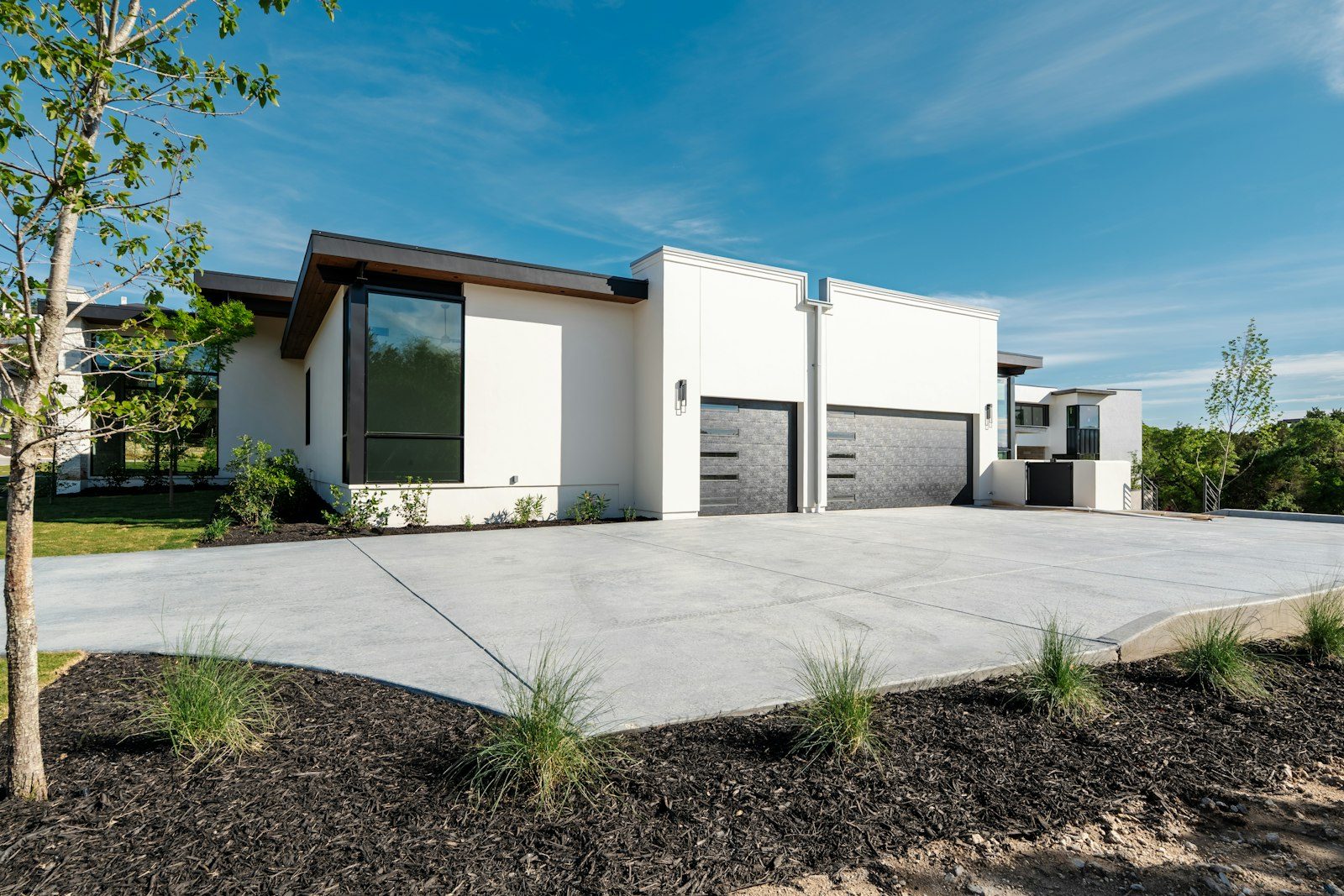
Tear-out to broom finish, usually inside a week, for slabs that went in when the house did.
A big share of Lakewood's housing stock is mid-century, and a surprising number of those homes still have the driveway that came with the keys. Sixty-plus years of sun, plows, oil pans, and freeze cycles. You can read the whole history in the surface: edges gone crumbly, panels that sank an inch and stayed there, a crack down the middle that gets a little wider every spring. At some point patching becomes a subscription. Replacement cancels it.
Tearing out a driveway sounds violent, and honestly the first morning is. But it's a tight, well-rehearsed process, and most homes go from old slab to fresh concrete in under a week. Here's how we run it, what you'll see each day, and what changes underneath so the new one doesn't inherit the old one's problems.
When we break out an original slab around Belmar or Applewood, the autopsy is almost always the same. Concrete that's thinner than anyone would pour today. No steel, or a rusted ghost of mesh lying at the very bottom where it never did a thing. And under it, native clay with no gravel layer at all. The old-timers got away with it because the slab had no traffic heavier than a station wagon, and because luck is real.
Luck runs out. Clay on the east side of town swells with every wet spring, and once the slab cracks into free-floating pieces, each piece starts moving on its own schedule. You can mudjack a settled panel or fill a crack, and sometimes that's the right call for a few more years. But when the base itself has failed, every dollar spent on the surface is rented, not owned.
| Stage | What happens at the house | What you deal with |
|---|---|---|
| Demo morning | Breaker and skid steer take the old slab apart; loads go out by truck | Noise for a few hours. Park on the street the night before. |
| Haul-off and grade | Old concrete leaves for recycling; we cut the new subgrade and fix the slope | A dirt driveway and a cleaner-looking yard than you expect. |
| Base and forms | Road base goes in and gets compacted in lifts; forms and steel set | You'll see the finished shape before any concrete arrives. |
| Pour day | Ready-mix trucks, screed, finish, then joints sawed the same day | A few hours of crew and equipment, then quiet. |
| Cure week | Concrete does its thing; walk on it in a day or two | Cars stay off seven days. Heavy vehicles wait 28. |
Text a photo to (303) 569-4046. We'll tell you straight whether it's a patch year or a replacement year.
The oldest calls come from the oldest streets, and in Lakewood that means the established neighborhoods on the flats. Belmar and Applewood tear-outs are usually full replacements of original concrete. Bear Creek jobs split between replacement and enlargement; families add vehicles and the two-track pad from 1985 stops making sense. Green Mountain properties bring slope into the conversation, and sometimes the smartest move during a replacement is regrading the whole approach so meltwater finally goes where it should. Solterra is new enough that we're rarely replacing there yet, though builder-grade shortcuts keep a few crews honest everywhere.
So the same service means different work street to street. That's exactly why we bid from a site visit, not from satellite photos.
Mid-April through late October is the comfortable season for tear-outs on the Front Range, and early fall is the gem: the ground is dry, days are warm, nights are cool, and the new slab gets its full 28 days of strength gain before serious cold. Summer works great too; we just schedule pours for morning so the afternoon storm cycle can't touch the finishing.
And winter isn't off the table. Demolition doesn't care about temperature, so cold-month projects often split the work: break out and base prep during a thaw, pour with heated water and blankets in the next mild stretch. What we won't do, ever, is place concrete over frozen subgrade. A slab poured on frost settles the moment the frost lets go, and you'd be calling someone to replace the replacement.
Homeowners apologize for how bad the old driveway looks, like it's a messy garage. Don't. A slab that made it from the Johnson administration to now did its job. We just make sure the next one is built like we know what the weather here does, because now we do.Our crew lead, after the walkthrough
Still unsure about something?
Call the crew at (303) 569-4046 and we will talk it through.

Get a free, no-obligation estimate from a crew that knows Colorado soil, Colorado weather, and how to finish concrete that lasts.
Accessibility
Adjust the site to fit how you read and browse. Your choices are saved on this device.