
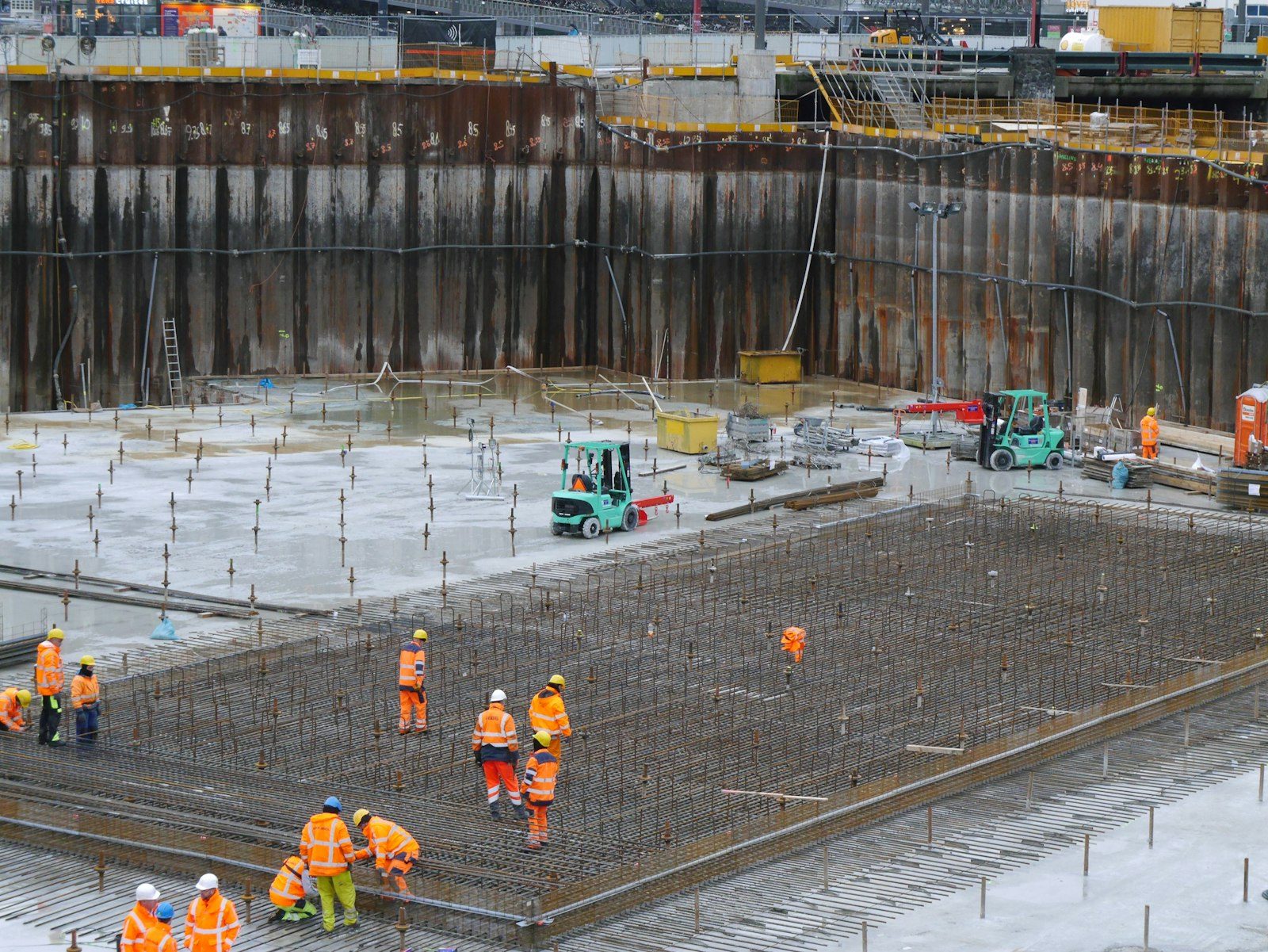
A hailstorm at one in the afternoon is a disaster. The same storm on Thursday is a rinse.
Mid July, a cell stacks up over the foothills by one, and by two thirty there is pea hail bouncing off everything west of town. If your public walk went in that morning and the surface is still green, that storm pits the top of it and washes the cream out of the low spots. If the same panels were placed nine days earlier, you sweep up the ice and go back inside. Nothing about the concrete changed. The calendar did.
Managing that gap is most of what right-of-way work is, along with what comes after: slope an inspector signs off on, a base that holds the panel level, and a finish that matches the run next door. We do panel work and full runs across Lakewood, from the older tree-lawn blocks near Bear Creek and Applewood to the attached walks in Solterra.
Front Range summers run on a schedule. Clear morning, clouds building by noon, something loud between two and five. So we place sidewalk concrete early and finish early, which is why our trucks roll at first light in July and not at ten. If the forecast turns while the load is on the way, plastic and blankets come off the trailer and we cover as we go.
Rain is the one people ask about. Hail is the one that actually ruins a day, because it lands with force and leaves dimples nothing can polish out. Wind is the quiet third. Dry air moving across a fresh slab at this elevation pulls moisture out faster than the concrete can replace it from below, and a surface that dries ahead of the slab crazes into a web of shallow lines. That is not a reason to avoid summer work. It is a reason to start at dawn.
Public walks answer to accessibility standards, and the one that trips up most repairs is cross slope: the tilt across the width of the panel, not the grade running along it. Too much and the walk is out of compliance even though it looks fine and drains beautifully. We shoot it with a digital level at the forms and again after the screed, because a quarter inch of drift over four feet is invisible to the eye and obvious to an inspector.
When the ground fights us, we solve it in the base instead of the concrete. That comes up constantly on the sloped west side of town, where the street and the yard sit at genuinely different elevations. Right-of-way work usually needs a permit and an inspection. We pull it, make the calls, and schedule the pour around when the sign-off can happen.
| What rolls through | On concrete poured this morning | On concrete that has cured |
|---|---|---|
| Pea hail | Pits the surface permanently. If it is bad enough we grind or replace the panel | You sweep the ice off. Cured concrete shrugs it off |
| Heavy rain | Thins the paste at the top and buys you dusting and scaling later | Free curing water. Genuinely helpful in the first week |
| Hot sun with dry wind | Crusts the surface ahead of the slab and leaves a spiderweb of fine cracks | No effect worth discussing |
| Overnight freeze | Can wreck the pour outright, so we blanket it or do not place at all | Fine, as long as the base drains and water is not sitting under it |
| First snow of the year | Needs blankets and a plan before the crew leaves the site | Shovel it. Skip the ice melt until the walk has been through a full year |
We would rather move a pour twice than place under a sky we do not trust. Nobody remembers a sidewalk that got pushed two days. Everybody remembers a pitted panel out front.From the crew lead on these jobs
We will look at the run, tell you which panels have to go, and put it in writing. (303) 569-4046.
On the older blocks around Bear Creek and Applewood, the trees in those planting strips were small once and the walks were flat once. Now the roots are the size of your forearm and one panel rides three inches high. We can usually take that panel out, prune the offending root cleanly rather than hacking it, set a barrier, and repour without putting the tree at risk. Grinding the lip is a legitimate short-term move on a sound panel with a small offset. It is a haircut, not a cure.
The street edge is where a walk dies first, because it takes everything the plow throws and everything the brine carries. Chloride sits in the pores, freezes, expands, and lifts the top layer off in flakes. Good air content in the mix is the only real defense, and we ask you to keep deicer off fresh work through the first winter.
Our window runs from the ground thawing in spring through the middle of October, and fall is the easiest stretch to book. Winter panels are possible when a lip is a genuine hazard, using heated water, blankets, and a frost-free subgrade. We will not chase a date onto frozen ground.
Still unsure about something?
Call the crew at (303) 569-4046 and we will talk it through.
Get a free, no-obligation estimate from a crew that knows Colorado soil, Colorado weather, and how to finish concrete that lasts.
Accessibility
Adjust the site to fit how you read and browse. Your choices are saved on this device.