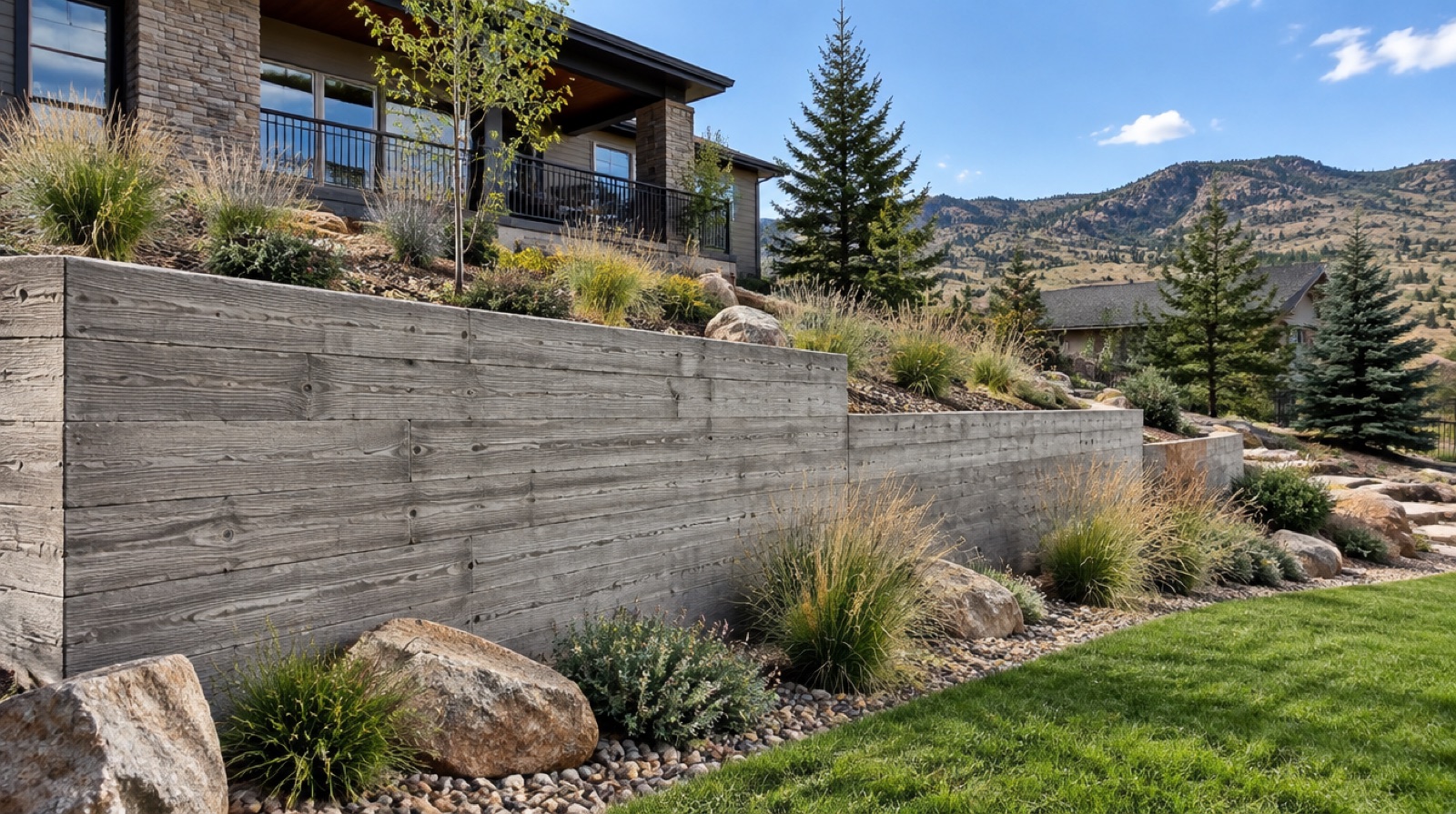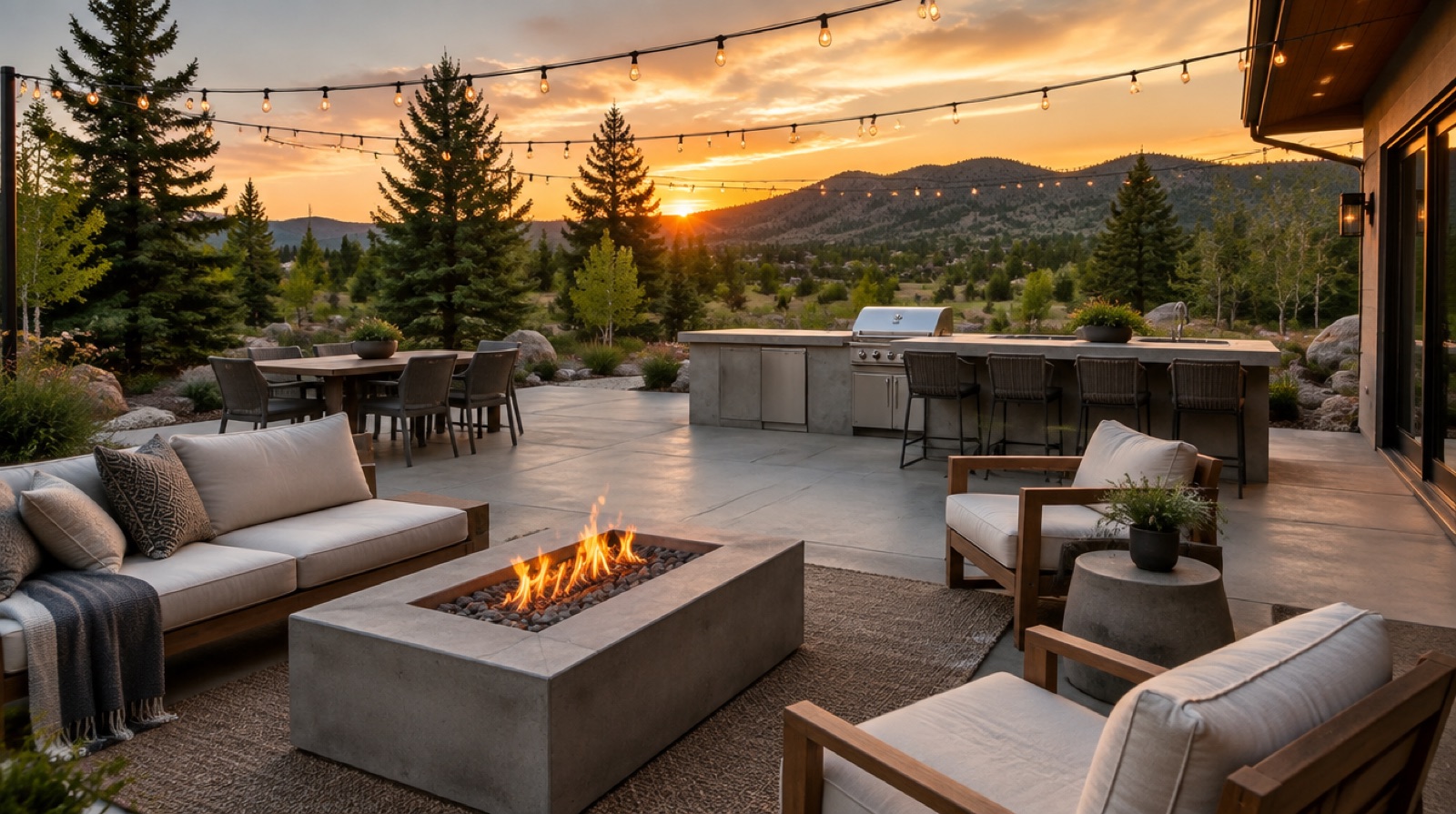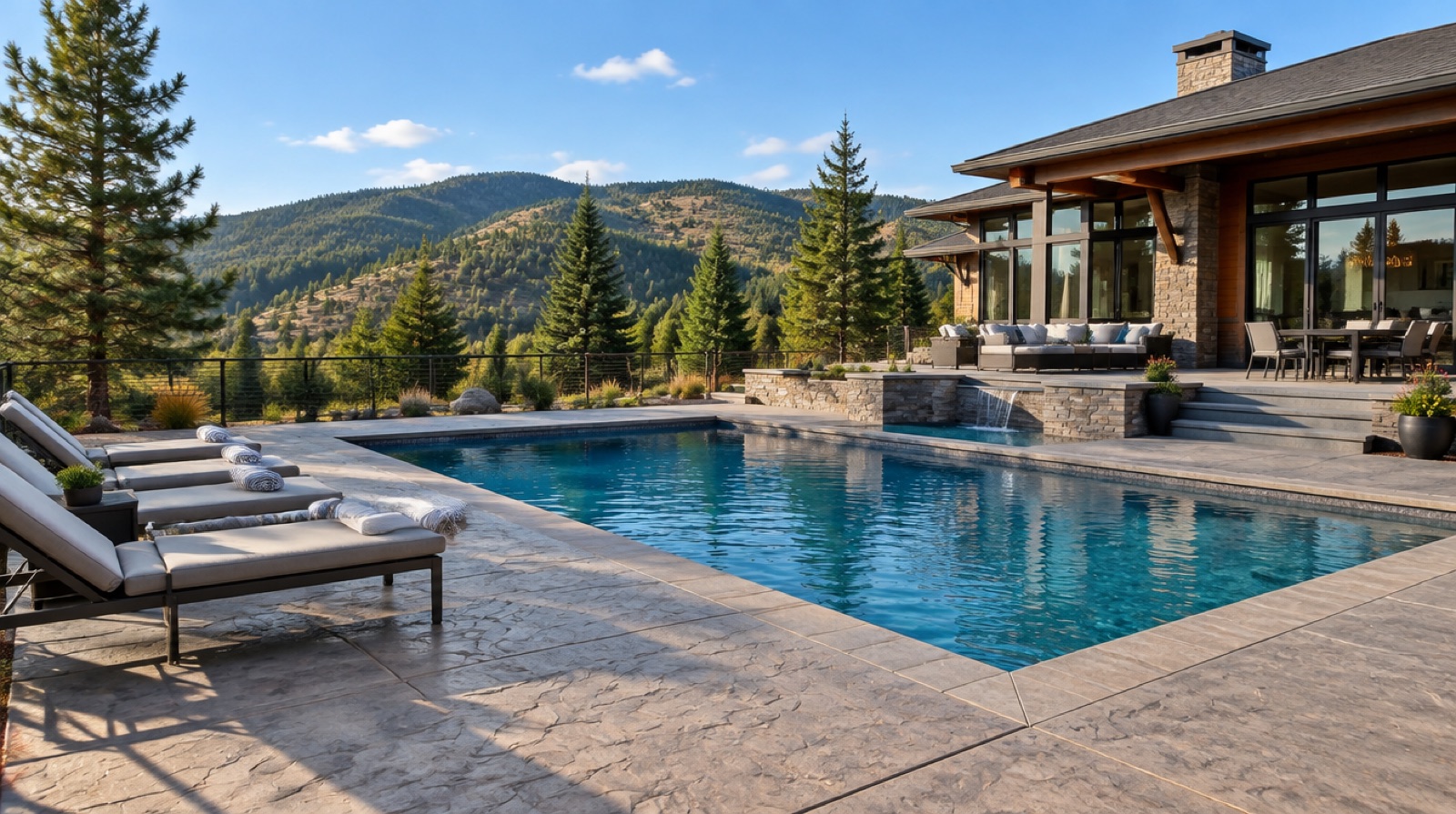
Clean, continuous borders for beds and lawns.
Concrete landscape curbing is a continuous poured border that runs along the edge of your beds, lawns, and tree rings. It is extruded or formed in one connected run, so it follows the exact line of your yard, curves and all, without the seams and gaps you get from edging you snap together piece by piece. The point of it is simple. It keeps grass from creeping into your mulch, holds your beds in a clean shape, and gives the mower a track to ride against so you stop scalping the lawn at the edges.
For Front Range homes and businesses, a hard edge has to do more than look good. It has to survive winters where the ground freezes and thaws over and over, and it sits on clay that swells when it gets wet and shrinks when it dries. Plastic edging pops up out of that ground by spring. A poured curb, built on the right base with the right joints, stays put and keeps its line season after season.
The big difference between concrete curbing and the alternatives is that it is one piece. Plastic edging comes in strips that you stake into the ground, and pavers are individual blocks set side by side. Both rely on the soil to hold them, and our soil moves. Over a couple of seasons the stakes work loose, the strips heave, and the line you paid for turns into a wavy mess. A poured curb is a single continuous ribbon of concrete that does not have those weak points to fail at. It holds a crisp line on straight runs and flows smoothly around curves and tree rings. Because it is low and solid, the mower wheel rides right along the top, which means cleaner edges and less trimming by hand.
A curb is long and thin, which makes it the part of your hardscape most likely to crack if it is poured carelessly. We treat the base as the real work. The trench gets cut to depth, loose dirt comes out, and the bottom gets compacted so the curb is not riding on soft fill that will settle. We use an air-entrained mix so the concrete can take the freeze-thaw beating without scaling, and we cut control joints at regular spacing down the run. Those joints give the concrete a planned place to crack as it shrinks and as the ground moves underneath, instead of letting random cracks wander across the face. On expansive clay, that detail is the difference between a curb that ages well and one that splits apart the first hard winter.
This is the honest concern with curbing, and it deserves a straight answer. Yes, a poured curb can crack, because all concrete shrinks as it cures and our clay moves underfoot. The question is whether it cracks where you planned or where you did not. We control it instead of pretending it will not happen. Control joints placed at the right intervals let the curb relieve that stress at clean, tooled lines that read as part of the design, not as damage. Proper base prep keeps the soil from heaving the curb unevenly, and real curing lets the concrete reach strength before the weather works on it. We are upfront about this on every estimate. Curbing is a hardscape edge, not a structural slab, and built right it holds its line for the long haul. Built on bare, uncompacted dirt with no joints, any curb will fail, which is exactly why we do not pour them that way.
A curb does not have to read as a gray strip. We pour it colored to complement your stone, siding, or existing concrete, and we can stamp a texture or pattern into the top face so it looks like cut stone or brick rather than plain concrete. The profile can be a low rounded mow strip that sits nearly flush, or a taller raised curb that really separates a bed from the lawn. Straight runs, sweeping curves, and circular tree rings all come off the same continuous pour. Once the curb is shaped and the color is set, we seal it so the finish holds up against UV at altitude and against the moisture that drives freeze damage. The result is a border that fits the property instead of fighting it.
From homes to commercial sites across the Front Range, here is where landscape curbing & edging earns its place.
Defines a clean, permanent line between planting beds and the lawn so grass stops creeping into the mulch.
Gives the mower wheel a hard track to ride along, which cuts down on hand trimming and scalped edges.
Wraps a continuous circular curb around a tree to hold mulch in and keep the mower away from the trunk.
Holds loose mulch or decorative rock in place instead of letting it wash and spread onto the grass.
Frames the edge of a drive or path with a finished line that ties the hardscape together.
Edges beds and islands on commercial and HOA grounds with a low-maintenance border that holds its shape.
Concrete behaves differently at altitude. Our expansive clay soils swell with moisture and shrink when they dry, and the freeze and thaw cycle works on any surface that takes on water. Every landscape curbing & edging project we pour accounts for both, from base preparation and drainage to air-entrained mixes, proper reinforcement, and control joints cut on time. That is how the work holds its shape and finish through Colorado winters instead of failing by spring.
You also get a written estimate before anything starts, a structural engineer on staff for the jobs that need one, and a crew that pulls and manages permits when the project calls for them. Licensed, bonded, and insured, with finishes that range from a clean broom texture to stamped, colored, and sealed.
Outdoor concrete has to look good and do real structural work at the same time. Here is what shapes a Landscape Curbing project.
Drainage is what keeps landscape curbing & edging sound, so keep weeps and drains clear and watch that water continues to move away from the structure. Sealing exposed surfaces and clearing snow promptly protect the finish through the freeze and thaw. And whatever the project, the same rule applies across the Front Range: keep water from sitting on or soaking into the surface, and the concrete will reward you with decades of service.
You always know what is happening and what it costs before we mix a single yard. Here is the path from first call to final walkthrough.
We visit the site, measure, check drainage and soil, and hand you a clear written quote. No charge, no pressure.
We set the grade, thickness, reinforcement, and finish. Structural work gets engineered and permitted.
Forms, rebar, and a clean pour. We screed, float, and finish to the texture you picked, then cut control joints.
You can walk it in 24 to 48 hours. We walk the job with you and explain how to care for it through the first winter.
Still unsure about something?
Call the crew at (303) 569-4046 and we will talk it through.

Get a free, no-obligation estimate from a crew that knows Colorado soil, Colorado weather, and how to finish concrete that lasts.
Accessibility
Adjust the site to fit how you read and browse. Your choices are saved on this device.