Protect the surface from water, salt, and sun.
Sealing is the cheapest thing you can do to keep an expensive slab from falling apart early. Bare concrete looks solid, but the surface is full of tiny pores. Water soaks in, road salt rides along with it, and then the Front Range freeze-thaw cycle goes to work. Water expands as it freezes, and it does that over and over through a single Colorado winter. That is what lifts the top layer off a driveway in flakes and leaves you with a pitted, scaling mess.
A good sealer closes off those pores so water and salt cannot get a foothold. On a new pour it protects your investment from day one. On decorative work it keeps color rich and stamped texture sharp instead of letting it fade gray under our high-altitude UV. We seal driveways, patios, garage floors, and stamped or colored surfaces across the metro and up and down the Front Range, and we tell you straight when a slab needs it and when it can wait.
There are two families of sealer and they do different jobs. Penetrating sealers, the silanes and siloxanes, soak into the concrete and bond chemically below the surface. They leave the look and texture almost unchanged, they do not peel, and they are the workhorse for driveways and walks that take salt and traffic. Film-forming sealers, usually acrylics, sit on top and add sheen and color pop, which is what you want on stamped and decorative work. The tradeoff is that films wear and need resealing more often, and they can get slick. We match the sealer to the surface and how you actually use it, instead of putting one product on everything.
This is the honest concern with sealing, and it is a real one. A glossy film-forming sealer on a patio or pool deck can get genuinely slick when it is wet or iced over, and that matters in a climate that throws snowmelt and freeze at the same surface all winter. We deal with it two ways. On decorative slabs that need a film for the color, we blend in a fine anti-slip grit so you keep the sheen without the skating rink. On driveways and walks we usually go with a penetrating sealer that leaves the original broom or aggregate texture intact, so traction does not change at all. Tell us where people walk in winter and we spec accordingly.
New concrete should cure before it gets a permanent sealer, generally about a month, so the slab can release moisture and reach strength first. Seal too early over a wet slab and you can trap that moisture and cause the sealer to cloud or fail. Older slabs are a different job. Before we reseal we clean the surface, strip any old failing film, and let it dry out, because a sealer is only as good as what it bonds to. If the concrete already has fine surface cracks, we address those first so water is not getting in underneath the work we are about to do.
No sealer is forever, and anyone who tells you otherwise is selling something. Out here the punishment is heavier than most places: intense UV at altitude, deicing salt tracked off the roads, and dozens of freeze-thaw swings between November and April. Penetrating sealers last the longest because they live inside the concrete instead of on top of it. Film-forming acrylics on a driveway take the most abuse and come up for renewal sooner, while a covered patio with the same sealer can go much longer. We leave you with a straight reseal schedule for your specific surface and exposure, so you are protecting the slab on time instead of waiting until the damage shows.
From homes to commercial sites across the Front Range, here is where concrete sealing & waterproofing earns its place.
A penetrating sealer keeps deicing salt and meltwater out of the surface, which is the main thing that scales a Colorado driveway.
Sealing locks in color and keeps the surface easy to clean against hard water, grease, and weather.
A film-forming sealer brings out the color and keeps the stamped texture crisp instead of fading flat.
Sealing protects integral color and stain from UV bleaching so the tone stays rich for years.
A sealer resists road salt, oil drips, and moisture coming up through the slab in a working garage.
Sealing deepens the stone color and keeps the textured surface from shedding loose aggregate over time.
An anti-slip sealer protects the surface from splash-out and freeze while keeping wet footing safe.
Concrete behaves differently at altitude. Our expansive clay soils swell with moisture and shrink when they dry, and the freeze and thaw cycle works on any surface that takes on water. Every concrete sealing & waterproofing project we pour accounts for both, from base preparation and drainage to air-entrained mixes, proper reinforcement, and control joints cut on time. That is how the work holds its shape and finish through Colorado winters instead of failing by spring.
You also get a written estimate before anything starts, a structural engineer on staff for the jobs that need one, and a crew that pulls and manages permits when the project calls for them. Licensed, bonded, and insured, with finishes that range from a clean broom texture to stamped, colored, and sealed.
A good repair starts with an honest read of what failed and why. Here is what shapes a Sealing project.
After a concrete sealing & waterproofing, the best protection is keeping water managed around the slab so the problem does not return. Reseal repaired surfaces, keep drainage flowing away, and address new cracks early before they spread. And whatever the project, the same rule applies across the Front Range: keep water from sitting on or soaking into the surface, and the concrete will reward you with decades of service.
You always know what is happening and what it costs before we mix a single yard. Here is the path from first call to final walkthrough.
We visit the site, measure, check drainage and soil, and hand you a clear written quote. No charge, no pressure.
We set the grade, thickness, reinforcement, and finish. Structural work gets engineered and permitted.
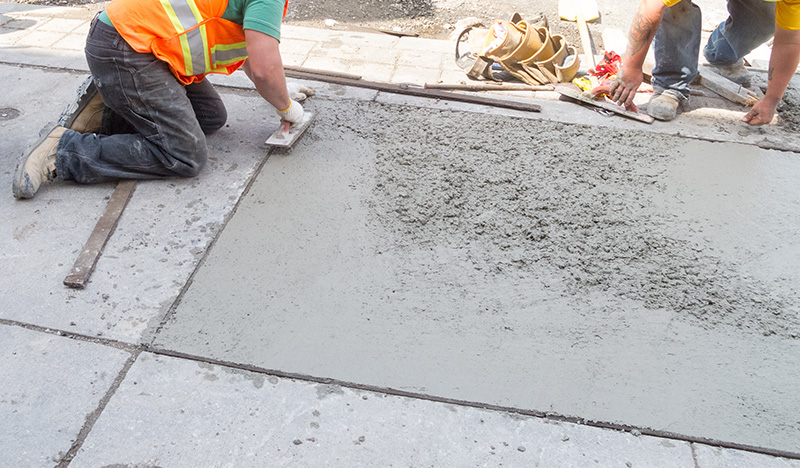
Forms, rebar, and a clean pour. We screed, float, and finish to the texture you picked, then cut control joints.
You can walk it in 24 to 48 hours. We walk the job with you and explain how to care for it through the first winter.
Still unsure about something?
Call the crew at (303) 569-4046 and we will talk it through.

Get a free, no-obligation estimate from a crew that knows Colorado soil, Colorado weather, and how to finish concrete that lasts.
Accessibility
Adjust the site to fit how you read and browse. Your choices are saved on this device.