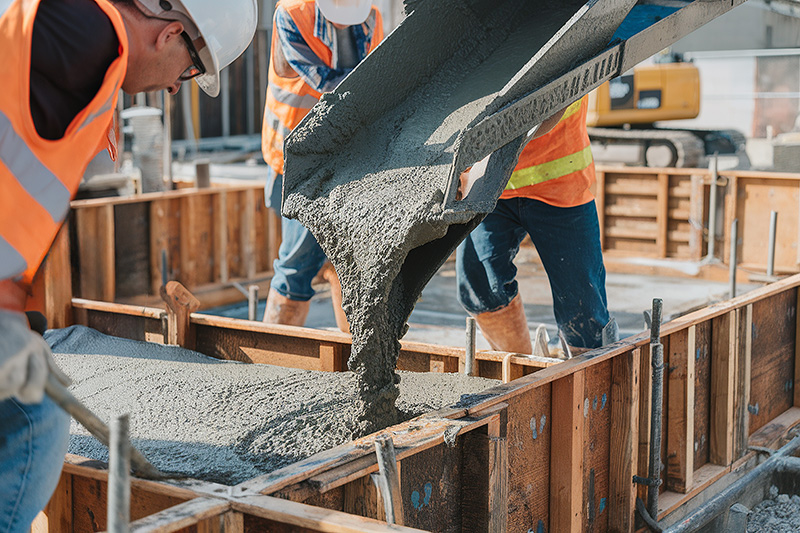
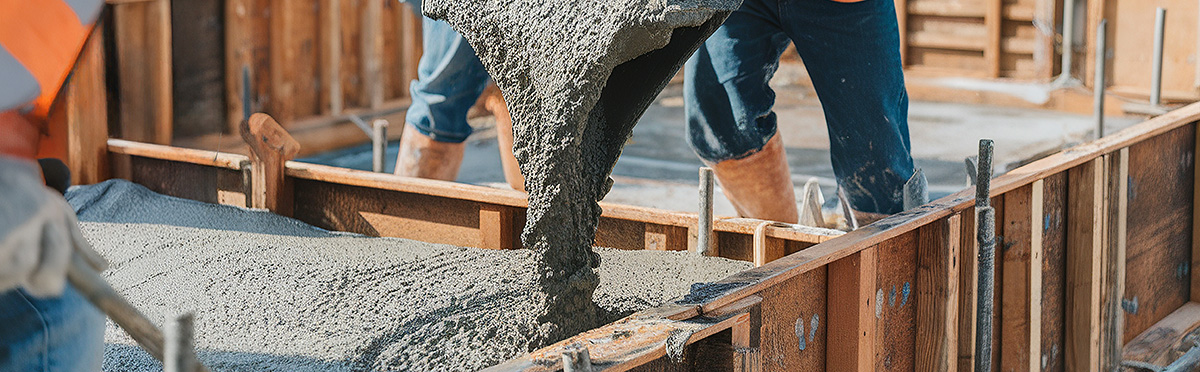
Large-scale flatwork poured to spec and on schedule.
Commercial flatwork is every horizontal pour on a building site that is not the foundation: the interior building slab, the exterior sidewalks and approaches, the trash enclosure pad, the loading apron, the equipment bases. On a commercial job it all runs on three things at once, tolerances, inspections, and a schedule that the rest of the trades are built around. Go Denver Concrete staffs the crew, pours to the engineer's drawings, and keeps the slab work from becoming the thing that holds up framing, steel, or final occupancy.
On the Front Range that work gets harder than it looks on paper. Expansive clay can lift a slab that was not isolated and reinforced for it, and the freeze-thaw swing from a sunny afternoon to a single-digit night pries water-soaked concrete apart. We build for both with compacted base, air-entrained mixes, real reinforcement, and control joints cut on time. We are licensed, bonded, and insured for commercial work from Colorado Springs to Fort Collins, and we have a structural engineer on staff when a slab needs one signing off.
Commercial slabs come with numbers attached. A warehouse floor may carry a flatness and levelness spec. A site sidewalk has a slope tolerance that has to drain and still meet accessibility. An equipment pad has to sit dead level for the unit going on it. We set forms and screed rails to those numbers and check them as we go, not after the truck leaves. That means laser grades on the base, wet screeds or laser screeds matched to the size of the pour, and joints laid out on the plan before anyone hits the button. When the inspector pulls out a straightedge or a level, the slab reads where the drawings say it should, and that is the difference between a pour that gets signed off and one that gets ground or torn out.
On a commercial build, concrete is usually somebody else's start date. Steel cannot set, framing cannot stand, and a tenant cannot move in until the flatwork is in and cured. We plan the pours around that. We size the crew to the square footage, coordinate ready-mix deliveries so trucks are not stacking up or sitting empty, and sequence the work so one area can cure while another gets prepped. We pull and manage permits when the job calls for them, and we line up our pours with the general contractor and the inspector so we are not waiting on a sign-off we could have scheduled a week earlier. The goal is simple: the next trade shows up to a slab that is ready, not a slab that is still a week out.
The honest concern with any large flatwork pour here is cracking, and on Front Range clay it is a real one. Concrete shrinks as it cures, and a big slab sitting on soil that swells and shrinks with moisture will crack somewhere. The job is not to promise it never cracks. The job is to control where it does. We do that with a compacted, well-drained base so the slab is not riding on soft spots, with reinforcement sized to the load, with isolation around columns and footings so the slab can move without dragging the structure, and with control joints cut at the right spacing and the right depth before random cracking starts. Cut a joint late and the slab picks its own line. Cut it on time and the crack goes where you put it, straight and out of sight. That planning is what keeps a commercial floor looking and performing right for years.
Commercial flatwork is rarely one big pour. A single job can be a building slab, the sidewalks ringing it, the approaches where the drive meets the walk, a dumpster pad, and a handful of equipment bases, all to different specs. We handle the range of it on one project so the general contractor is dealing with one concrete crew instead of three. The building slab gets its flatness and reinforcement. The exterior walks and approaches get the slope to drain and the finish to grip when there is ice down. The smaller pads get the thickness and steel for whatever sits on them. Reinforced pours, broom or trowel or exposed-aggregate finishes, and inspection coordination all come from the same crew that started the job.
From homes to commercial sites across the Front Range, here is where commercial flatwork earns its place.
The interior floor slab for retail, office, and light-commercial shells, poured to the load and flatness the use demands.
Large field pours for warehouse, distribution, and retail spaces where flatness and durability under traffic matter.
Exterior walks ringing the building and the approaches where drives, walks, and entries meet, sloped to drain and finished to grip.
Aprons and pads at service entries and back-of-house zones that take repeated heavy turning loads.
Thicker reinforced pads for waste enclosures, rooftop and grade-level mechanical units, and other site equipment.
Any large slab where steel reinforcement and engineered jointing keep the surface flat and crack-controlled over time.
Concrete behaves differently at altitude. Our expansive clay soils swell with moisture and shrink when they dry, and the freeze and thaw cycle works on any surface that takes on water. Every commercial flatwork project we pour accounts for both, from base preparation and drainage to air-entrained mixes, proper reinforcement, and control joints cut on time. That is how the work holds its shape and finish through Colorado winters instead of failing by spring.
You also get a written estimate before anything starts, a structural engineer on staff for the jobs that need one, and a crew that pulls and manages permits when the project calls for them. Licensed, bonded, and insured, with finishes that range from a clean broom texture to stamped, colored, and sealed.
Commercial work is judged on tolerances, schedule, and inspections. Here is what shapes a Commercial Flatwork project.
Commercial surfaces earn their keep through maintenance. Sealing, prompt joint repair, and keeping de-icing chemicals managed all extend the life of a commercial flatwork and protect your investment in it. And whatever the project, the same rule applies across the Front Range: keep water from sitting on or soaking into the surface, and the concrete will reward you with decades of service.
You always know what is happening and what it costs before we mix a single yard. Here is the path from first call to final walkthrough.
We visit the site, measure, check drainage and soil, and hand you a clear written quote. No charge, no pressure.
We set the grade, thickness, reinforcement, and finish. Structural work gets engineered and permitted.
Forms, rebar, and a clean pour. We screed, float, and finish to the texture you picked, then cut control joints.
You can walk it in 24 to 48 hours. We walk the job with you and explain how to care for it through the first winter.
Still unsure about something?
Call the crew at (303) 569-4046 and we will talk it through.
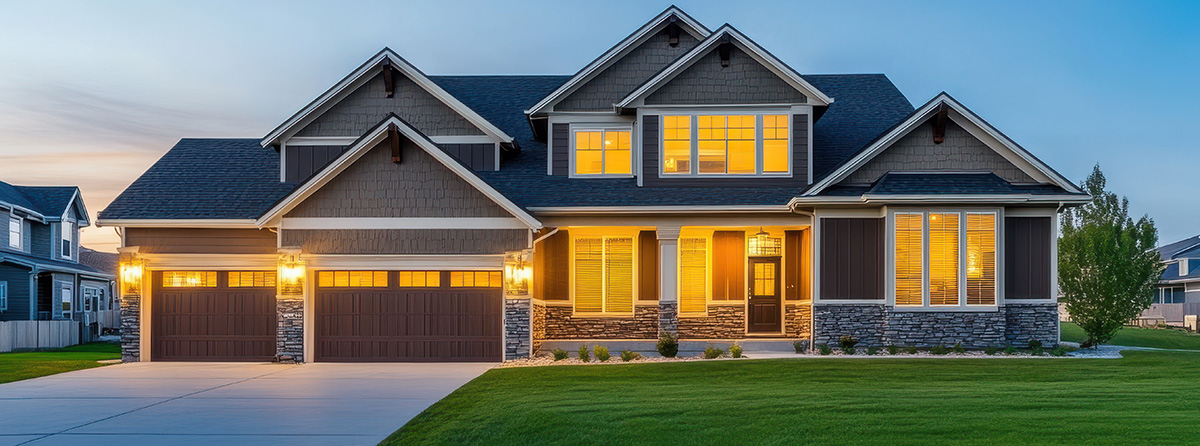
Get a free, no-obligation estimate from a crew that knows Colorado soil, Colorado weather, and how to finish concrete that lasts.
Accessibility
Adjust the site to fit how you read and browse. Your choices are saved on this device.