
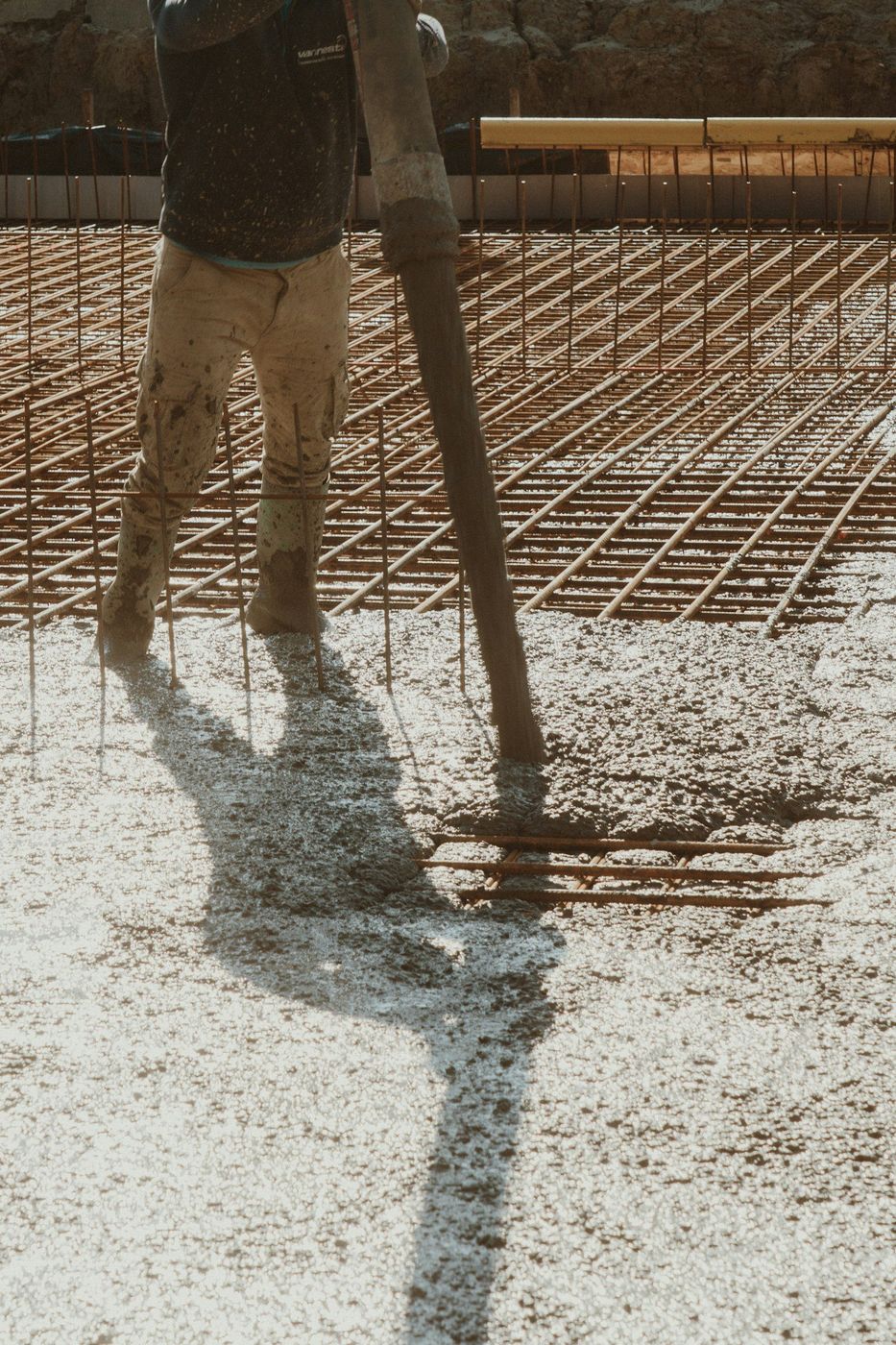
Panel-by-panel scoping, so you replace what failed and keep what didn't.
Most flatwork calls we take in Castle Pines start with a manager holding two bids and one question: patch the bad sections, or pull the whole run and start clean. That's the right question. It's also the one nobody answers straight, because the honest answer lives under the concrete and nobody wants to pay to look first. We look. Then we tell you which half of the walk is worth saving and which half is good money chasing a failed base.
Our commercial work across Douglas County covers entry walks, service drives, equipment pads, enclosure aprons, and the connector paths that tie a building to its parking. Property managers, general contractors, and HOA boards hire us, and they all share one constraint. The site has to keep working while we pour. So we phase it, barricade it, and pick hours that don't strand a tenant or block a delivery truck.
We scope panel by panel. A walk that's forty percent bad isn't a forty percent job, because tear-out carries a floor cost and sending a crew twice beats nothing about sending it once. Somewhere around a third of the run, the math flips and full replacement gets cheaper per square foot than surgical patching. We'll show you where that line falls on your property rather than quoting one approach and hoping the question never comes up.
The tell is almost always underneath. Lift a settled panel and you either find compacted base still holding its shape or you find soft ground that's been pumping water for years. First case, one panel gets leveled or replaced and it stays put. Second case, replacing that panel just schedules a matching failure three seasons out. Sites here sit at 6,450 feet on hilly ground, and when a storm dumps on a slope, water finds the weakest seam in your hardscape fast.
Newer inventory around Lagae Ranch and BellaMesa usually has decent base under bad jointing. Older properties in The Village at Castle Pines and Castle Pines North tend to run the other direction: joint layout was fine, the base is long gone. Two different problems. Quoting them the same way is how a manager ends up unhappy in year three.
| Approach | When it wins | What it costs you |
|---|---|---|
| One mobilization, area closed | Vacant space, a shutdown week, or a stretch when nobody needs that door | All access gone for the cure window. Lowest square-foot number we quote. |
| Phased in halves or thirds | Tenants who can't give up an entrance at any point | Longer calendar, repeat mobilization, more barricade. Access never fully closes. |
| Night and pre-dawn placement | Daytime traffic you genuinely cannot reroute | Light towers, a night crew, and a tighter weather window. Open before staff arrive. |
| Patch now, replace on the capital cycle | A budget year where the walk is ugly but still safe | Cheapest today and the most expensive across ten years. We'll say that out loud. |
| Full replacement with regrade | Anywhere runoff is heading back toward the building | Most disruption of the five. It's also the only version that fixes the cause. |
Send the scope and a few photos. We'll tell you what both of them left out before you sign either.
Late April into October is the wide stretch for flatwork up here. Mid-September might be the best of it. Warm days, cool nights, and enough runway to reach design strength before the first hard freeze comes down off the Divide. Summer is fine too. We start early because that afternoon build over the foothills is reliable enough to schedule around, and nothing wrecks a fresh surface quicker than a cloudburst landing while a finisher is still working the top.
Winter isn't off the table. Heated mix water, non-chloride accelerator, blankets down before the trucks leave, and we hunt for a three-day window instead of gambling on one clear morning. Frozen subgrade is where we stop. Not for a deadline, not for a tenant, not for anybody. Concrete placed over frost is a replacement already on somebody's calendar.
Give us your delivery windows and your peak hours at the walkthrough. We build the phasing around them. Planning a Tuesday night placement in advance is a lot easier than arguing with a box truck driver at seven in the morning.
The panel somebody points at usually isn't the problem. A manager shows me a cracked square by the entry and the real story is forty feet uphill, where a downspout has been dumping onto the walk and washing base out from under it since the building opened. Fix the water or you'll buy that panel twice.The crew lead's read on it
Still unsure about something?
Call the crew at (303) 569-4046 and we will talk it through.

Get a free, no-obligation estimate from a crew that knows Colorado soil, Colorado weather, and how to finish concrete that lasts.
Accessibility
Adjust the site to fit how you read and browse. Your choices are saved on this device.