
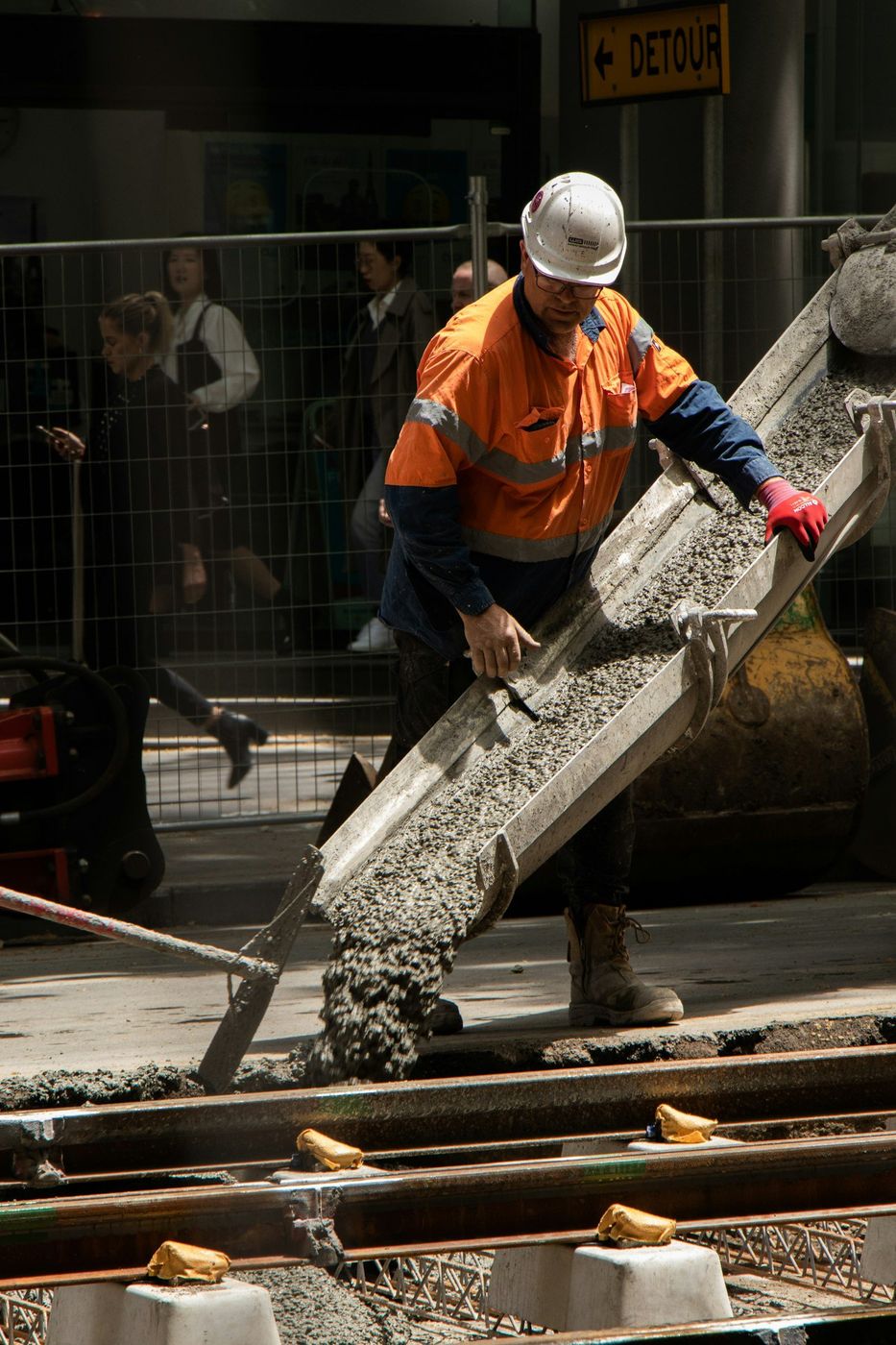
We plan every placement around the two hours a July cell needs to cross your property.
Two forty on a July afternoon. The morning was clear, our crew has been on the ground since six, and the last two loads of a service apron are still stiffening under a bull float. Then the cell that had been parked out over the plains starts moving, and somebody's phone chirps. That is the moment a commercial pour in Aurora is won or lost, and it gets decided the day before, not while the plastic is coming off the roll.
We place walks, aprons, service pads, and drive lanes for retail centers, industrial buildings, medical offices, and the managers who look after them. Weather is not a footnote on that work. It sets the start time, the mix, the crew size, and some mornings whether we place at all. This city sits in the stretch of the Front Range that collects hail, and a slab four hours old has no defense against it except the tarp somebody remembered to load.
Fresh concrete is defenseless for roughly eight hours. After that it is tough. Before that, the weather writes on it permanently. Hail is the version everyone pictures, and it earns the reputation: pea-size stones landing on a surface that still takes a fingerprint leave a pocked finish nobody troweling can chase out.
The quieter damage does more harm. On a breezy day up here the humidity can sit in the teens while the sun bakes the deck, and water leaves the top faster than the slab can bleed it back. What you get is plastic shrinkage cracking, thin ragged lines opening before a saw has run anywhere near them. Nobody caused that with a bad load. The air did it.
Rain during finishing is the one that ruins slabs without announcing itself. Water landing on a surface being troweled gets folded into the paste. Everything looks correct on Friday, and two winters on it dusts under a broom.
| What arrives | What it does to fresh concrete | What we do |
|---|---|---|
| Hail while the surface is still soft | Dimples the finish and bruises the paste under every stone strike | Tarps and plywood staged on site from the first truck, never fetched later |
| A downpour during finishing | Works loose water into the top layer, which reads as dusting later | Stop, cover, wait it out. We would rather lose an hour than the top eighth of an inch. |
| Dry wind with the humidity in the teens | Pulls moisture off faster than the slab bleeds, so cracks open before the saw runs | Retarder, fog mist, wind screens on the upwind edge, extra hands on the float |
| Ninety degrees and full sun on a bare deck | Sets the load early and shrinks the finishing window to almost nothing | First light start, chilled water, retarder in the mix, more finishers per truck |
| An overnight low below freezing in week one | Freezes the surface before it has strength, and it sheets off in spring | Blankets down before dark, non-chloride accelerator, nothing stripped until temperatures hold |
Send us the site plan and your operating hours. We will build a schedule around your weather risk and your tenants, then hold to it.
Late April through the middle of October is the working season, and the shoulders beat the middle. Early September into October is probably the best flatwork weather this state produces: warm enough to finish in comfort, cool enough that the surface does not run away from the crew. Midsummer is fine, it just costs you an early alarm.
Winter placements happen too. For a property that cannot wait, we run heated mix water, a non-chloride accelerator, and insulated blankets, and we read the seven-day forecast instead of the date on a contract. Frozen subgrade is where we stop. Concrete placed over frost is concrete you buy twice.
Aurora covers enough ground that flatwork ages unevenly across it. Property serving the newer southeast neighborhoods, Southshore and Tallyn's Reach and Saddle Rock among them, sits on younger walks than what we find around Sterling Hills, Murphy Creek, and Tollgate Crossing. Younger is not the same as sound. Plenty of it went in fast during a build-out, on base nobody proof rolled.
We carry tarps in August even when the sky is empty. Costs nothing to haul them. The one day you need them, you need them inside four minutes, and driving back to the shop is not a plan.Our crew lead, after the walkthrough
Still unsure about something?
Call the crew at (303) 569-4046 and we will talk it through.

Get a free, no-obligation estimate from a crew that knows Colorado soil, Colorado weather, and how to finish concrete that lasts.
Accessibility
Adjust the site to fit how you read and browse. Your choices are saved on this device.