
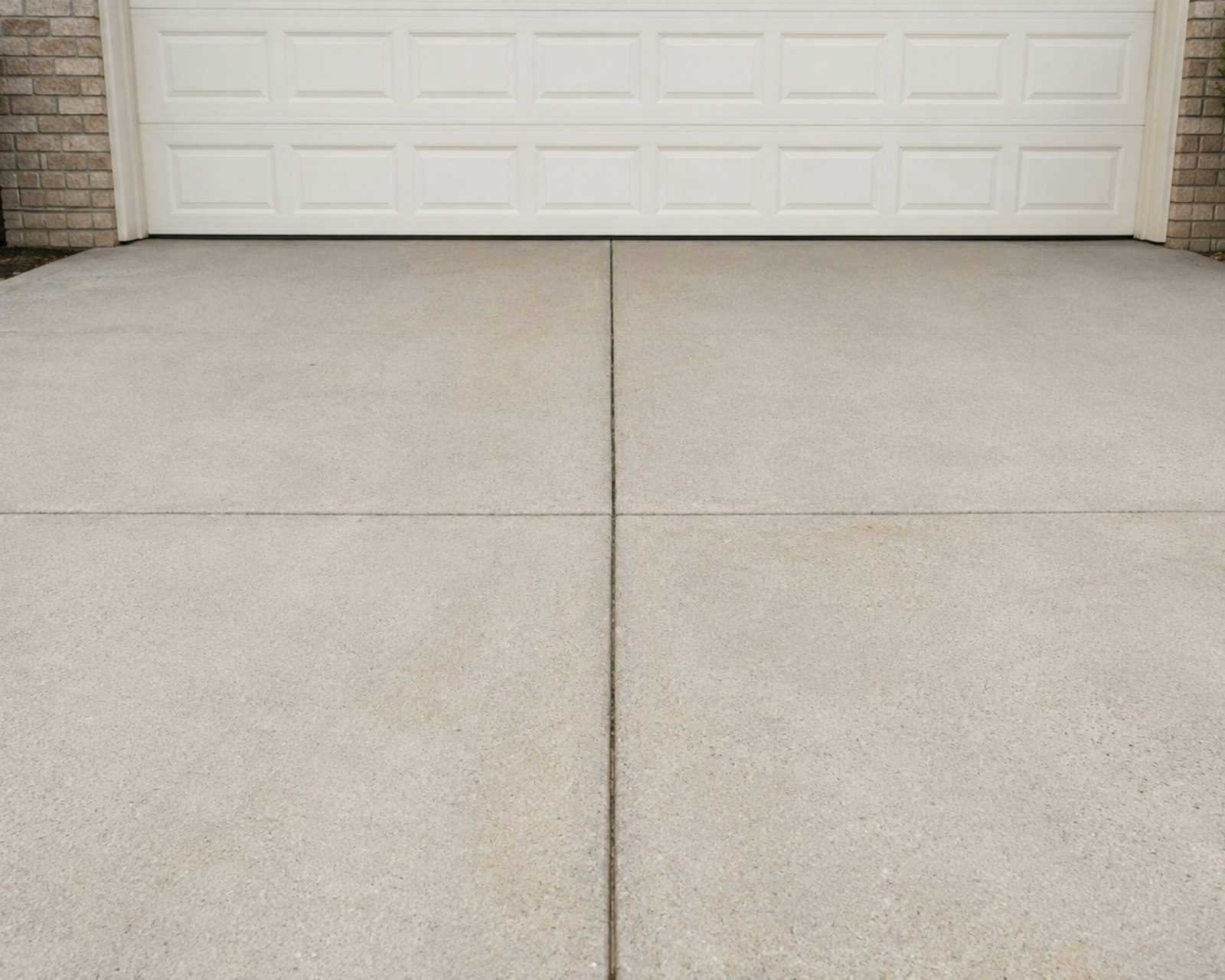
A sealer works every single day you don't think about it, which is exactly why people forget to renew one.
Your sealer had a busy week and you didn't notice a thing. It took the drip off a car that came home covered in road treatment. It held off the coffee somebody knocked over on the front porch. It kept meltwater from soaking into the top of the slab on Tuesday, which meant nothing was in there to freeze and push apart on Tuesday night. Then it stood in the sun all afternoon and gave up a little of itself doing it.
That's the job. Sealer is a wear layer that spends itself so the concrete doesn't have to. It's also the single cheapest thing you can do for flatwork, and the thing most often skipped, which is why so many driveways around Stroh Ranch and Canterberry Crossing look decades older than the houses they belong to.
Concrete is porous. Left bare, it drinks whatever lands on it: water, oil, fertilizer, chloride off the roads, tannin from leaves that sat there all fall. Water is what actually breaks things. It soaks into the pores, freezes, expands, and shoves small pieces of the surface apart. Run that through a Front Range winter, where a slab crosses the freezing point again and again in one week, and the top starts coming off in flakes.
A sealer interrupts the cycle. It also buys time on every spill, since a stain is only a stain once it soaks in. On a sealed drive, the oil you find Saturday is still sitting there waiting for a rag. On a bare one, it went in Thursday and it's permanent.
| Surface | What it takes day to day | When it's due |
|---|---|---|
| Driveway | Tire heat, oil drips, road chemicals melting off the car | Four or five years. Sooner if you plow it or park a work truck. |
| Front walk and porch | Boots, shovel edges, whatever gets tracked to the door | Three or four years; the landing by the door goes first. |
| Back patio | Furniture legs, grill grease, sunscreen, wet towels, dogs | Three years, plus a touch-up in the grill zone as needed. |
| Stamped or colored work | Everything a patio takes, plus full-time UV on your color | Two to three years. Not the one to let slide. |
| Garage floor | Hot tires, dropped tools, snowmelt puddling under the car | Three to five years, with a product rated for hot tire contact. |
| Hot tub surround | Constant wetting, chemicals, bare feet needing grip | Two to three years, always with anti-skid in the coat. |
Penetrating sealers soak into the concrete and react down inside the pores. Nothing sits on the surface, so the slab looks exactly like bare concrete when it's done. They can't peel because there's no film to peel, they don't get slick, and they're what we put on most driveways and walks around here. What they won't do is darken the color or add any shine.
Topical sealers form a film on top. That film is what gives stamped and stained work its depth and that wet look people want, and it's also why decorative concrete needs attention on a schedule. Film-formers cloud, yellow, or flake when they go over a damp slab, get laid on too thick, or sit in the sun long past their service life. On the right surface they're excellent. On a driveway that never dries properly, they're a mess waiting to happen.
The failure we see most has nothing to do with which product got picked. It's moisture. Seal a slab with water still in it and that water is trapped, and it comes back as white haze within weeks. Dry slab, correct product, correct rate.
Pour a cup of water on it. If it soaks in dark instead of beading, call us and we'll take a look before winter does.
Late May through early October, and if you want the easiest conditions we've got, aim for September. Mild temperatures, dry air, low chance of a surprise storm, and enough runway to fully cure before the first hard freeze. Spring works too, once the ground has given up its winter moisture and the slab has had a real dry stretch. A patio that looks dry on top after a wet April often isn't.
Winter is out for exterior sealing. These products need temperatures holding well above freezing while they cure, and a January slab in the shade is never genuinely dry. Interior work is different. A garage floor or basement slab goes year-round as long as we can ventilate.
New concrete has its own clock: about a month after the pour, so the surface chemistry can settle. And that first winter it goes without deicer no matter what's on it.
Still unsure about something?
Call the crew at (303) 569-4046 and we will talk it through.

Get a free, no-obligation estimate from a crew that knows Colorado soil, Colorado weather, and how to finish concrete that lasts.
Accessibility
Adjust the site to fit how you read and browse. Your choices are saved on this device.