
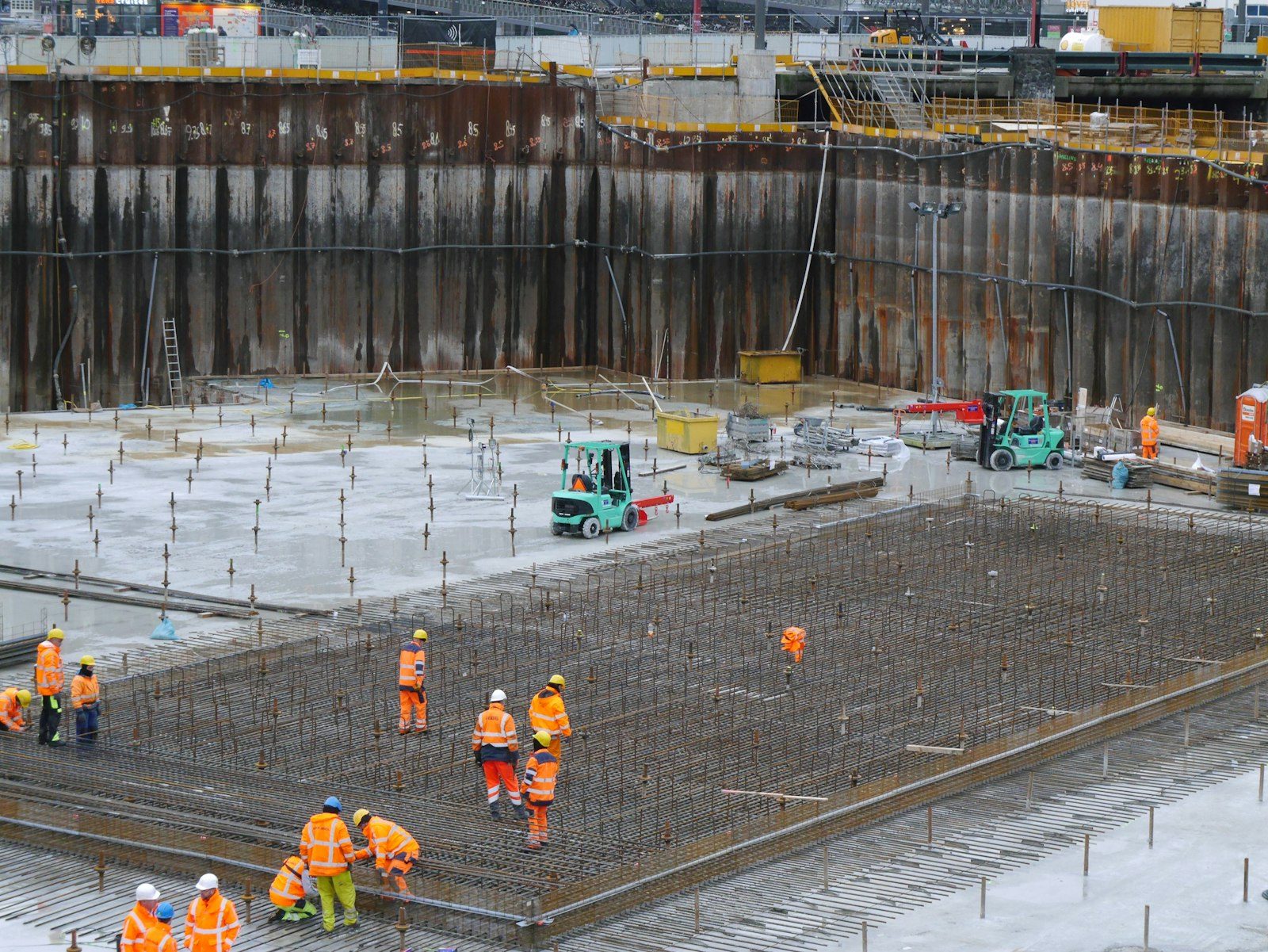
Cement slurry pumped under a dropped slab, raising it back to grade for a fraction of what a tear-out runs.
Value is the whole argument for mudjacking. You already own the concrete. It's the right thickness, it has the right finish, it matches everything around it, and the only thing wrong with it is that it sits an inch and a half lower than it used to. Tearing that out means paying for demolition, disposal, forms, steel, ready-mix, finishing, and a month of waiting. Raising it means paying for material and a few hours of crew time.
The method is old and boring, which is a compliment in this trade. We core a pattern of holes through the sunken panel, pump a heavy sand-and-cement grout into the empty space beneath it, and let pressure do the rest. The slab comes up. We plug the holes. You use it that afternoon. Nothing about it is clever. It just works, on the right slab, for the right reason.
Break a replacement down and you can see where the money goes. A crew and a machine spend a day breaking up the old panel. A truck hauls the pieces off and somebody pays a tipping fee. Forms, recompaction, steel, then ready-mix by the yard with delivery riding on top. Finish it, cure it, stay off it for a week and keep the truck off for four.
A lift skips every line on that list. What you're buying is grout volume and pump time. Grout volume is set by how big the hole under your slab is, which is why a badly sunk panel and a barely sunk panel can be priced closer together than people expect, and why square footage on the surface is a poor guide to what a job costs. Pump time is measured in hours. That's the entire bill.
The catch is that a lift only makes sense when the concrete on top is worth saving. Sound panel with a void beneath it, easy call. Panel that's already crumbling at the edges and cracked in three directions, we'd rather you spend the money once on new concrete than twice on a raised slab that fails anyway.
| Amount of drop | What the lift takes | What that means for the number |
|---|---|---|
| Under half an inch, one panel | A short hole pattern and a small volume of grout | The least expensive work we do. Usually a morning. |
| Half an inch to two inches | More holes, staged pumping, grade rechecked as it rises | Still a same-day job. Grout volume is the main driver. |
| Two to four inches | A real void underneath, so material climbs quickly | The price tracks the hole under the slab, not the slab. |
| More than four inches, or a whole run of panels | We stop and find the cause before quoting anything | Sometimes a lift is right. Sometimes you'd be filling a void that reopens. |
| Dropped and broken into loose pieces | Not a lift at all | Pressure just shifts the fragments. New concrete is the honest answer. |
We'll shoot the grade, tell you what it takes to recover it, and say so plainly if lifting is the wrong move. No charge either way.
Here's the trade-off nobody advertising a lift wants to lead with. Cement slurry is heavy. Once it cures it becomes a solid pad, and that pad is dead load your soil now carries. Where a downspout or a utility trench washed out the fines and left an air pocket, that's a non-issue; the ground around the void has been holding fine for years. Where a slab dropped because the native soil under it is genuinely soft, adding weight is not the cure. We check which situation you have first, and we've talked people out of lifts they arrived ready to buy.
Seasonally, we pump from thaw through late fall. Autumn bookings are the smart ones. Get a panel back to grade before winter and meltwater sheds off it instead of pooling, freezing, and levering the joint wider every night. Frozen ground ends the season, since grout won't cure properly and a frost-locked slab won't rise evenly anyway. A December call typically becomes a March appointment, and we'll tell you how to keep the lip from icing until then.
Around Parker the geography of settlement is predictable. Stonegate and Canterberry Crossing send apron and front-walk calls where utility trenches settled under newer flatwork. Stroh Ranch sends patio panels that have taken roof water in one spot for decades. Different age, same physics.
Still unsure about something?
Call the crew at (303) 569-4046 and we will talk it through.

Get a free, no-obligation estimate from a crew that knows Colorado soil, Colorado weather, and how to finish concrete that lasts.
Accessibility
Adjust the site to fit how you read and browse. Your choices are saved on this device.