
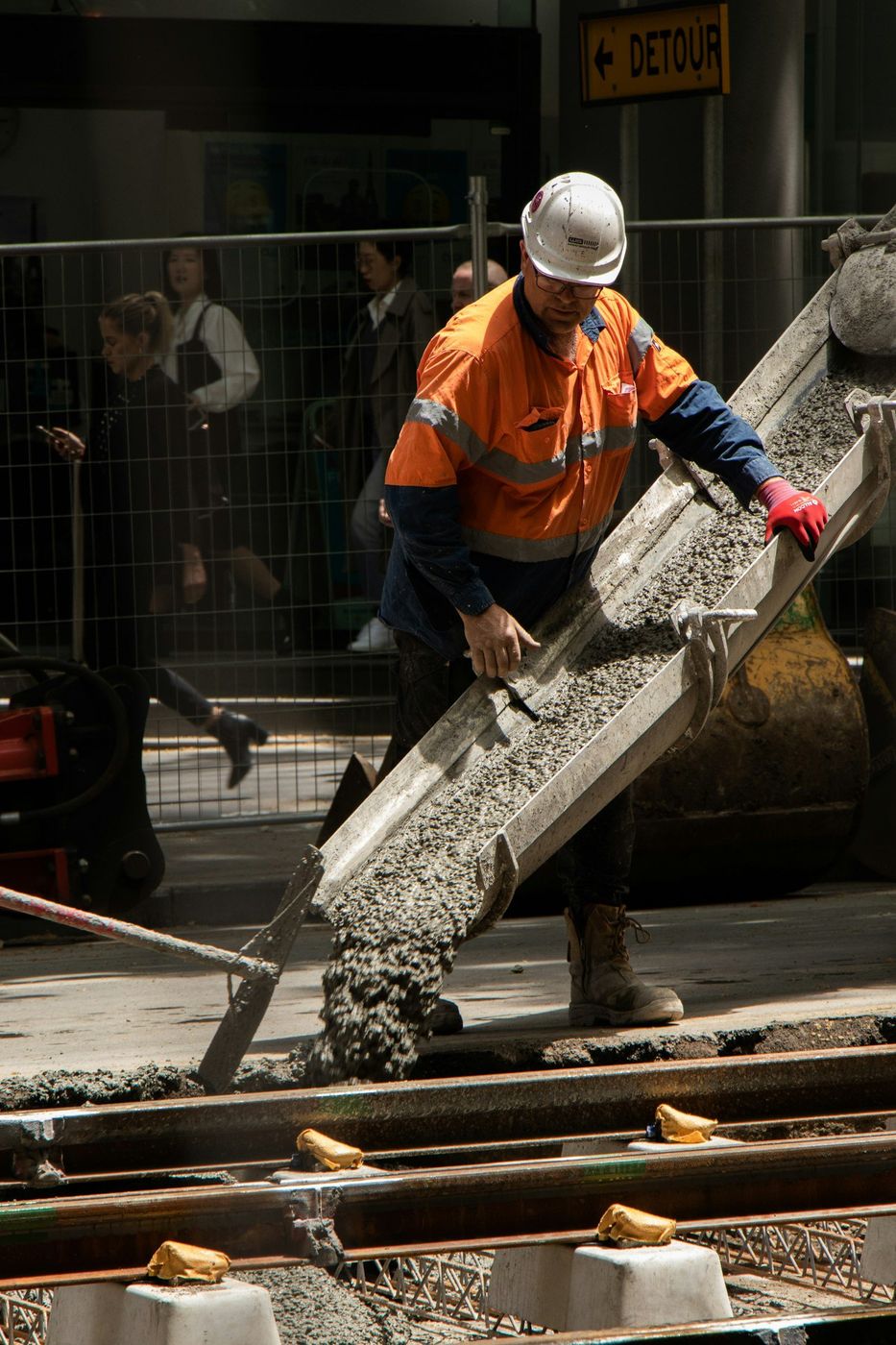
Edging built so a mower wheel can ride right along it and nobody spends Saturday on their knees with a trimmer.
Think about how you'll actually interact with this stuff. Not the day it's poured, when it looks crisp and everybody's happy. Think about a Saturday in July, pushing a mower along the bed line, wondering whether the wheel can ride the curb or you have to swing wide and come back with a trimmer. That one detail decides whether edging saves you time for twenty years or costs you a quarter hour every week.
We build curbing around that question. Profile shape, height above the turf, how tight the radius can get before it looks lumpy, where the joints land. Those are use decisions dressed up as construction decisions, and the crews that treat them as pure construction leave you with something pretty that's annoying to live beside.
Three jobs, mostly. It keeps mulch and rock from migrating into the lawn every hard rain, which on sloped lots happens more than people expect. It gives the mower a defined edge. And it stops turf roots from creeping into a planting bed, the slow invisible chore that eats a weekend every spring.
What it doesn't do is retain soil. A landscape curb is edging, not a wall. When a bed sits a foot higher than the lawn and wants to stay there, that's a retaining problem with a different answer. We say so up front rather than pouring a four-inch curb against two feet of dirt and letting you find out in April.
| Profile | Where it belongs | Living with it week to week |
|---|---|---|
| Slant top, beveled toward the lawn | Bed lines you mow along constantly | The wheel rides right up it. Almost no trimming. |
| Rolled or round top | Curved beds and informal plantings | Forgiving under a mower deck, softer look, sheds water well. |
| Straight face with a square top | Formal beds, straight runs, crisp geometry | Sharp and handsome. You will trim along it. |
| Raised barrier curb | Holding rock back from a walk or driveway edge | Great containment. Mow up to it, then trim the face. |
| Flush mow strip | Between turf and a fence line or a hard surface | The lowest maintenance option there is, and the least visible. |
| Stamped or patterned top | Front beds where the curb is part of the design | Looks the best, needs resealing to stay looking that way. |
Lay it out the way you want the curve to run, snap a photo, and send it over. We'll quote from that.
Extruded curbing comes out of a machine that rides along the trench line, packing a continuous ribbon of stiff, low-slump concrete into the profile you picked. It's fast, it holds a curve beautifully, and for a few hundred feet of bed edging it's the sensible choice. Formed curbing is built the old way with stakes and form stock, and it earns its keep on straight architectural runs, transitions into flatwork, and anywhere the curb has to tie into something structural.
Most of our Castle Pines work is extruded. Newer landscaping in Lagae Ranch and BellaMesa tends toward long sweeping beds that a machine handles better than a person with form boards, and established yards in Castle Pines North usually want a curb worked around mature plantings without tearing the whole bed apart. Either method, the trench underneath matters as much as the concrete on top.
A curb has a small cross section and sits shallow, which makes it far more sensitive to ground movement than a slab. Two water sources drive that. One is snowmelt collecting along a bed edge and freezing there. The other is your irrigation, running three times a week all summer within inches of the concrete. Wet soil that freezes lifts the ribbon, and an unjointed curb breaks wherever it likes.
So we joint tight and study drainage before starting. On hillside properties a curb across a slope traps water on the uphill side unless we break the run or set it to let water pass.
Mid-April through October is the working window, and we usually follow the planting crew so nobody tramples new beds. Curbing is one of the last things to schedule in fall, since it needs a stretch above freezing to cure and the machine can't pack a stiff mix into frozen ground. Keep deicer away from it the first winter, and keep the string trimmer off the top edge of colored work, because that's where sealer wears through first.
Everybody asks about color and pattern. Nobody asks about the mower, and the mower is what visits the curb fifty times a year. Get the profile right and you never think about the thing again. That's the whole point of it.What our crew lead tells homeowners
Still unsure about something?
Call the crew at (303) 569-4046 and we will talk it through.

Get a free, no-obligation estimate from a crew that knows Colorado soil, Colorado weather, and how to finish concrete that lasts.
Accessibility
Adjust the site to fit how you read and browse. Your choices are saved on this device.