
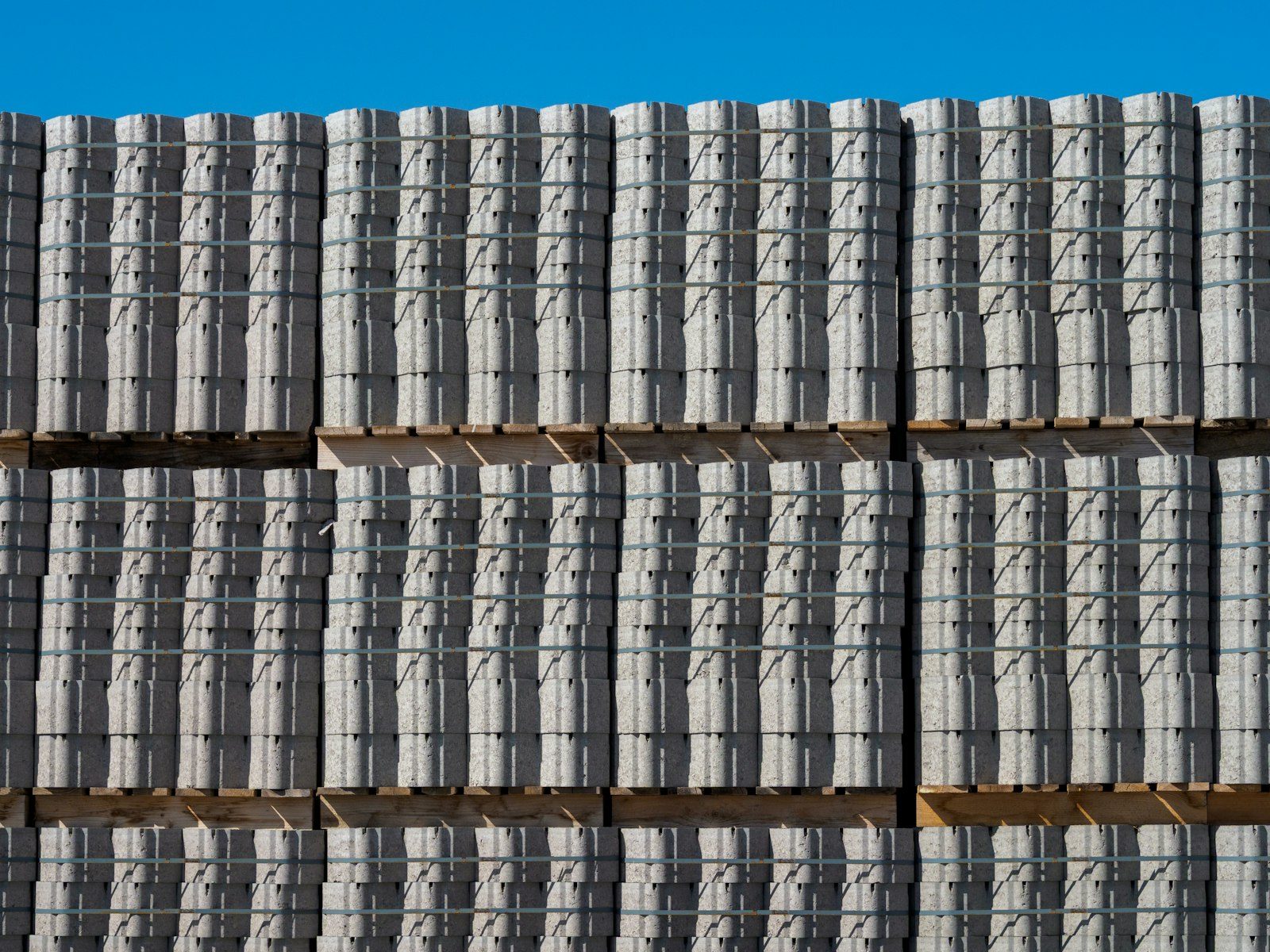
On a hillside lot, the retaining wall is not landscaping. It is structure.
This town got built into the hills instead of over them, and you can read that decision in the walls. Almost every property here holds back dirt somewhere: a terraced side yard, a cut behind the garage, a flat spot carved out for a pool or a sport court, a driveway that had to climb from the street to the house. Take the walls away and half the usable ground in Castle Pines goes with them.
Which makes them worth building right and worth watching as they age. We design and pour retaining walls with a structural engineer on staff, so the height, the footing, the steel, and the drainage all come from calculations rather than from what looked fine on the last job. Some walls need a stamped design. Plenty of contractors will build you one anyway and let you find out later.
Up in The Village at Castle Pines, and along the older stretches of Castle Pines North, walls have been in the ground long enough to tell the truth. Mature landscaping crowds them, irrigation has been soaking the backfill for decades, and the ones built without a real drain behind them are the ones now leaning out at the top. Roots get blamed a lot. Water is usually the culprit; roots just widen the crack once it exists.
The newer ground through Lagae Ranch, Daniels Gate, and BellaMesa has the opposite issue. Those walls are young, but a lot of them were built as a landscape line item to make a lot buildable, sized by rule of thumb, backfilled with whatever came out of the excavation. They look great for five years. Then a wet spring arrives and the bulge shows up, always in the tallest section, always where nothing was draining.
| Wall system | Height range it suits | Where it wins, and where it doesn't |
|---|---|---|
| Poured concrete cantilever | Tall walls carrying real load | Strongest option and the most demanding to build; needs a footing, steel, and forms |
| Poured gravity wall | Low to moderate, with room behind for mass | Simple and durable, but it eats space you may want for planting |
| Segmental block | Low terraces and gentle grade changes | Fast and attractive; height limits arrive quickly without geogrid and engineering |
| Boulder wall | Rustic low banks on wooded lots | Fits the setting here beautifully, but it drains only as well as its base |
| Terraced pair of low walls | Long slopes where one tall wall would need heavy design | Breaks the load into pieces; requires enough horizontal room between benches |
A retaining wall holds back soil. Saturated soil weighs far more and pushes far harder, and once water fills the space behind a wall with nowhere to go, pressure builds with depth until something gives. Almost every failed wall we tear out failed because of that, not because the concrete was weak.
So the back of the wall gets designed as carefully as the front. Free-draining rock against the wall face, wrapped in filter fabric so fines can't plug it. A perforated drain line at the base, pitched to daylight somewhere useful. Weep holes through the stem where the situation calls for them. Waterproofing on the buried face. And at the top, a swale or a grade that sends surface runoff around the wall instead of into the backfill. On these wooded slopes, uphill runoff is the whole design problem.
Send a photo from the end of the wall looking down its length. That angle tells our engineer more than a straight-on shot.
Cracks in the face, spalling, a section that lost its cap: those are repairable if the wall's geometry is still true. Grinding, patching, and adding drainage behind a sound wall buys years cheaply.
Rotation is different. If the top of the wall has moved out relative to the base, the footing or the soil in front of it has given up, and there is no patch for that. Same story for a wall that has developed a horizontal crack across the stem or a visible bow in the middle of a long run. Those get taken down and rebuilt with proper reinforcement and drainage. We'd rather tell you that on day one than sell you a repair we already know is temporary. And on a steep lot, a wall that fails takes the driveway or the patio above it along for the ride.
Still unsure about something?
Call the crew at (303) 569-4046 and we will talk it through.

Get a free, no-obligation estimate from a crew that knows Colorado soil, Colorado weather, and how to finish concrete that lasts.
Accessibility
Adjust the site to fit how you read and browse. Your choices are saved on this device.