
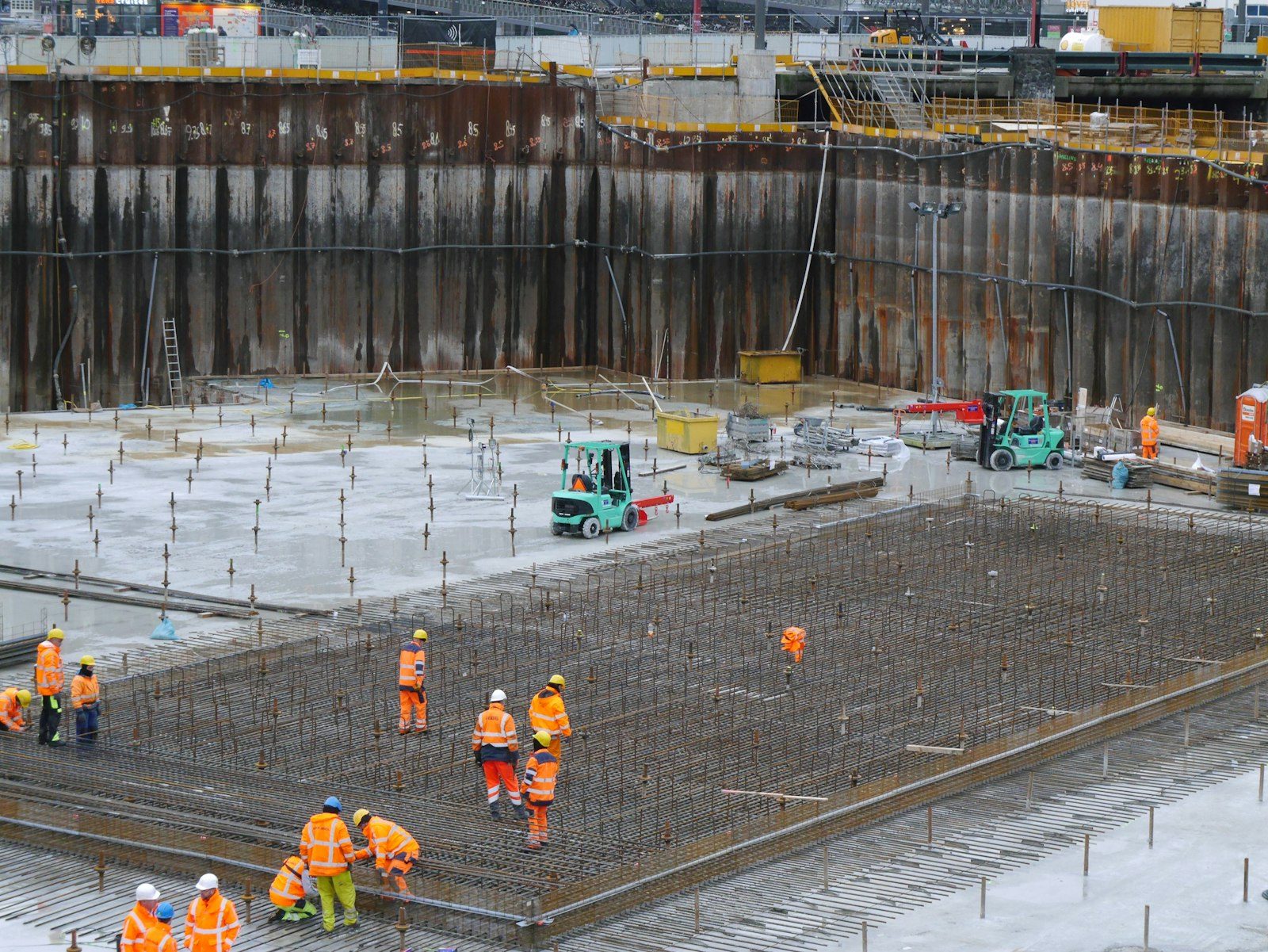
Curbing is a small ribbon of concrete riding on whatever you put beneath it. That trench is the whole job.
Walk a neighborhood and you can date the curbing by how straight it still runs. Fresh work is crisp. Three years on, plenty of it has picked up a slow wave, dropped an inch where a bed stays wet, and split every few feet into pieces that no longer line up. People blame the concrete. It's almost never the concrete.
Curbing is a narrow ribbon with enormous surface for how little material it holds, so whatever the ground does, the curb does with it. Around Montecito and Fairways we see beds irrigated daily all summer, and that steady water works on the soil directly beneath the edging. So this is mostly about the trench. A curb built on prepared ground stays put. A curb laid on loose dirt doesn't.
Most curbing goes in the fast way. Somebody runs a trencher, throws the spoil aside, and drives the machine along the line that same afternoon. Looks perfect on day one. Underneath sits loosened soil nobody packed and nothing that drains.
Our version isn't complicated. Strip sod and topsoil, get to firm subgrade, place a few inches of compacted aggregate the whole way. Organic material has to be gone, because roots and leaf litter break down over a few seasons and leave voids right where the curb bears.
The other half is moisture. Beds get watered on a timer and that water goes somewhere. Soil staying damp under one stretch behaves nothing like dry soil twenty feet away, and that difference puts the wave in a run. Aggregate gives water a path sideways instead of pinning it against concrete.
Here's what people miss: curbing is a small dam. Run it across a slope and you've built a wall against sheet flow, and on a lot with any grade the water ponds behind that wall and soaks the bed until something gives. Usually the curb tips outward. Sometimes the mulch floats into the lawn during a hard storm.
So grade comes before pattern. Where a run crosses the fall of the yard we leave gaps at low points, drop a section slightly as a spillway, or sleeve a pipe underneath to move water through rather than over. Flat beds need none of that. Sloped ones need all of it.
Send a photo taken from uphill looking down the bed line. Grade is the first thing we check.
| Method | Where it shines | What to know |
|---|---|---|
| Machine-extruded curb | Long runs, flowing bed lines, consistent profile at speed | The machine still needs prepared ground under it. Speed is not a substitute for base. |
| Hand-formed curb | Tight radii, steps in grade, transitions into existing hardscape | Slower and more labor, but it goes places a machine physically cannot |
| Poured mow strip | Bed edges you want to run a mower wheel along | Flat and wide rather than raised, so it won't hold mulch back the way a curb does |
| Roll edging from the store | Temporary layouts and very small budgets | It lifts every spring, it never stays straight, and you will redo it |
Curved bed lines are where extruded curbing earns its keep. A machine holds a smooth arc that hand forming struggles to match, and a good operator gets down to a fairly tight radius before the profile starts to distort. Past that point we form by hand instead of forcing the machine and living with a lumpy inside edge.
Joints carry unusual weight on a curb. A four-inch ribbon shrinks as it cures and it will crack; the only question is whether cracks land where we chose or wherever they please. So control joints get tooled every three to four feet, tighter through curves, and the run reads as clean segments rather than a broken line.
Season is simple. April through October, and we'd rather install after the irrigation is running so we know where water goes. Small sections cure fast, but small mass also means cold nights hurt a curb worse than they hurt a driveway. We stop once overnight lows settle below freezing.
Still unsure about something?
Call the crew at (303) 569-4046 and we will talk it through.

Get a free, no-obligation estimate from a crew that knows Colorado soil, Colorado weather, and how to finish concrete that lasts.
Accessibility
Adjust the site to fit how you read and browse. Your choices are saved on this device.