
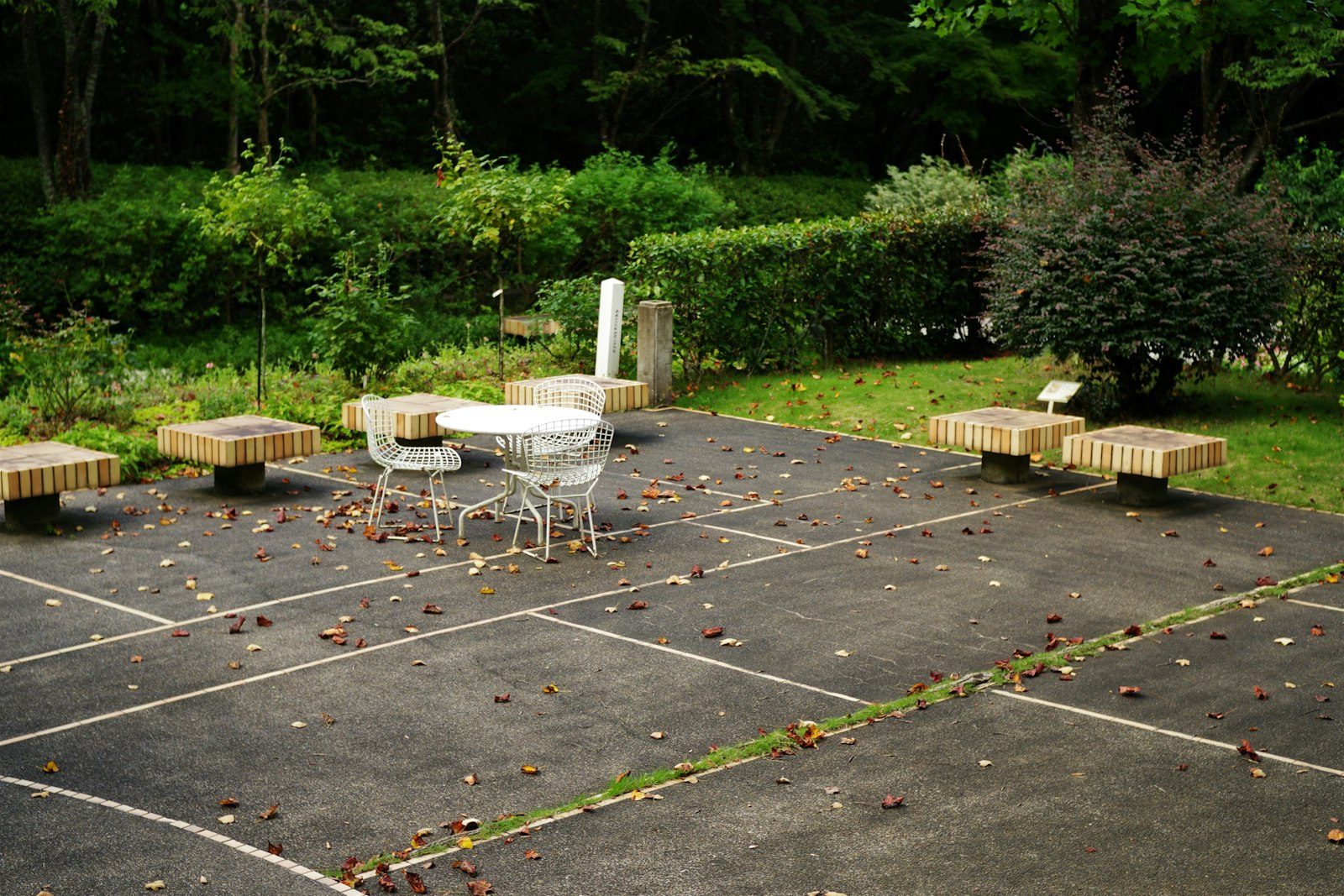
Textured, drained, and jointed for bare feet, chlorine, and the freeze that arrives every October.
Pour day on a pool deck starts before sunrise, and it starts with a tape measure rather than a truck. We're checking that every form is holding the fall we laid out, that the drain grates sit a hair below finished grade instead of a hair above, and that the expansion material at the coping runs continuous with no gaps where somebody stepped on it yesterday.
A deck is the fussiest flatwork on a residential property. It has to shed water in a specific direction, stay grippy when it's wet, stay cool enough to walk on at 5,817 feet in July, take chlorine and salt splash without etching, and move independently from a concrete shell that isn't going anywhere. Get the sequence right on pour day and it does all of that quietly for twenty years.
First truck is scheduled early on purpose. Summer heat pulls water out of the mix and shortens the finishing window, and an afternoon storm building over the foothills can end a pour that started late. So we place the far side first, working back toward our access point, screeding to the grade stakes and pulling the surface toward the drains as we go.
Bull float behind the screed. Edge the coping line and the outside perimeter. Then we wait. Concrete tells you when it's ready for texture, and reading that window is the whole job on a deck, because we're chasing a specific amount of grip. Too early and the broom drags a mushy surface that dusts later. Too late and the texture is a scratch instead of a profile. Joints get sawed the same day, laid out to line up with the coping and the corners of the shell rather than wherever a chalk line happened to land.
| Finish | Traction when wet | The trade-off |
|---|---|---|
| Heavy broom, pulled across the traffic direction | Best of the standard finishes | Rougher on knees and towels. Some people love it, some don't. |
| Light broom | Good, and the most common choice | Needs resealing on schedule or the texture wears smooth at the steps. |
| Exposed aggregate | Very good, stays grippy for decades | Stone edges are hard on bare feet. Best away from the waterline. |
| Textured overlay with a knockdown profile | Very good, and it runs cooler underfoot | Thinner material. Bond prep has to be perfect or it delaminates. |
| Stamped with a stone pattern | Depends entirely on the sealer used | Use a grit-additive sealer or it turns into an ice rink wet. |
| Smooth steel trowel | Poor. We won't do it on a deck | Looks great in photos, sends people to urgent care. |
Pool chemistry is hard on cement paste. Splash-out carries chlorine or salt onto the deck, it evaporates in the dry Colorado air, and the residue concentrates right at the coping band where it does the most damage. Air-entrained mix and a good penetrating sealer are what stand between that band and a spalled edge.
Then there's the sun. UV at this altitude fades color hardeners and breaks down cheap topical sealers faster than the label suggests, so we spec penetrating products on decks and plan on a reseal every two to three years. Light colors matter too, and not for looks. A pale deck is meaningfully cooler on bare feet in July than a dark one.
We'll come look at the coping, the drainage, and the grade before you commit to a finish.
The joint at the coping is the one people skip and the one that costs them. Deck concrete moves. The shell doesn't. Leave them tied together and by the third spring you've got a crack tracing the pool edge all the way around.Straight from the crew
Late May through September is the natural window, and if you're building a new pool the deck usually follows the shell and the plumbing inspection by a few weeks. September is our pick. Days are still warm enough for a clean finish, nights cool the slab down gently, and the concrete gets a full month of curing before the first hard freeze arrives.
Existing pools around Heritage Hills, the Fairways, and Carriage Club often get deck replacements in the shoulder seasons, which works well because nobody's swimming and the equipment can stage in the yard for a week without ruining anybody's summer. In RidgeGate and Montecito, where the builds are newer, the deck is more often part of an original pool schedule. Winter pours happen with heated water and blankets, but a deck is a big flat surface with a lot of exposure, and the finish quality you get in January is not the finish quality you get in September. If it can wait, let it.
Still unsure about something?
Call the crew at (303) 569-4046 and we will talk it through.
Get a free, no-obligation estimate from a crew that knows Colorado soil, Colorado weather, and how to finish concrete that lasts.
Accessibility
Adjust the site to fit how you read and browse. Your choices are saved on this device.