
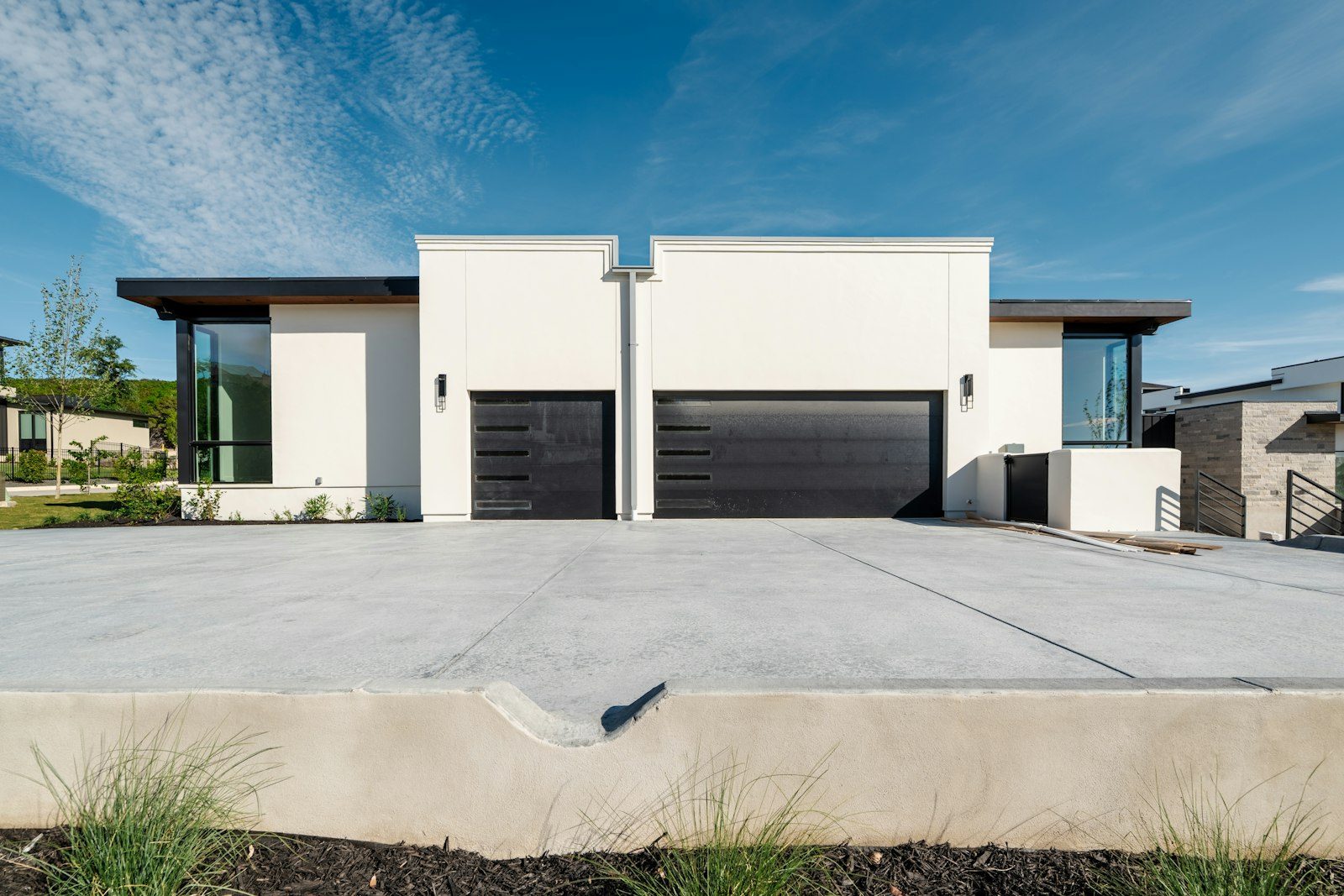
New driveways built for meltwater mornings, clay flats, and the rocky ground up by Green Mountain.
Early March in Lakewood goes like this: six inches of snow overnight, full sun by nine, and every driveway on the block standing in meltwater by lunch. That water soaks into whatever cracks the slab has picked up, and when the temperature falls back through the twenties that night, it freezes and pries them wider. Repeat forty times a winter. That's the exam your driveway takes every year, and it's the exam we build for.
We pour new driveways all over town, from the mid-century blocks near Belmar and Applewood to the newer builds up in Solterra. Same city, very different ground. The flats ride on clay that puffs up wet and pulls back dry. The Green Mountain side trades clay for slope and rock. Our mix barely changes between them. The base prep changes a lot, and base prep is where a driveway is won or lost.
Freeze-thaw gets the blame for most driveway failure here, but it has accomplices. At 5,518 feet the UV is strong enough to cook a cheap sealer in a couple of summers. Hail shows up most Julys and finds any surface that was finished soft. Deicer tracked in off the road, magnesium chloride especially, eats at concrete that wasn't poured with entrained air. And underneath it all, on the east side of town anyway, clay keeps flexing the slab from below like a slow tide.
So we don't experiment. Every exterior pour is 4,000 PSI mix with air entrainment. Steel rides chairs at mid-depth, right where bending stress lives. Joints get cut before the crew goes home, while the concrete is still deciding where to crack. None of that is exotic. It's just the stuff that gets skipped when a bid is suspiciously low.
| Season | What we're watching | The verdict |
|---|---|---|
| Spring | Overnight lows and wet ground after snowmelt | Good once nights hold above freezing. The clay needs to dry out before we compact base on the flats. |
| Summer | Afternoon storms building over the foothills | Prime time. We pour early, finish by early afternoon, and keep plastic sheeting on the truck for surprise rain. |
| Fall | The first hard freeze | Our favorite window. Mild afternoons, crisp nights, and the slab gains strength before deep cold sets in. |
| Winter | Frozen ground and short daylight | Doable with warmed batch water, chloride-free accelerators, and blanket curing. Never over frost; if the base is frozen, we reschedule. |
Dial (303) 569-4046 and we'll walk the site with you, no charge, and price the whole job line by line.
The driveways we tear out in Applewood and around Belmar are often the originals, poured back when the houses were, and they owe nobody an apology after all those decades. But they're done. Thin slabs, no steel, base that was mostly hope. Over in Bear Creek the stock is younger and the calls lean toward widening, third-car pads, and fixing settled panels. Up on Green Mountain and out at Solterra, slope is the story; a driveway with any real pitch needs drainage thought through before the first form stake goes in, or every storm sends water somewhere you'll regret.
That variety is the fun of working in this town. Two jobs in the same week can need completely different excavation, different base depth, different joint layout. What they get either way is the same crew and the same standard.
North-facing drives near Green Mountain hold snowpack for weeks after a storm while the south-facing one across the street is bone dry. Same concrete, twice the freeze-thaw cycles. When we pour on a north exposure we talk drainage and sealer with the homeowner before we talk finish.Our crew lead, after the walkthrough
Still unsure about something?
Call the crew at (303) 569-4046 and we will talk it through.

Get a free, no-obligation estimate from a crew that knows Colorado soil, Colorado weather, and how to finish concrete that lasts.
Accessibility
Adjust the site to fit how you read and browse. Your choices are saved on this device.