
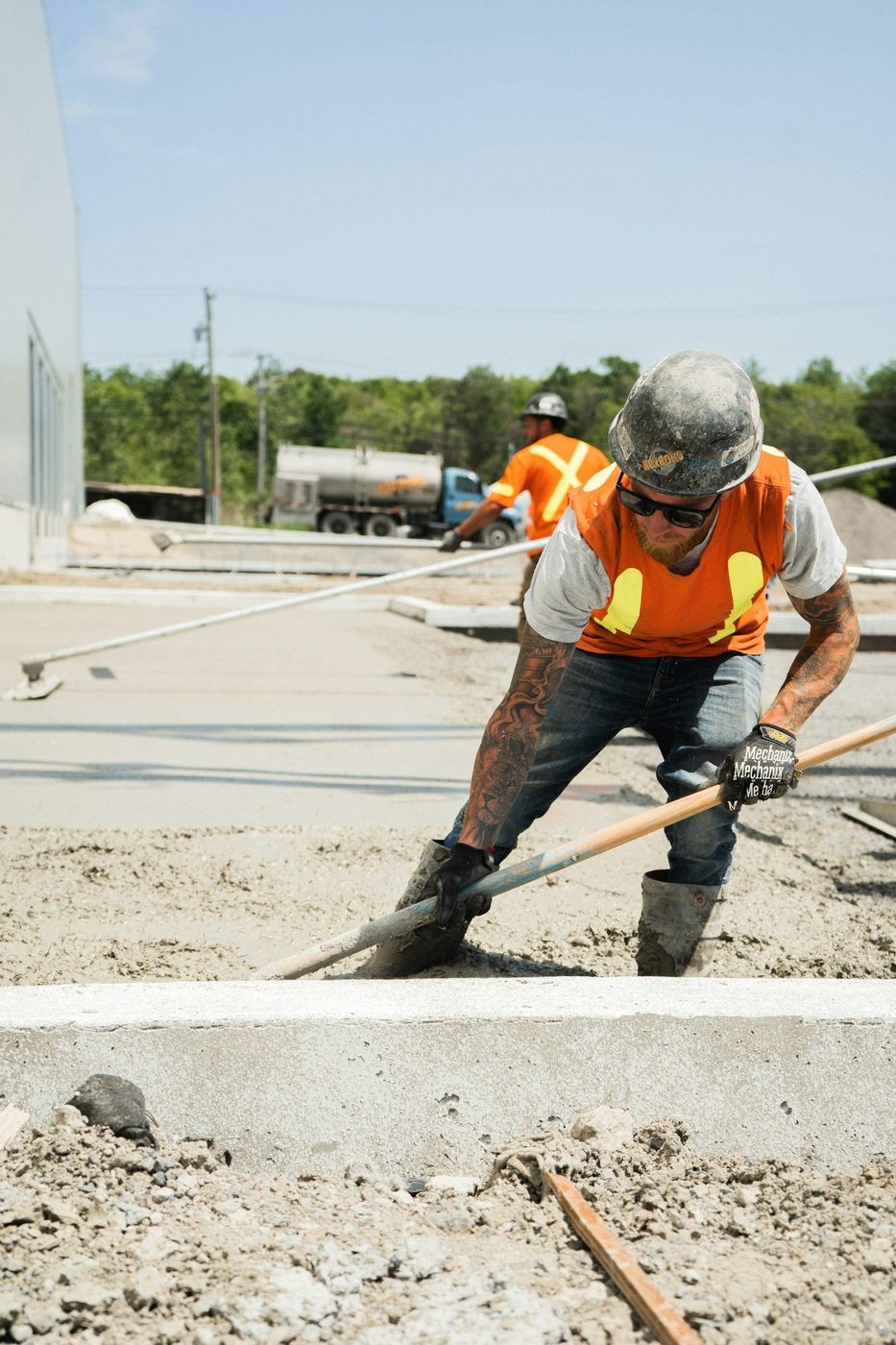
Backyard concrete sized for real furniture, pitched away from the house, and finished the way you'll actually live on it.
Patio pour day starts before your coffee does. The crew walks the forms at first light, pulls a string line one more time, and checks that the steel is sitting up on chairs where it belongs. The ready-mix truck backs in around seven. From the first chute of concrete to the last pass of the trowel is maybe four hours of constant motion, and every minute of it was decided days earlier: the mix design, the slope, the joint layout, the finish. Good patios are planned. The pour just proves it.
We build them all over Lakewood, from tight mid-century backyards near Belmar to big view lots in Solterra where the patio is the whole point of the house. Different yards, same physics: clay or rock below, ferocious sun above, and a thunderstorm most July afternoons. Design for those three and a patio lasts decades.
The most common patio regret we hear isn't about finish or color. It's size. A dining table for six needs about twelve feet of clear depth to pull chairs out without stepping into the grass. Add a grill zone, a couple of loungers, maybe a fire bowl, and the cozy little pad from the builder starts feeling like a postage stamp fast. Concrete is cheapest per square foot while the truck is already there. Go bigger on day one.
Then think about the sun, because at this elevation it's a design constraint, not a nice-to-have. A south or west exposure with no cover is brutal from two o'clock on in July. We orient seating areas to catch morning light, plan shade structures where afternoon use matters, and up along Green Mountain we've seen how terrain changes the light too; the west side of town loses direct sun earlier than the flats. Plan for the hour you'll actually sit outside.
That's enough to start. Call (303) 569-4046 and we'll turn it into a drawn layout and a free line-item bid.
| Finish | The look and feel | Worth knowing |
|---|---|---|
| Broom | Clean, classic, grippy underfoot when wet | The workhorse. Lowest cost, easiest to maintain, never out of style. |
| Exposed aggregate | River-stone texture with real depth | Great traction and hides dirt well. Barefoot comfort varies; feel a sample first. |
| Stamped | Slate, flagstone, or wood-plank patterns in colored concrete | The showpiece. Needs resealing every 2 to 3 years to hold its color at this altitude. |
| Smooth troweled with stain | Modern, almost indoor look | Beautiful under a covered patio; too slick out in the open where snow melts and refreezes. |
Every patio we pour tips away from the house. It sounds obvious. It's skipped constantly, and the price for skipping it is water parked against your foundation every time a storm dumps an inch in twenty minutes, which is a normal Tuesday here in July. On the clay side of town that water swells the soil against the basement wall; on sloped Green Mountain and Bear Creek lots we're often blending patio drainage into the larger grading story of the yard. Get the water leaving, and keep it leaving.
As for timing: April through October is patio season, and there's a case for pouring in spring so the slab is cured and furnished by the first barbecue. Fall pours are lovely too, with cool nights and no storm dodging. Winter installs happen more than people think, using heated mix water and insulated blankets between fronts; frozen ground is the only hard no. If you want to eat outside in June, though, call in March. The calendar fills.
Still unsure about something?
Call the crew at (303) 569-4046 and we will talk it through.

Get a free, no-obligation estimate from a crew that knows Colorado soil, Colorado weather, and how to finish concrete that lasts.
Accessibility
Adjust the site to fit how you read and browse. Your choices are saved on this device.