
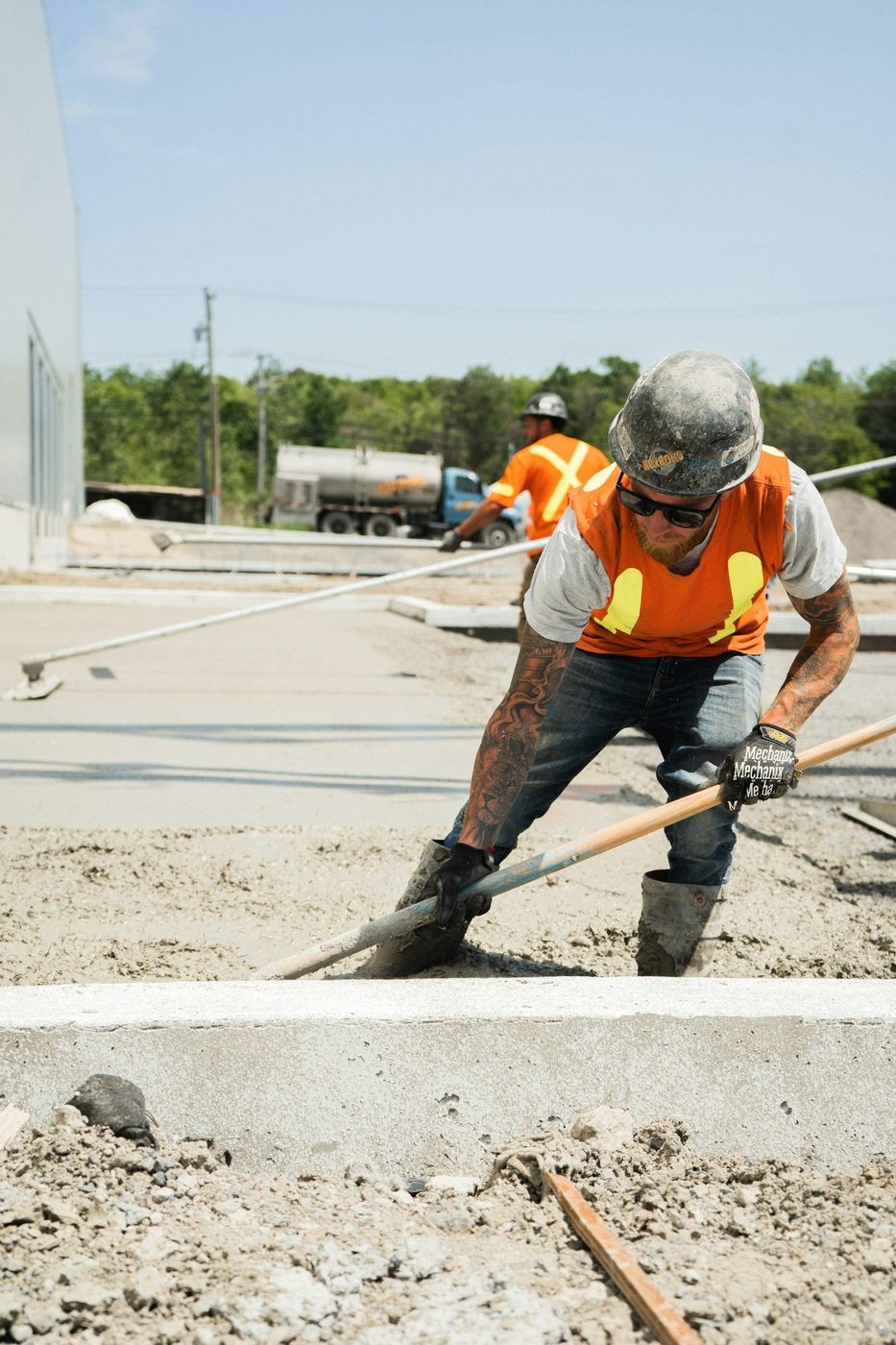
A shell is only as good as the ground it bears on and the water you keep away from it.
Everyone talks about the shell. Tile, coping, plaster color, the shape of the sun ledge. Almost nobody asks the question that decides whether any of it lasts: what is this thing sitting in, and where does the water in that ground go?
A concrete pool is a huge rigid vessel buried in a hole cut into a hillside. On the wooded, sloped lots common through Lagae Ranch and up around The Village at Castle Pines, that hole is rarely uniform. One wall bears on undisturbed native material and the opposite wall bears on ground that was moved when the house pad was built. Add subsurface water tracking downhill and you have the two forces that break pool shells. So we start below the shell and work upward, with our in-house structural engineer involved from the first site visit rather than at the end as a signature.
Excavation tells us most of what we need. We look at what the bucket brings up wall by wall, because a pool that spans two different bearing conditions will crack along the line between them if nobody addresses it. Where the material is soft or was placed as fill, we over-excavate and rebuild with compacted structural fill until the bearing is consistent all the way around.
Deep end matters most. That's where the shell is thickest, the water column heaviest, and the load concentrated. It's also where the hole is most likely to reach into ground with different behavior than the shallow end. We shape the subgrade in steps and transitions rather than abrupt jumps, so the shell has no single line to hinge on.
Then the drainage. A hydrostatic relief valve in the floor is standard practice and cheap insurance. Beyond that, on a lot where water runs downhill toward the excavation, we install a gravel-wrapped subdrain around the shell and give it somewhere to go by gravity. Water that can't build pressure behind a wall can't push on it.
Have us out before the design is final. What the ground can carry should shape the pool, not the reverse.
| Shotcrete | Cast in place | |
|---|---|---|
| How it goes in | Pneumatically shot against the earth and the steel cage, then carved | Placed into two-sided forms built inside the excavation |
| Shapes it suits | Free-form curves, beach entries, benches, ledges, vanishing edges | Rectangles and simple geometry with straight walls |
| Excavation role | The dug hole is the back form, so the soil face has to be cut clean and true | Forms carry the concrete, so the excavation is looser and gets backfilled after |
| Backfill exposure | Minimal, since the shell bears directly against undisturbed ground | More backfill around the walls, meaning more compaction to get right |
| Where it goes wrong | Rebound trapped in a corner or a nozzle angle that leaves a void behind steel | Poor consolidation in a tall thin wall, or backfill placed too early |
| Our default here | Most residential shells on these hillside lots | Occasional rectangular pools and some commercial vessels |
Excavation and shooting run from spring through fall, and the smart move is to break ground early in the season. A pool is not one pour; it's a sequence of trades, and every inspection and weather day stacks up. Start in May and you swim that summer. Start in July and you're plastering in October with your fingers crossed.
Cold weather doesn't end the work, it just narrows it. Shotcrete can be placed in the cold with heated material and protection, and the curing water has to be managed carefully so it doesn't freeze on the shell overnight. Frozen subgrade is where we stop, same as on any pour. Summer brings the opposite problem: hot dry air at this elevation pulls moisture out of fresh shotcrete fast, so we water cure it on a schedule for a week or two and we don't skip days.
Rain has one specific danger on a pool job. A soaking storm on an open excavation can slough a wall or soften the subgrade you just approved. We tarp, we cut diversion above the hole, and we'd rather lose a day than shoot against ground that turned to mud overnight.
Still unsure about something?
Call the crew at (303) 569-4046 and we will talk it through.

Get a free, no-obligation estimate from a crew that knows Colorado soil, Colorado weather, and how to finish concrete that lasts.
Accessibility
Adjust the site to fit how you read and browse. Your choices are saved on this device.