A level, lasting base for sheds, studios, and outbuildings.
A shed is only as solid as what it sits on. Set a storage building, studio, or workshop straight on bare dirt or a handful of pavers, and you are starting a slow failure. The ground moves, the floor follows, and within a few seasons the doors stop closing square, the framing racks, and the bottom plate sits in damp soil long enough to rot. A concrete pad puts a stop to all of that. It gives your outbuilding one flat, dry, permanent surface that does not shift when the weather turns.
That matters more on the Front Range than most people expect. The expansive clay under a lot of this region swells when it gets wet and shrinks when it dries, and the freeze-thaw cycle works on anything sitting loose at grade. We size and reinforce each pad to the actual structure going on it, from a small garden shed to a backyard workshop, and we prep the base so the slab stays put. Done right, the pad outlasts the shed sitting on it.
A garden shed and a finished backyard studio do not need the same slab, so we do not pour them the same way. The size of the building, the weight it will hold, and how you plan to use it all drive the thickness of the concrete and the reinforcement inside it. A light storage shed gets a slab sized for its footprint and contents. A workshop loaded with benches, tooling, and shelving gets more thickness and more steel, because concentrated weight is what cracks an undersized pour. We set the pad a little larger than the building footprint where it makes sense, so the walls land on solid concrete instead of right at a vulnerable edge, and so you have a clean margin to work around the structure.
The slab is only half the job. What goes under it decides whether the pad holds its line or starts to tilt. We strip the topsoil and organic material, then build and compact a base that gives the concrete uniform support instead of soft spots that let one corner drop. On expansive clay, even support is what keeps movement from concentrating in one place. Grading is part of the same work. We pitch the site so water runs away from the pad and away from the building, not toward it, because standing water at the edge feeds both clay swell and the freeze-thaw that scales unprotected concrete. A shed pad that drains right stays drier inside, and a dry floor is what keeps your stored gear and your framing in good shape.
This is the honest worry, and it deserves a straight answer. No slab on expansive clay is guaranteed never to move, and anyone who tells you otherwise is selling. What we can do is build the pad so it resists movement and controls where any cracking shows up. That means a properly compacted base for even support, reinforcement to hold the slab together, and control joints cut so the concrete cracks along a planned line instead of wandering across the field. We use air-entrained mixes built for the freeze-thaw here and let the slab cure properly, walk-on in roughly 24 to 48 hours and full strength around 28 days. Skip the base or the joints and you get a heaved, spider-cracked pad. Do it right and a shed pad will sit flat and solid for the long haul.
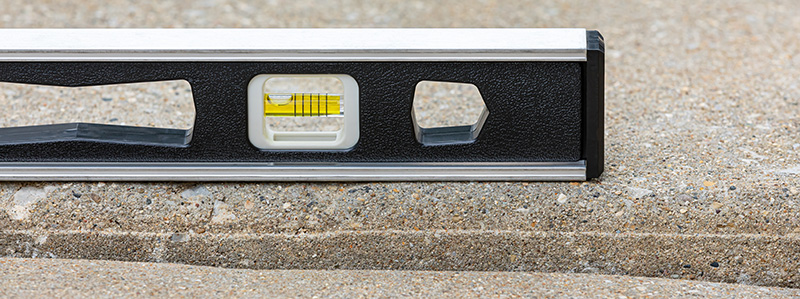
A shed that is not fastened down is a shed waiting on the next strong Colorado wind. We form the pad with clean, square edges and plan anchor points so your building bolts down to solid concrete and stays where you put it. The finish gets matched to how the space will be used. A broom finish gives you grip underfoot for a storage shed or greenhouse, while a smoother trowel suits a finished studio floor you want to keep clean. If the pad will be coated later, we finish it to take that coating. Where it makes sense to protect the surface from moisture and salt, sealing is on the table too. The point is a base that fits the building and holds up to real use.
From homes to commercial sites across the Front Range, here is where shed & outbuilding pads earns its place.
A flat, dry pad keeps a storage shed off the dirt so the floor and framing do not rot from below.
A finished studio or office needs a level, stable slab that holds its shape under regular daily use.
A workshop pad is sized and reinforced for the weight of benches, tooling, and stored material.
A poured base gives a greenhouse a clean, drainable floor and a solid edge to anchor the frame to.
Any outbuilding you want to keep square and dry for years starts with a properly prepped concrete pad.
Small finished outbuildings get a level slab and anchor-ready edges so they sit true and stay put.
Concrete behaves differently at altitude. Our expansive clay soils swell with moisture and shrink when they dry, and the freeze and thaw cycle works on any surface that takes on water. Every shed & outbuilding pads project we pour accounts for both, from base preparation and drainage to air-entrained mixes, proper reinforcement, and control joints cut on time. That is how the work holds its shape and finish through Colorado winters instead of failing by spring.
You also get a written estimate before anything starts, a structural engineer on staff for the jobs that need one, and a crew that pulls and manages permits when the project calls for them. Licensed, bonded, and insured, with finishes that range from a clean broom texture to stamped, colored, and sealed.
A flatwork quote comes down to a few things working together, and the cheapest bid almost always skips one of them. Here is what actually shapes a Shed Pads project.
Keeping water out of the surface is everything here. A reseal every few years, snow cleared before it melts and refreezes, and a quick rinse of de-icing salt off the slab will add years to your shed & outbuilding pads. Avoid rock salt and harsh ice melt, which accelerate surface scaling at altitude. And whatever the project, the same rule applies across the Front Range: keep water from sitting on or soaking into the surface, and the concrete will reward you with decades of service.
You always know what is happening and what it costs before we mix a single yard. Here is the path from first call to final walkthrough.
We visit the site, measure, check drainage and soil, and hand you a clear written quote. No charge, no pressure.
We set the grade, thickness, reinforcement, and finish. Structural work gets engineered and permitted.
Forms, rebar, and a clean pour. We screed, float, and finish to the texture you picked, then cut control joints.
You can walk it in 24 to 48 hours. We walk the job with you and explain how to care for it through the first winter.
Still unsure about something?
Call the crew at (303) 569-4046 and we will talk it through.

Get a free, no-obligation estimate from a crew that knows Colorado soil, Colorado weather, and how to finish concrete that lasts.
Accessibility
Adjust the site to fit how you read and browse. Your choices are saved on this device.