
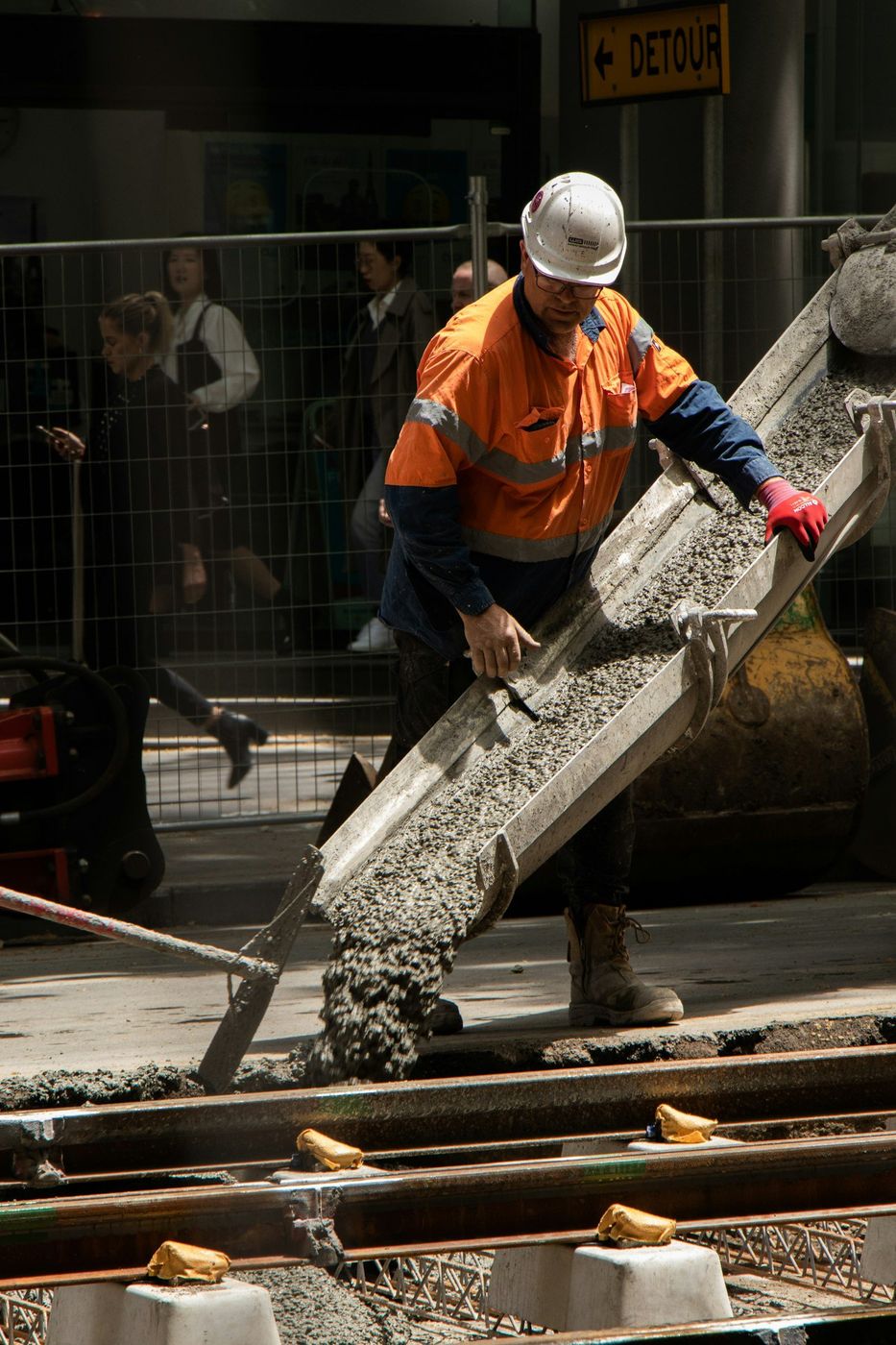
A flat, anchored, well-drained base so the building you bought sits square ten years from now.
Castle Rock lots vary more than most towns its size, and the shed pads follow the lots. Out in Castlewood Ranch and the deeper parcels off Crystal Valley we're pouring bases for twelve by twenty barns holding a tractor and a snowblower. Over in The Meadows, where the yards are tidy and the side setbacks are tight, it's usually an eight by ten storage building tucked behind the fence line.
Different buildings, same failure when it's done wrong. The shed goes on gravel or blocks or straight on the dirt, one corner takes on water, that corner drops half an inch, and two winters later the doors won't latch and the floor has a bounce in it. A poured pad costs more on day one. It's also the only version where the building is still square when you sell the house.
On the bigger parcels the question is load. A pad parking a zero-turn mower, a snowblower, and a few hundred pounds of feed is a different animal than one holding hand tools, and if anything heavy will roll through the doorway we build the threshold for it. Access is easier out there, since a truck can usually chute directly.
Tighter neighborhoods flip both of those. Loads are light, but getting concrete to the back corner of a Meadows or Metzler Ranch yard means measuring the gate, planning a wheelbarrow route, or parking a pump in the street. That gets settled at the estimate, not on pour day. Worth a call to your HOA too, since an outbuilding is the kind of improvement most associations want to see on paper first.
| Building | Pad we pour | Detailing |
|---|---|---|
| 8 by 10 storage shed | Four inches, mesh, matched to the footprint | Simple perimeter, drilled anchors after cure |
| 10 by 12 with a mower inside | Four inches, mesh, plus a few inches of apron at the door | Thickened lip where the wheels cross the edge |
| 12 by 20 barn style | Four to five inches, number four bar on a grid | Thickened edge under bearing walls, wet-set anchor bolts |
| Pad extended past the walls | Same thickness, footprint plus twelve to eighteen inches | Gives you a dry place to stand and keeps splash off the siding |
| Unheated building on a frost-prone spot | Slab over deepened base, or footings if the structure requires | Depth follows the building manufacturer and the soil, not a rule of thumb |
Send us the model and the door side. We'll size the pad, check the drainage line, and give you a written number for free.
Unheated outbuildings get treated differently than a garage, for one simple reason. No warmth under the slab means the ground below stays cold all winter, and any water sitting in the base gets every chance to freeze and swell. Our answer is drainage, not depth for its own sake. Clean angular base that moves water, a pad set slightly high against the surrounding grade, and no low spot where a downspout happens to dump.
Anchoring is the part people forget until a March windstorm reminds them. Wind up here gets under a light building and lifts, and a shed that isn't tied down can walk across the yard. If the kit ships with a bolt pattern, those anchors go into wet concrete where they belong. If the building shows up later, we drill and set mechanical anchors once the slab has strength.
The pads we get called back to fix are almost always the ones sized exactly to the walls. Rain runs off the roof, hits the dirt an inch from the edge, splashes back onto the siding, and the bottom foot of the building rots out. Give us another foot of concrete all the way around and that problem disappears.What the crew sees on site
These are small jobs, which makes them the easiest ones to fit into a schedule. From late April through October we can usually slot a pad between larger pours, so turnaround is often quicker than people expect.
Fall carries an advantage worth mentioning. Get the pad down in September, set the building in October, and the mower and the patio furniture have a home before the first real snow. Spring works too, though everybody wants those same weeks and lead times stretch. A cold-weather pad can be done with warmed water and blankets over the slab, but for something this size we'll say it plainly: unless you need the storage now, waiting on the ground to thaw is cheaper and the concrete is no better either way.
Still unsure about something?
Call the crew at (303) 569-4046 and we will talk it through.
Get a free, no-obligation estimate from a crew that knows Colorado soil, Colorado weather, and how to finish concrete that lasts.
Accessibility
Adjust the site to fit how you read and browse. Your choices are saved on this device.