
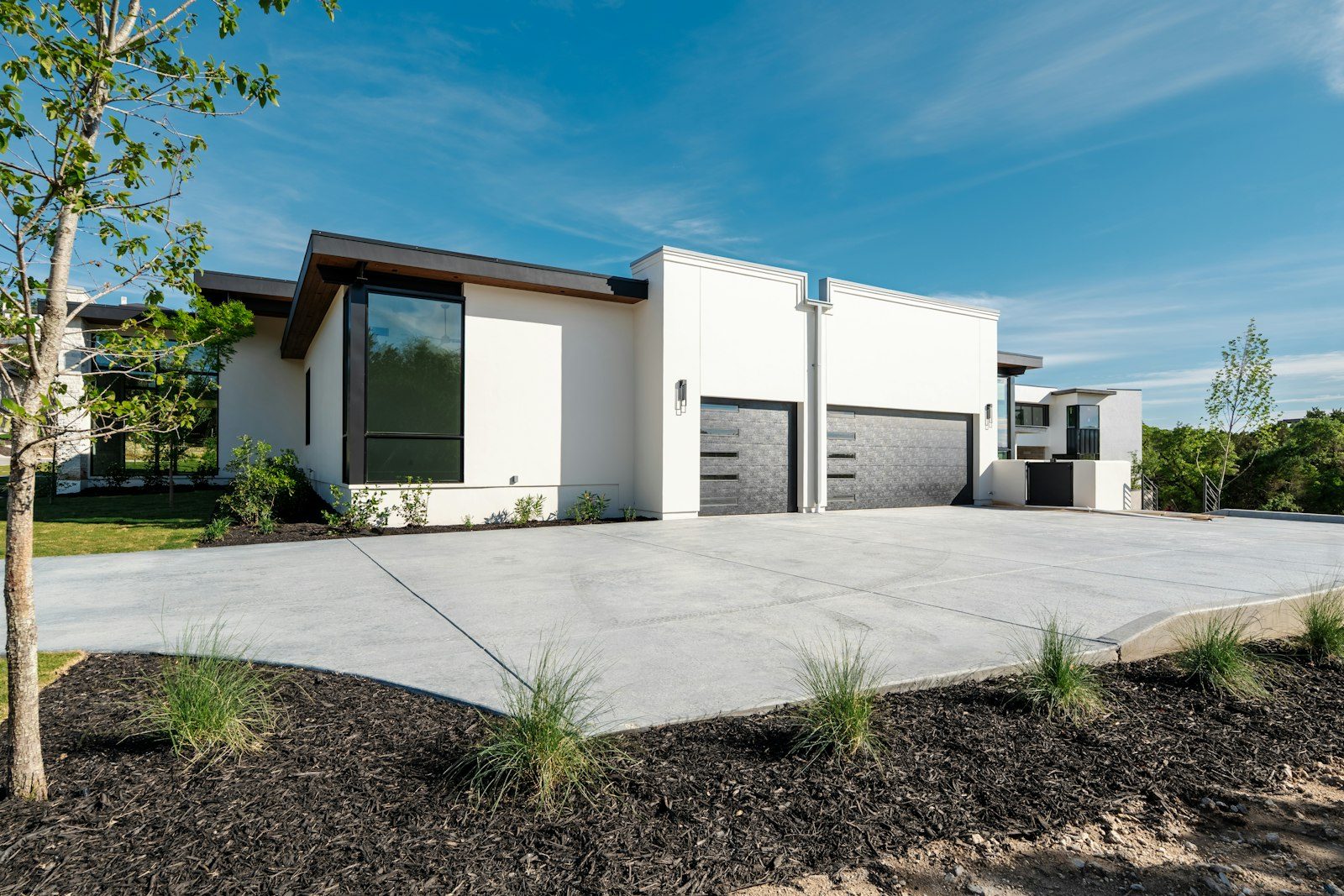
We read failing driveways from the curb, then fix what went wrong underneath them.
You can diagnose most Castle Rock driveways without leaving the sidewalk. Edges crumbling into gray gravel. A surface gone chalky and pitted where snowmelt sat all February. One panel dropped half an inch below its neighbor, catching the snow shovel every storm. A diagonal crack that showed up at the garage corner three springs ago and keeps stretching. Each of those symptoms is the slab telling you, in plain sight, what happened below it.
We've stood at a lot of curbs in this town, from the original drives in Founders Village to builder pours in The Meadows that quit inside a decade. The symptoms vary. The causes barely do: expansive clay swelling under the slab, freeze-thaw cycling at 6,224 feet, and shortcuts on base and steel by whoever poured it first. Here's how we read the signs, and what we do about them.
A chalky, flaking surface almost always means scaling. Water got into the top layer, froze, and popped it loose, and a deicer habit speeds that up fast. Crumbling edges point to a slab poured thin at the borders with nothing holding the shoulder. A panel sitting proud of its neighbor? That's clay pushing up from below after a wet stretch. A panel sinking toward the garage is the opposite problem: fill dirt compressing under the load, year after year.
And then there's the long, wandering crack. If it's tight and hasn't moved since you noticed it, relax. Concrete cracks. But a crack you could lose a house key in, one that widens each spring, means the base underneath has failed. No caulk fixes that.
| What you see | What's happening | The fix that fits |
|---|---|---|
| Chalky, flaking surface | Freeze-thaw scaling, often fed by deicer use | Shallow damage takes an overlay; deep damage earns a new slab |
| Edges breaking off in chunks | Thin, unsupported borders from the original pour | Rebuild the affected panels with proper edge depth |
| One panel heaved above the next | Wet clay swelled and lifted it | Remove the panel, correct the base, repour |
| Slab pitching toward the garage | Backfill settling under the drive | Replacement with a regrade so water runs to the street |
| Wide cracks that grow every year | The base under the slab has quit | Full tear-out; patching over a dead base wastes money |
Castle Rock grew in rings, and the driveways prove it. Founders Village and Plum Creek hold the older stock, and the bulk of our full tear-outs happen there; those slabs have given what they had. Castlewood Ranch and Metzler Ranch sit in the middle years, where a smart partial repair still pencils out. The Meadows and Crystal Valley are full of newer builds, and the calls from there surprise people: builder-grade drives with skimped base prep that start moving before the mortgage is five years old. Sapphire Pointe, Red Hawk, and Cobblestone Ranch send us a mix of widening jobs and third-car pads.
Different ages, one constant. Every drive in town rides on clay that swells wet and shrinks dry. The pour that survives here is the one built for that movement.
Text a photo from the curb to (303) 569-4046. We'll tell you repair or replace before anyone schedules a visit. The estimate is free either way.
Late spring through mid fall is the easy window. If you ask which month we'd pick for our own house, it's September: mild days, crisp nights, plenty of strength banked ahead of the first deep freeze. Summer works fine too, but at this altitude we start early and keep one eye on the afternoon storm building to the west, because rain on a slab mid-finish will scar the surface for good. We'd rather push a pour a day than gamble yours.
Cold months still get concrete poured. Heated batch water, chloride-free accelerators, and overnight blankets let us work between fronts all season. The one hard no: frozen ground. Pour over frost and the slab drops the day the ground releases it; nothing in the mix design rescues that. Frozen base means we hold your pour for the thaw, and we'll say so up front.
Half the drives we tear out in this town cracked exactly where a saw cut should have gone. Somebody finished the pour, packed up, and never came back with the saw. Joints cost an hour. Skipping them costs the homeowner a driveway.Our crew lead, after the walkthrough
Still unsure about something?
Call the crew at (303) 569-4046 and we will talk it through.
Get a free, no-obligation estimate from a crew that knows Colorado soil, Colorado weather, and how to finish concrete that lasts.
Accessibility
Adjust the site to fit how you read and browse. Your choices are saved on this device.