
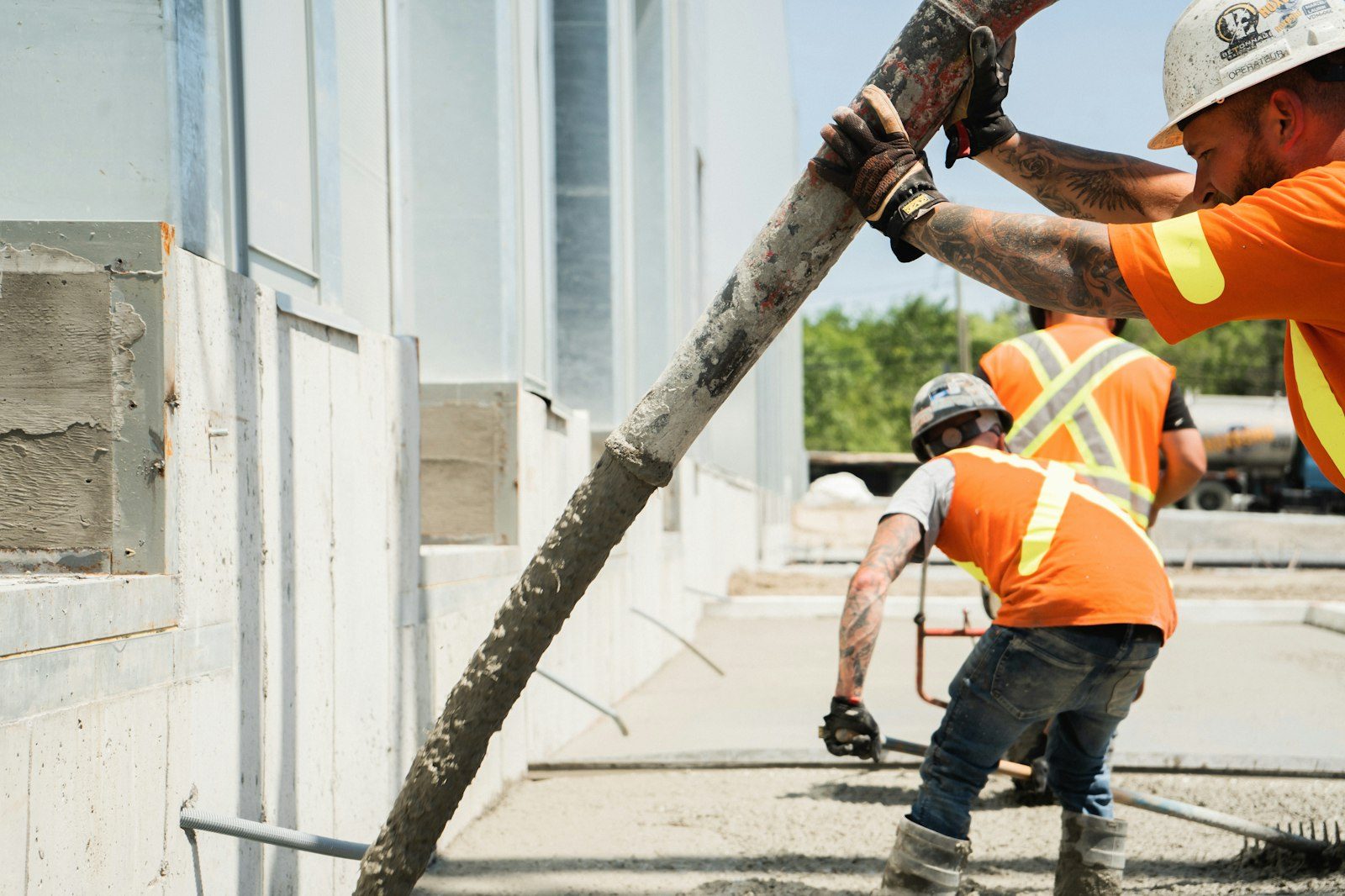
A pond spends a third of the year with a lid of ice on it, and that's the load we design the walls around.
Mid January, a hard week, and the pond you built for summer evenings is a solid gray disc. The surface freezes first and thickens downward, and as it does the sheet expands and pushes outward against whatever is holding it. If the walls run straight up and down, the ice has nowhere to go and every pound of that push lands on the concrete. Give the walls a slope and the same sheet rides up the batter instead, which is the difference between a pond that shrugs off winter and one that opens a crack in year three.
That's the thinking behind everything on this page. Anybody can pour a bowl that holds water in August. Holding it through forty freeze cycles, a spring thaw, and a summer of sun at this elevation takes a handful of details that cost very little while the forms are still up and cost a fortune to add later.
Winter gets the attention, but the shoulder seasons do quiet damage. Late fall is when leaves land, sink, and turn acidic in the corners. Spring is the real test. Thaw and runoff show up together, the ground around the shell saturates, and if the outside of that concrete is under water pressure while the inside sits empty, you learn fast whether the underdrain works.
Summer at 5,518 feet brings its own list. High UV, low humidity, and evaporation rates that convince people they have a leak when they don't. Afternoon storms deliver runoff in short bursts, which is why perimeter grading belongs in the build rather than on the landscaper later.
| Wall detail | What the ice sheet does | Where that lands |
|---|---|---|
| Vertical wall, square inside corners | Sheet expands and loads the wall dead on, concentrating at the corners | Vertical cracks starting at the corners, usually within a few winters |
| Battered wall, sloped inward toward the bottom | Sheet rides up the slope as it grows and relieves itself | Our default on anything that holds water through winter here |
| Rounded plan with no sharp corners | Load spreads around the perimeter instead of stacking in one spot | Excellent behavior, and it's why free-form ponds tend to outlast rectangles |
| Deep zone below the frost layer | Water stays liquid at depth and keeps the shell loaded from inside | One reason we build a deep section rather than an even shallow bowl |
| Empty shell in a wet spring | Nothing inside pushing back while saturated soil pushes in | The failure mode people cause themselves. Underdrain and water weight prevent it |
We'll read the joints, the drainage around it, and the wall shape, then give you a straight answer on repair against rebuild.
What we build changes with the property. Applewood and the older streets have deep mature yards where a pond can sit under trees, which looks wonderful and means leaf management is part of the design: a skimmer that's easy to reach and a bottom drain that earns its keep every October. Bear Creek properties often have natural low ground already, so the exercise is separating your feature from whatever the yard does with runoff, since a pond fed by storm flow turns into a mud pit twice a summer.
Up on the Green Mountain side, rock changes excavation and slope changes hydraulics, and a stepped pond with a small stream between levels is often the better design because it works with the grade instead of arguing with it. Solterra and the newer neighborhoods bring engineered fill and tighter yards, so we pay close attention to what the shell is bearing on and to HOA rules worth confirming before anything gets dug. As for timing: build from late spring through early fall. Concrete for a water-holding structure wants a real cure, and chasing that in the cold adds cost and risk for no good reason.
Still unsure about something?
Call the crew at (303) 569-4046 and we will talk it through.
Get a free, no-obligation estimate from a crew that knows Colorado soil, Colorado weather, and how to finish concrete that lasts.
Accessibility
Adjust the site to fit how you read and browse. Your choices are saved on this device.