
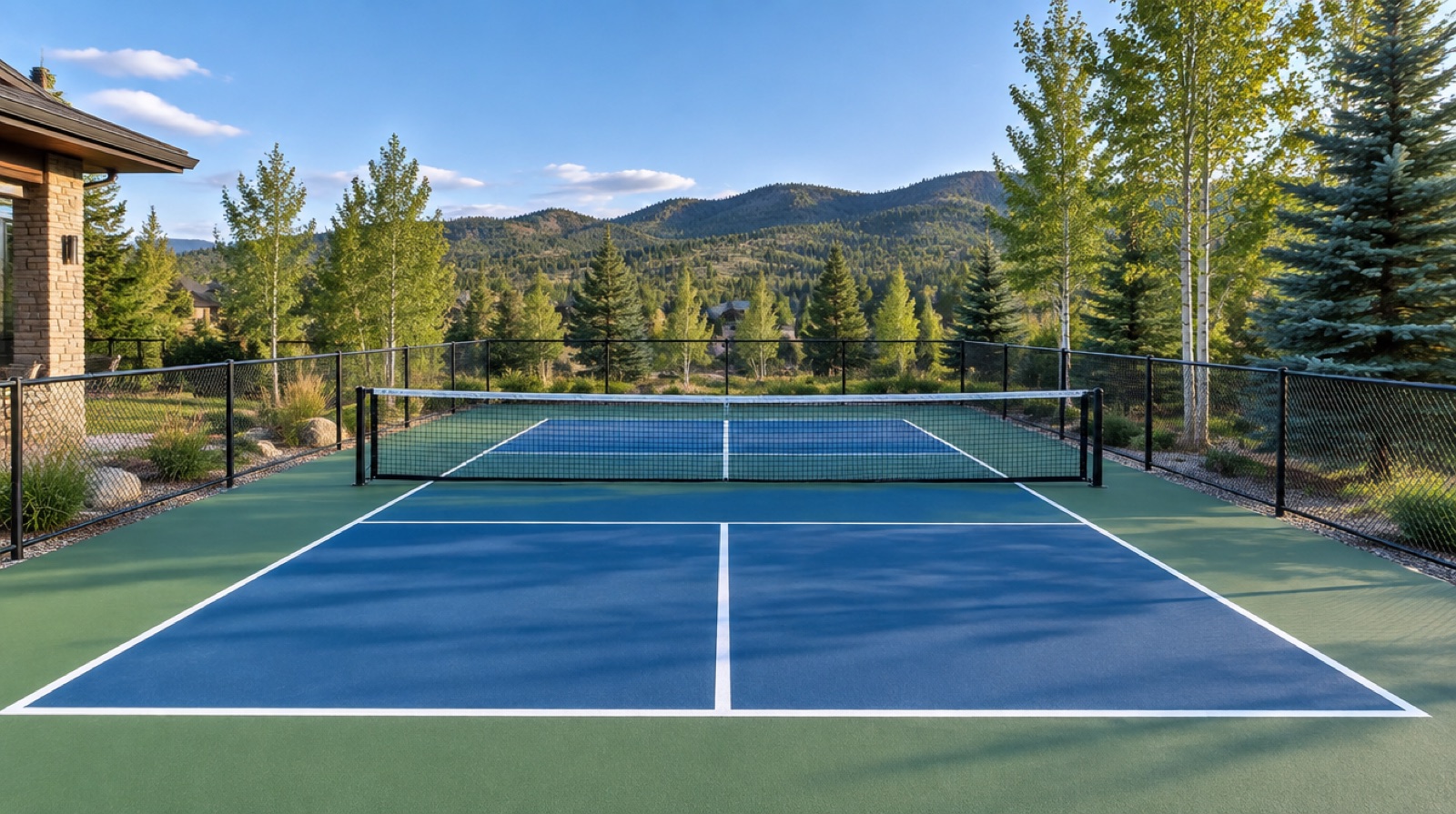
Four players stand in roughly four places all day. We build the slab for those four places.
Courts run from seven in the morning until the light quits. Open play early, lessons at midday, leagues after work, and somebody's group still going at nine on a Saturday. Four players hold roughly the same four positions for hours, shoes pivot on the same square yard at the kitchen line, and the ball keeps landing in the same handful of zones.
That's a different kind of wear than a driveway takes, and it changes what matters. Not thickness. A court slab barely notices the load standing on it. What matters is a surface that stays plane, sheds water without holding a puddle, keeps its texture, and never develops a crack that changes how the ball comes off the baseline. We build courts for associations, clubs, and communities turning underused ground into the busiest amenity they own.
Traffic out here is concentrated. The two feet of surface on either side of the kitchen line absorb all the pivoting, sliding, and stopping that the rest of the court never sees, and that strip goes smooth first. Baselines take the second-worst beating. The corners hardly get touched at all.
That pattern tells you where the work belongs. Texture matters more than raw strength. Joints have to fall where nobody's feet land during a rally. The finish needs grip without shredding shoes. It also tells you how a court ages, which is not all at once: it goes slick in two bands and then everybody starts complaining about footing.
Communities across the Ranch keep adding courts on ground that used to be something else. Retired tennis surfaces, tired sport courts, and unused corners of association property near Westridge, Southridge, and The Hearth are the usual candidates. Newer areas like BackCountry have room but often need drainage sorted out first. Infill spots around Northridge and Eastridge run tight, which makes orientation and fence placement the opening conversation rather than the closing one.
| Element | Dimension | Why it matters during play |
|---|---|---|
| Playing lines | 20 by 44 feet | The court itself. Everything past this is room to move. |
| Minimum total surface | 30 by 60 feet | Anything tighter and players run out of concrete chasing a lob. |
| Preferred total surface | 34 by 64 feet | What tournament play calls for, and regular players feel the difference. |
| Non-volley zone | 7 feet off the net on each side | The hardest-worn strip out there. Texture disappears here first. |
| Orientation | Long axis running north and south | Keeps low morning and evening sun out of a server's eyes. |
| Net post footings | Below frost depth, poured separate from the slab | Posts that heave pull the net out of level and the whole court plays wrong. |
Send us the space you're considering. We'll tell you how many courts fit, which way they should face, and what the drainage will take.
Sunlight at this altitude is hard on color. An acrylic system holds up longer than people expect when it's applied at proper thickness over a clean slab, while a thin rushed job on a dusty surface will chalk inside a couple of summers. So we cure the concrete properly, wait out the full month, wash it, and let the surfacing crew work in the conditions they need instead of the conditions a schedule wants.
Freeze and thaw handles the rest. Water sitting in a crack or an open joint expands overnight and widens the opening a hair at a time, and hail can bruise a coating that hasn't fully hardened. Standing water feeds both problems, which comes right back around to the one percent of fall we build in and the reason we chase true flatness instead of settling for close enough.
May through September is the build window we want. Concrete goes down fine into October, but color coats need warm dry days, so a fall slab normally means a spring surfacing. Plenty of boards plan it that way deliberately, so the courts open right as the season does.
You can see where a court gets played. Two bands of shine along the kitchen line where the texture is gone, everything outside them still rough. When players say a court feels slick, that's exactly what they're feeling, and it's a resurfacing conversation rather than a concrete one.From the crew lead on these jobs
Still unsure about something?
Call the crew at (303) 569-4046 and we will talk it through.

Get a free, no-obligation estimate from a crew that knows Colorado soil, Colorado weather, and how to finish concrete that lasts.
Accessibility
Adjust the site to fit how you read and browse. Your choices are saved on this device.