
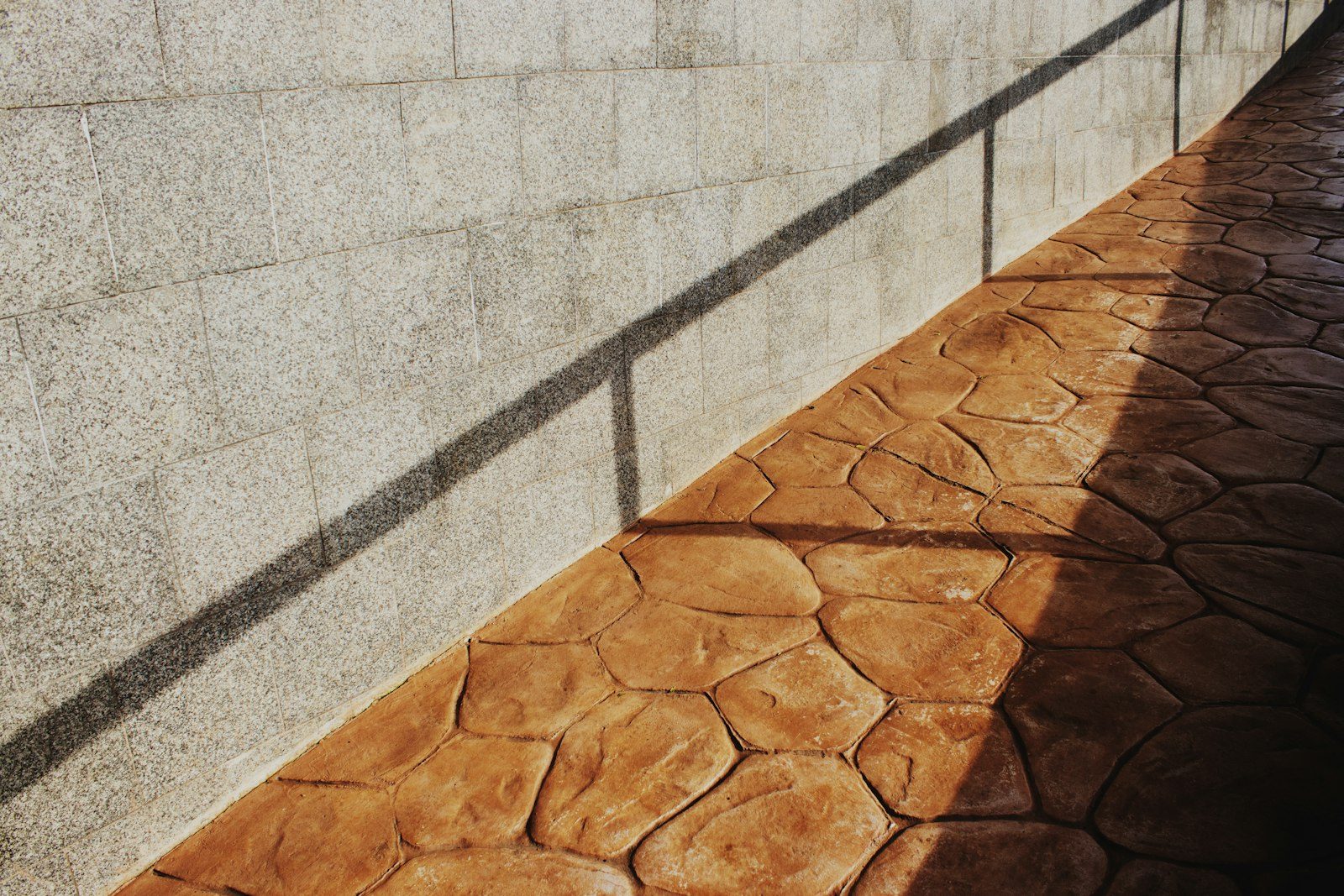
Front walks and garden paths priced by what actually drives the work, not by the square foot.
Square footage is the smallest number on a walkway estimate. That catches people off guard. A front walk might cover barely more ground than a single parking stall, yet two bids on the same run can land nowhere near each other. The concrete isn't the variable. The digging is, and so are the forms, the curves, and whatever the last walk left buried in the yard.
We pour paths all over this city: straight porch-to-sidewalk runs in Park Hill, side approaches squeezed between a house and a fence in the Highlands, curved garden routes threading a Wash Park backyard. Every one starts with the same question. Who walks this, and when? Answer that honestly and the spec writes itself. Width, fall, joint layout, finish. Guess at it and you've bought a path nobody uses once there's snow on the ground.
Concrete is sold by the yard and a walkway takes very few of them. What you're paying for is a crew with shovels, a crew with a screed, and both of those scale with how awkward your run is.
Straight is cheap per foot. Curves are not, because a curve means flexible forms staked every couple of feet and a joint layout that follows the arc instead of slicing across it. Drop a step into a run and it stops being flatwork. Access matters too: a front walk in Berkeley where the truck chutes off the street is a different job from a back garden route where every load gets wheeled through a gate one buggy at a time.
Then there's what we find when the old walk comes up. If the answer is bare dirt packed hard by ninety years of feet, we're bringing in road base before anybody calls for concrete. That isn't padding. That's the reason the new path outlives the one you're replacing.
| The choice | What happens if you skip it | Our call |
|---|---|---|
| Compacted base under the slab | The path rides directly on soil that moves twice a year and panels split apart | Never skip. This is the single best dollar on the job. |
| Going from three feet wide to four | Two people walk single file and somebody is always in the grass | Spend it. The crew and forms are already there, so the jump is small. |
| Steel in the slab | Cracks open instead of staying hairline | Mesh held at mid-slab covers a normal residential walk. Bar where a vehicle crosses. |
| Same-day saw cuts | The path picks its own crack lines, usually diagonally | Never skip, and it costs almost nothing. |
| Decorative border or saw-cut pattern | You get a plain broom finish, which ages perfectly well | Nice to have. Cut this before you cut the base. |
Three feet is the narrowest front walk we'll build, and we argue against three every time somebody asks for it. One person carrying groceries with a kid trailing behind ends up stepping into the lawn. Four feet fixes that. Five on a main entry reads generous and adds less to the total than most people expect.
Fall is the other half of it. A walk has to shed water, so we build a slight cross pitch and it always runs away from the house. Flat paths hold puddles, puddles freeze, and a sheet of ice on a shaded north-side route in January is how somebody breaks a wrist on your property. Those shaded runs hold their glaze for weeks. If that describes your side yard, say so at the estimate and we'll pitch it harder and pick a finish with real grip.
We measure it, dig a test hole, and hand you a written estimate for free. Call (303) 569-4046.
A walkway is a ribbon. Skinny, with a lot of edge for the little area it covers, and cold gets at it from three sides instead of one. That's why paths lift while the driveway ten feet away sits perfectly still. There's simply less mass holding the slab down when moisture in the subgrade freezes and pushes. More concrete on top doesn't answer it. Drainage below does, and so do joints in the right places.
So we cut control joints close together on walks, at spacing that roughly matches the width, and they get cut the same afternoon rather than the following week. On curves the cuts run square to the arc. Where a path meets a porch, a stoop, or a garage apron, that seam gets isolation material so the two pieces move independently. They will move. Planning for it beats repairing it.
We like September best for path work. Mild afternoons, cool nights, and a full cure before the ground turns. Cold-weather runs are doable, and a small path is one of the easier winter pours since we can blanket the whole thing. Frozen subgrade still stops us. And whatever month yours goes in, keep salt and magnesium chloride off it that first winter. Sand and a shovel. Nothing else.
Folks push back on width at the estimate and then thank us in the spring. Nobody has ever called to say the walk came out too wide. We hear the opposite version constantly.Our crew lead, after the walkthrough
Still unsure about something?
Call the crew at (303) 569-4046 and we will talk it through.
Get a free, no-obligation estimate from a crew that knows Colorado soil, Colorado weather, and how to finish concrete that lasts.
Accessibility
Adjust the site to fit how you read and browse. Your choices are saved on this device.