
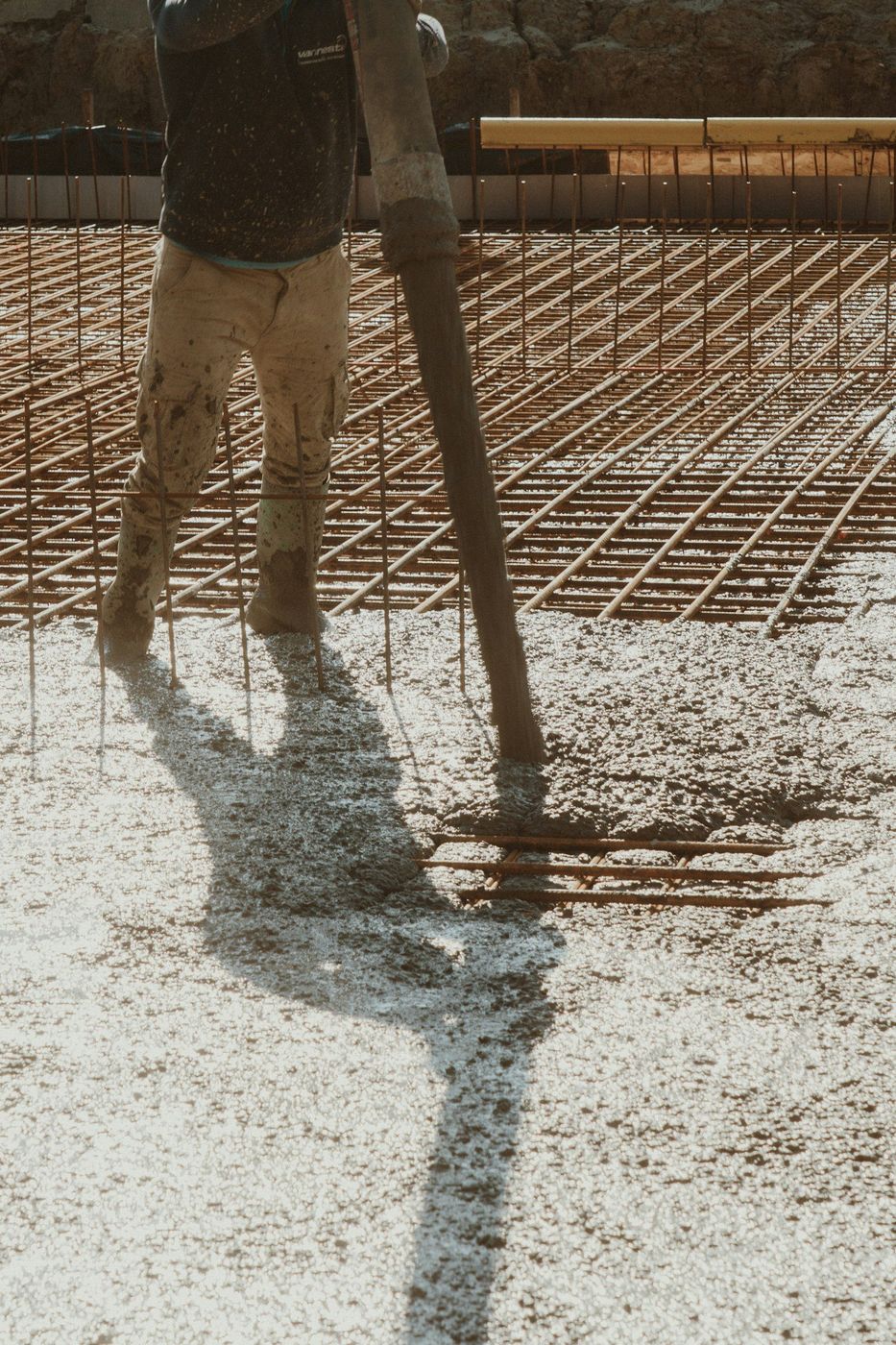
The one slab on your lot that strangers walk on every single day.
The mail carrier. A stroller with a sleeping kid in it. Somebody's father working a walker one step at a time. Two teenagers on scooters, a dog walker managing three leashes, and every neighbor cutting your corner on the way to the bus stop. Your sidewalk carries all of that, most days, and nobody gives it a thought.
Then one panel lifts an inch and everybody thinks about it. That's the strange thing about sidewalks: they sit on your property line but they belong to the public's daily routine, which raises both the standard and the stakes. We rebuild them across Denver. On the older tree-lined blocks around Park Hill and Wash Park, roots have been quietly winning the argument for decades. In Central Park and the newer Cherry Creek blocks the walks are young and the trouble is settlement.
Wear patterns tell you how a walk gets used before we measure anything. A worn diagonal at the corner where people cut instead of turning. A scuffed lane down the middle where the broom texture has gone smooth. A chipped edge on the side you shovel from, because a steel blade catches the same lip every storm for twenty years.
None of that is the failure. The failure is the quarter-inch step between two panels that a scooter wheel catches, or the low spot that collects meltwater and glazes over by seven in the morning. A sidewalk doesn't have to be pretty. It has to be continuous, flat across its width, and dry an hour after the sun hits it. That's the whole assignment.
Denver's older blocks put a strip of grass between the walk and the curb, and that strip grew some of the best shade in the city. It also grew root systems that have nowhere to go but sideways and up. In Park Hill, Berkeley, and around Sloan's Lake we see the same picture over and over: one or two panels tilted like a ramp, a crack running right where the trunk flares, and a homeowner who loves the tree and dreads the phone call.
We plan around the tree. Cutting through the big structural roots to make the concrete fit is how you get a dead tree in five years and a whole new problem to pay for. Depending on what we find, that can mean shaving only the fine surface roots, adjusting the walk profile over the root zone, adding a root barrier, or replacing a shorter section and living with a gentle rise across it.
| Who is on it | What they notice first | What we build for them |
|---|---|---|
| Neighbors on foot | Lips between panels and puddles that glaze over at night | Flush joints and a consistent cross pitch so water clears fast |
| Strollers and wheelchairs | Cross slope that drags the wheels toward the street | Cross pitch held at two percent or less across the full width |
| Kids on scooters and bikes | Any raised edge, because a small wheel stops dead on it | Level transitions at every joint and driveway crossing |
| Shovels and snow blowers | Rough finishes that grab the blade and chip | Broom texture pulled across the walk, not lengthwise with it |
| Trash carts and moving dollies | The wheel drop at every settled panel | Full-depth panel replacement rather than a skim patch over the seam |
Send a photo and we'll tell you whether it grinds, lifts, or comes out. Free estimate. (303) 569-4046.
Every walk has a winter personality. South-facing runs melt clear by mid-morning and dry out. Shaded runs on the north side of a block hold a hard glaze for weeks, and a low panel there is genuinely dangerous. That's why flatness across the width matters so much. A walk that drains has one bad hour after a storm. A walk with a dish in it has a bad month.
Right-of-way work runs from thaw to hard freeze, and we like the shoulders best. A spring pour gets an entire mild season to gain strength before it meets plow spray. Fall panels cure in near-ideal temperatures. Summer works with a first-light start and plastic staged nearby for the afternoon storms.
Cold-weather replacement happens too, with heated mix water, an accelerator free of chlorides, and blankets over a small section. Frozen subgrade is the wall we won't climb, because a panel placed over frost drops the week the frost releases. Once the new concrete is down, keep every deicer off it through the first winter.
The grass strip between the walk and the curb tells us plenty before we set foot on the concrete. Dry strip and a panel tipped toward the street means a root has been lifting for years. Soggy strip and a panel that dropped means a base problem, and usually a downspout aimed the wrong way.What our crew lead tells homeowners
Still unsure about something?
Call the crew at (303) 569-4046 and we will talk it through.

Get a free, no-obligation estimate from a crew that knows Colorado soil, Colorado weather, and how to finish concrete that lasts.
Accessibility
Adjust the site to fit how you read and browse. Your choices are saved on this device.