
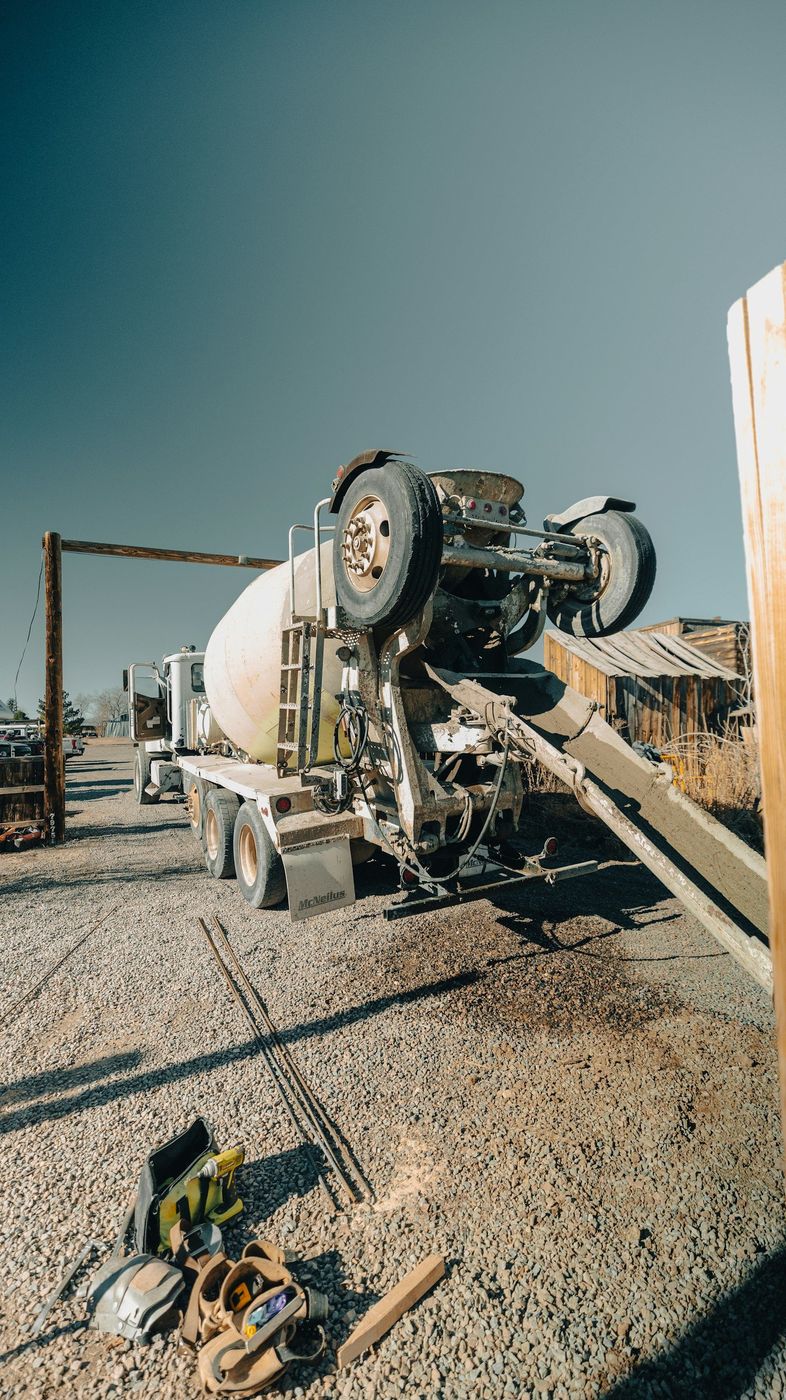
Demo, haul-off, regrade, and a fresh slab, run by a crew that knows how to work a tight city lot.
Here's what the first morning of a driveway replacement actually looks like. The breaker starts around 7. By 10 the old slab is rubble, by early afternoon it's on a truck headed to a recycler, and what's left is bare dirt and a couple of grade stakes. Day two we rebuild the base, set forms and steel, and walk the whole bed before a drop of concrete arrives. The pour itself takes a morning. After that the slab does what concrete does: nothing dramatic, just quietly getting harder for a month while you stay off it.
The catch in Denver is that half our jobs sit on blocks platted before anyone owned a car. Alley garages behind Berkeley and Sloan's Lake. Gates too narrow for a skid steer. Power lines exactly where a pump boom wants to swing. We plan around all of it before we schedule anything, which is the difference between a two-day job and a week of excuses.
Not every ugly driveway needs to come out. Surface scaling, a couple of tight cracks, one low corner: those have cheaper fixes than demolition. Replacement earns its price when the trouble lives below the surface. Panels that rock under the car. Cracks wider than a pencil that gain a little every year. A drive that has sunk far enough to send meltwater at the garage door instead of the street. We see this constantly in the postwar slabs around Park Hill and University Hills, where sixty or seventy freeze-thaw winters have worked on concrete that never had a proper base to begin with.
Once the base fails, everything you spend on the surface is rent, not repair. And we'll tell you which side of that line you're on. If your driveway has five good years left, we'd rather say so and pour your neighbor's instead.
| Your situation | How we pour it | What it means for you |
|---|---|---|
| Straight shot from the street | Chute directly off the mixer | Fastest option, least staging, no extra equipment in the yard |
| Garage loads off the alley | Stage the truck in the alley and chute or wheel from there | We time it so we're not blocking your neighbors half the day |
| Narrow gate, side-yard route | Concrete buggies, load after load | Slower placement, so we adjust crew size and mix timing to match |
| No ground route at all | Pump truck with a boom over the house | One more machine on site, but it turns an impossible pour into a routine one |
Free on-site estimate, a written scope, and a schedule we actually keep. Call (303) 569-4046.
Tear-out season runs longer than pour season, and that's worth knowing. We can break and haul concrete in January without a second thought; it's the new slab that needs cooperation from the sky. From April through October, demo and pour run back to back. In the cold months we watch for the warm windows the Front Range reliably serves up, then place concrete with heated mix water, non-chloride accelerators, and blankets that trap the heat while strength builds. Frozen subgrade stops the whole show, though. Concrete placed over frost settles the moment the frost lets go, and no additive on earth fixes that.
Clay is the other schedule-maker. After a soaking spring storm we'll sometimes push a regrade a day or two so the exposed subgrade can dry enough to compact properly. Nobody loves the delay. Everybody loves not doing the job twice. Around Washington Park, where the lots are tight and the soil holds water, that patience has saved more than one project.
On the alley lots in the Highlands, we plan the concrete's path before we plan anything else. If the only way in is a 3-foot gate, that's a buggy job, and knowing it two weeks early is what keeps pour day boring. Boring pour days are the goal.What our crew lead tells homeowners
Still unsure about something?
Call the crew at (303) 569-4046 and we will talk it through.

Get a free, no-obligation estimate from a crew that knows Colorado soil, Colorado weather, and how to finish concrete that lasts.
Accessibility
Adjust the site to fit how you read and browse. Your choices are saved on this device.