
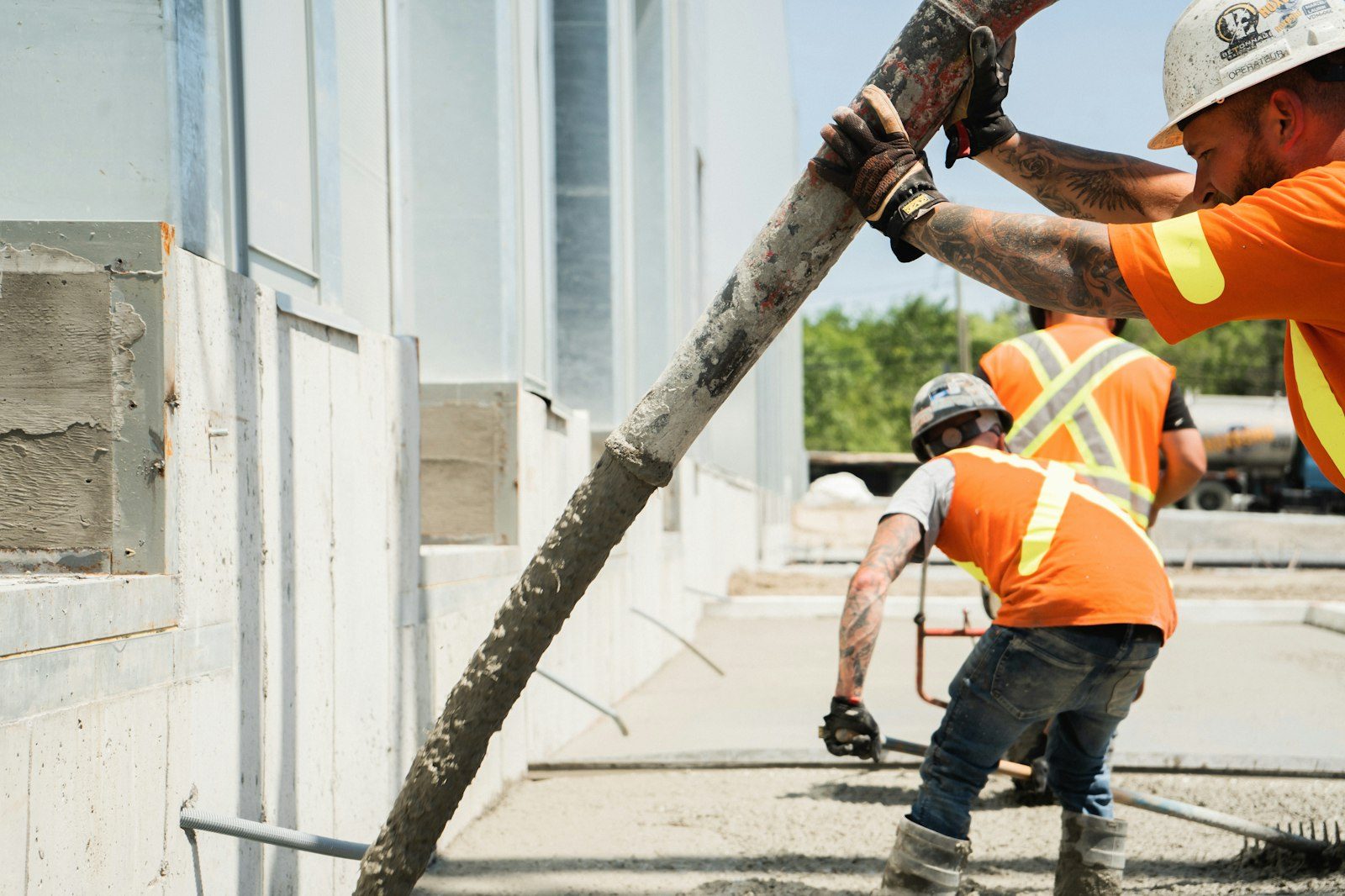
Nobody plans a stem wall project. They plan a remodel, and the stem wall decides how it goes.
Almost nobody calls us about a stem wall. They call about a project. A room going off the back. A garage turning into an office. A siding job that turned up something soft where framing meets concrete. Then mid-project, the short band of concrete between the wood and the dirt becomes the thing every other trade is waiting on.
Arvada gives us that conversation in three flavors, because the housing came from three eras. Olde Town homes were built small and get added onto. West Woods houses are old enough now for their second round of real work. Out at Candelas, Leyden Rock, and Whisper Creek the walls are young, and the question is never the concrete. It's what the concrete stands on.
| What you're planning | What it asks of the wall | Where it usually stalls |
|---|---|---|
| Room addition off an older house | New bearing that matches how the old wall bears, at the same depth | A shallower new footing, so the addition drifts on its own schedule |
| Garage becoming heated living space | A wall now separating conditioned rooms from wet ground | Nothing on the buried face, because it was built for a cold garage |
| Re-siding, with rot found at the bottom plate | Enough concrete showing above grade to keep wood out of the wet | Soil and mulch raised over the top of the wall years ago |
| Detached shop on a graded pad | Frost resistance with no heat inside the building helping | Minimum depth, on fill that hasn't finished packing down |
| Deck or covered patio tied to the house | Sound concrete in the load path and every penetration sealed | A ledger bolted through siding into a face already flaking |
| Landscaping that raises the back grade | Clearance held between soil and anything made of wood | Beds built up until the wall vanishes and water has nowhere to go |
The oldest walls we work on around Olde Town are short, honest, and light on detail. They were built to hold a small house up off the dirt, and they mostly did it. What they never got was anything on the outside face, so decades of water moving through the trench has left the base soft in spots and the crawl space damp every March. Those we repair a section at a time.
West Woods sits in the middle. Better construction, deeper walls, and the trouble there is usually about what got added later: a patio poured tight to the house, a bed raised eight inches, a downspout dumping in the same place since the trees were small. Newer west-side walls are a different job. The concrete is fine. Everything interesting is happening in the ground beside it.
On a pad that was cut and filled, a wall is only as steady as the compaction record behind it. Good fill, placed in lifts at the right moisture and tested going up, carries a stem wall for as long as anyone will own the house. Fill that went in fast keeps compressing, and it never compresses evenly, so one run of wall drops while the rest holds. That's how a hairline turns into a stepped crack in two seasons.
So on newer construction we ask different questions. How deep is the fill under this corner. Was the trench beside the foundation packed or just pushed back in. Where does the sump discharge land. An addition or a shop going onto that pad gets bearing set on the same terms as the house.
Send us the scope and a few photos at grade level. We'll tell you what the wall can take and what it can't before you're committed. (303) 569-4046.
Digging next to a house goes best when the ground cooperates, and that means late summer through fall here. Soil holds a clean trench face, the excavation stays open safely, and there's time to finish backfill and final grade before anything freezes.
Pours run nearly year round. Cold months bring heated mix water, non-chloride accelerator, and blankets, and we never place on frozen bearing. The step we get stubborn about is putting the dirt back. Frozen material bridges instead of compacting, and by April it has thawed into a void that reads as a settled walk or a bed pitching back at the house. In deep winter we wait for a thaw or import material that behaves cold.
Still unsure about something?
Call the crew at (303) 569-4046 and we will talk it through.
Get a free, no-obligation estimate from a crew that knows Colorado soil, Colorado weather, and how to finish concrete that lasts.
Accessibility
Adjust the site to fit how you read and browse. Your choices are saved on this device.