
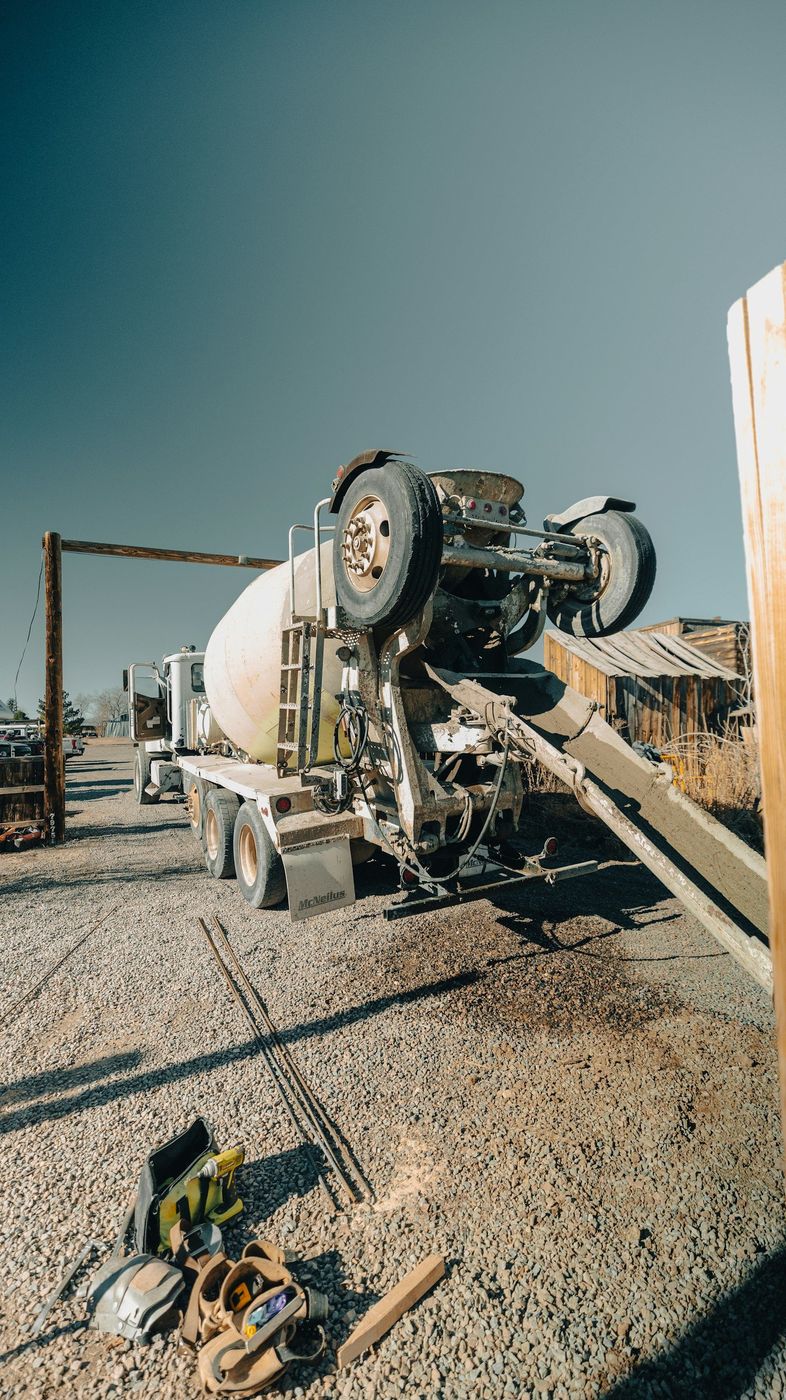
Most receiving here happens at one door behind one building, which is exactly why that door never gets a spare.
Arvada is not a distribution town, and that shapes almost every dock we work on here. No walls of forty positions. Instead: one door behind a retail building, a pair at a light industrial suite, a grade-level opening at a service business that takes a box truck three mornings a week. Small counts, high stakes. When the only receiving door on a property goes down, the whole operation improvises.
So the question at an Arvada dock is rarely how to phase forty doors. It is how to rebuild the one you have without stopping freight, and how to keep the next repair from being another patch on top of five old ones.
The older buildings around Olde Town went up when a delivery meant a panel van and two guys with a dolly. Rear openings are grade level, the service area behind them is narrow, and the concrete has been patched by whoever the owner could get on short notice. Then a tenant changes, a heavier vehicle starts backing in daily, and a slab built for foot traffic breaks up in a straight line right where the wheels land.
Light industrial and flex space has the opposite problem. The concrete was built for trucks, but with one specific tenant in mind. Buildings get re-leased, the new occupant runs a different freight profile, and wear concentrates where nobody planned for it.
The third category is newest. Commercial pads serving Candelas, Leyden Rock, Whisper Creek, and the parcels around West Woods sit on graded fill, and the ground behind a building is the last part of any site to get compaction attention. The concrete out there is often fine. What is under it, along the strip where a trailer sets all its weight on two small pads, is what moves.
| The previous repair | Why somebody chose it | How it ended |
|---|---|---|
| An asphalt wedge ramped up to the building face | Cheap, fast, done in an afternoon | Asphalt has no strength under a static trailer jack. It dishes, holds water against the wall, and the void underneath grows |
| A thin concrete cap poured over the failing apron | Looked like a clean surface for a modest number | A cap bonded to broken concrete inherits every crack under it and delaminates from the top down |
| Steel plate bolted over the broken threshold | It made the door usable again the same day | The plate hides the problem while wheels hammer the unsupported concrete beneath it. The eventual repair gets bigger |
| Slab lifted with slurry to close the gap at the wall | Cheaper than replacement and the elevation came back | Lifting works when the slab is sound and the water is gone. If either is untrue, it settles again on the same schedule |
| A longer leveler lip ordered to reach the settled trailer | It avoided touching concrete at all | You bought time and confirmed the approach is dropping. The hardware bill lands on top of the concrete bill |
Send photos of the apron and the threshold plus the type of truck that services you. We will tell you what has to come out and how many days you lose.
Dock areas are small, which makes them one of the few exterior pours we can protect properly in cold weather. That helps here, because plenty of Arvada businesses have a slow winter stretch and cannot spare the door in spring. A cold placement gets warm batch water, a chloride-free accelerator, and insulation down before the afternoon temperature falls off. What we will not do is place against frozen ground or pull protection early because a truck is scheduled.
The other seasonal reality is the north side of a building. A service court that never sees direct sun stays wet and freezes at night, week after week, and any water arriving from the roof or the grade keeps feeding it. New concrete alone does not fix that. We correct the fall, get the water to a defined outlet, and only then talk about the slab. Rebuilding the same apron in the same puddle is a repeat visit we would both rather skip.
Plan on losing the door for several days from demo to light use, and longer before a loaded truck parks on it. If your freight calendar has a genuine soft week, tell us early.
Still unsure about something?
Call the crew at (303) 569-4046 and we will talk it through.

Get a free, no-obligation estimate from a crew that knows Colorado soil, Colorado weather, and how to finish concrete that lasts.
Accessibility
Adjust the site to fit how you read and browse. Your choices are saved on this device.