
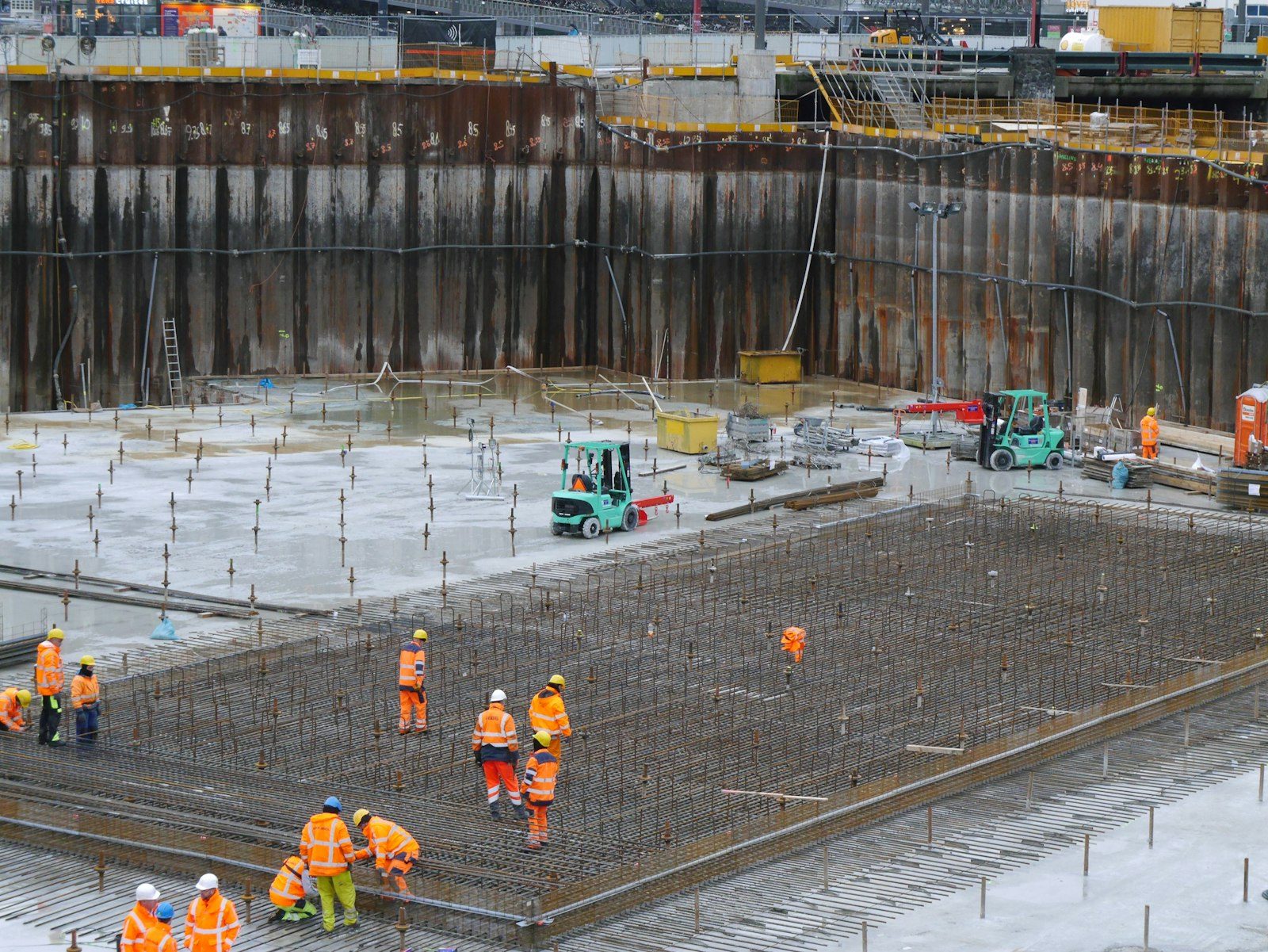
Your slab starts working two hours before the doors open, and that early shift is the one it has to survive.
Walk a retail property at six in the morning and the concrete is already earning its keep. A route driver drags a loaded hand truck off a liftgate. Somebody wheels a mop bucket out the back door to dump it. The landscape crew crosses the same corner they cross every Tuesday, blower on a shoulder strap. By nine that same slab is carrying strollers, dog leashes, and a van that parked half on the apron because the lot filled up.
That is the real job. Not the rendering on the leasing flyer. We build service walks, entry aprons, connector paths, and equipment pads for building owners and managers across Arvada, and we spec each one for the traffic that shows up before opening rather than the traffic in the photograph.
Ask a manager what crosses their flatwork and you get customers. Ask the opening crew and you get a very different list. Pallet jacks. Rolling carts loaded with stock. A floor scrubber. Grease barrels going to a pickup point. Ice melt buckets. The same six feet of concrete outside a rear door takes more abuse in a month than the entire storefront walk takes in a year, which is why that six feet is almost always the piece that fails first.
Olde Town has the hardest version of this. Buildings sit tight to the walk, the back of the house barely has room to swing a door, and one bad panel back there can shut down a receiving path with no way around it.
Out west the story flips. Newer commercial pads serving Candelas, Leyden Rock, and Whisper Creek have space and clean geometry, but everything went in during one construction window on ground that got graded and filled. When the base under one section was a little light, it does not announce itself for several years. Then a whole run of panels starts moving together. Established parcels around West Woods land between the two: decent original work, plenty of it, and a maintenance budget that has been deferring it panel by panel.
| Where it goes | Finish we run | What that buys you |
|---|---|---|
| Storefront frontage and entry walks | Medium broom, pulled across the direction of travel | Grip when the surface is wet, without a texture deep enough to trap grit and mop water |
| Back-of-house service aprons | Heavy broom | Enough tooth to keep boots and hand truck wheels honest when a door drips meltwater all winter |
| Trash and recycling routes | Heavy broom, unsealed | Sealer under a leaking container goes slick, then peels. Bare air-entrained concrete outlives it |
| Restaurant patio and seating areas | Float finish with a saw-cut pattern | Chair legs slide instead of catching, and the pattern absorbs the joints you needed anyway |
| Generator, transformer, and equipment pads | Steel trowel | Dense surface that sheds oil and takes a pressure wash without dusting |
Send a few photos and tell us where deliveries come in. We will tell you what has years left and what is already a liability sitting in your walkway.
April through October is the open window, and the two ends of it beat the middle. Cool spring and fall mornings buy a long, forgiving finishing window, which matters more on flatwork than on almost anything else we pour. July afternoons at this elevation pull water out of a slab fast, so summer work starts early and gets cured hard. A slab that flash-dries on a hot windy afternoon dusts under a floor scrubber for the rest of its life.
Winter work happens, and for a lot of retail tenants January is the only month they can stand to lose a doorway. We place with heated water, run a non-chloride accelerator, and blanket everything before the temperature drops off. We will not place on frozen subgrade and we will not pull blankets early to hit a promise. If your slow stretch lands right after the holidays, tell us in the fall and we will hold the calendar.
What we push back on is the late-season rush. A property that decides in mid-November to fix everything gets a hurried pour and a spring full of surface complaints. Book the shoulder.
Still unsure about something?
Call the crew at (303) 569-4046 and we will talk it through.
Get a free, no-obligation estimate from a crew that knows Colorado soil, Colorado weather, and how to finish concrete that lasts.
Accessibility
Adjust the site to fit how you read and browse. Your choices are saved on this device.