
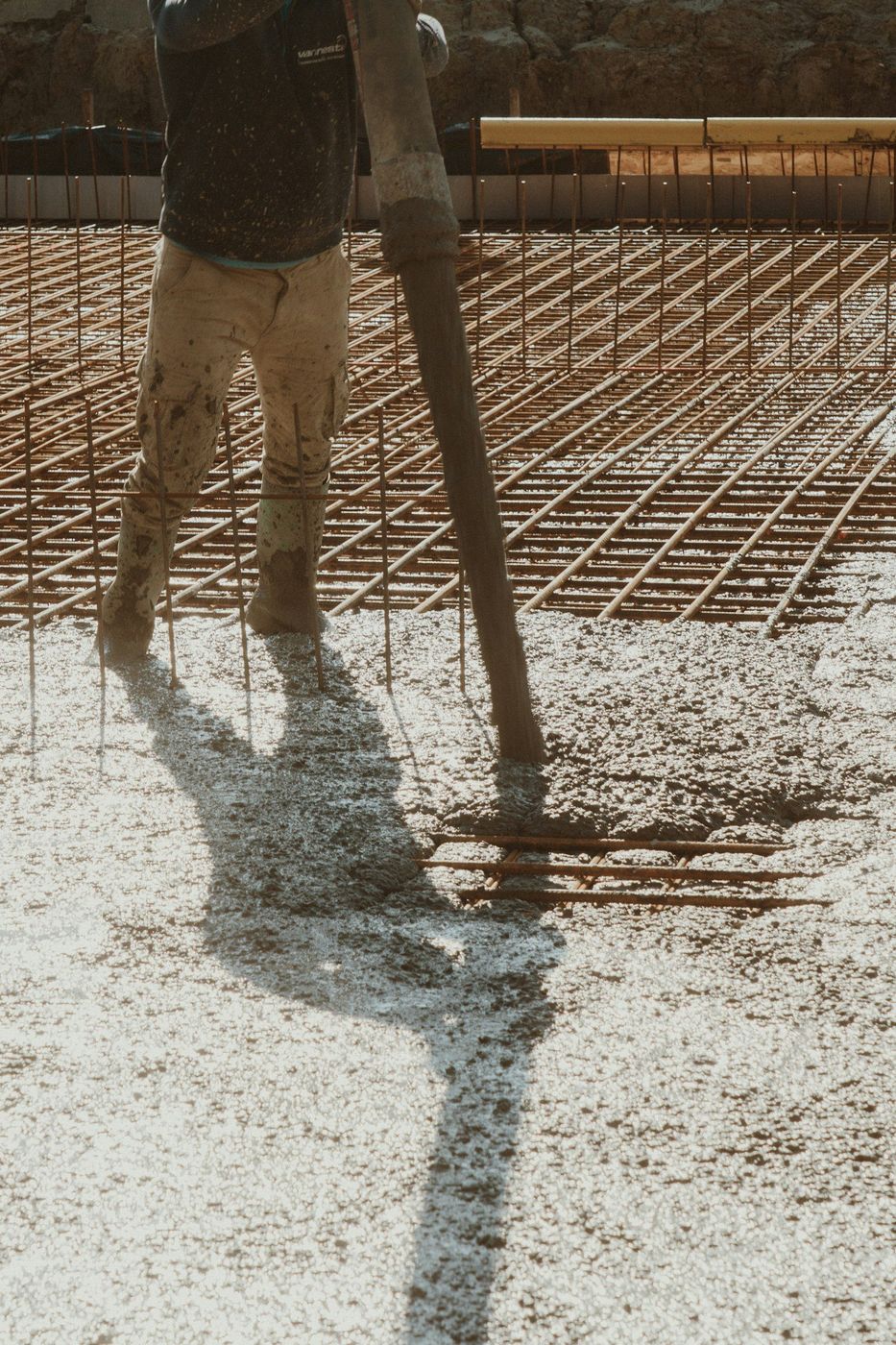
You can diagnose most failing garage floors in this city without getting out of the car.
Drive a residential street here in February and count the overhead doors that no longer sit down flat. A wedge of daylight at one end, a gray tongue of ice reaching under it, a rubber sweep that gave up. Nobody hung that door crooked. The floor under it moved, and the door is the part you can see from the street.
Floors spend their lives buried under cars, shelving, and boxes, so the door line and the apron end up doing the reporting for them. We pour garage floors, shop slabs, basement floors, and addition slabs across Westminster. On a replacement call the first thing we do is stand in the driveway and read the outside of the building.
Start with the door line, because it is the most honest straightedge on the property. A door that seals across its whole width sits on a slab edge that never moved. Light at one end means the frame racked or the edge dropped, and eight times out of ten it is the edge.
Then the seam where the floor meets the apron. If the apron stepped down, water now heads for the building, and the step keeps growing because every storm feeds the same loose ground. Look for a chalky band across the first few feet inside the door, which is what winter tire drip does to unprotected concrete. Then the cracks. One you cannot feel underfoot is concrete shrinking. One with a lip in it is a base problem, and patching compound has no opinion about that.
| What shows from the driveway | What the slab is doing | Whether it stays |
|---|---|---|
| Daylight under a closed door at one end | The slab edge has settled, or the opening has racked with it | Often a partial rebuild of the edge, sometimes a lift |
| Apron sitting lower than the floor, with a lip at the seam | Loose trench backfill or washed base under the apron | Replace the apron and cut off whatever feeds water under it |
| Water running in every time it rains hard | Grade outside falls toward the building, or the floor pitches in | Fix grade first. Repour only if the floor slopes the wrong way |
| A crack with a lip you can feel with your foot | Base failure rather than shrinkage. Something below let go | That panel comes out |
| White crust and flaking in the first few feet | Winter drip and deicer working an unprotected surface | Surface repair if shallow, replacement once aggregate shows |
| Cracks running out of the door jamb corners | No thickened edge under the opening, or no joint relieving it | Depends how far they run and whether they have opened |
Send a photo from the driveway and we can usually tell you what is happening before we come out. (303) 569-4046.
Two details fix most of what that table describes, and both disappear the day the floor is finished. First is a thickened section under every bearing line: walls, posts, and above all the overhead door opening, where a slab takes wheel loads at a free edge with nothing beyond it. Thicken there and the jamb corner cracks stop happening.
Second is the vapor retarder. Concrete is not waterproof, it is an efficient sponge, and ground moisture keeps working up through it. Under a garage that means the salt and moisture cycle at the door gets fed from below as well as above, which is why that first band of floor goes first. Under heated space or any flooring, it means blisters and released adhesive. The sheet is nearly free while the base is open. Afterward no price buys it.
Interior floors are the easiest thing we schedule. Close the building, add heat, and a January pour behaves like a June one. That works in Legacy Ridge and Bradburn, where the garages are newer and tighter, and in older shops around The Ranch and Quail Creek once we hang plastic over the opening.
The apron and the driveway transition are another animal, since that concrete lives outdoors. Fall suits it best. Summer means early starts and a hard eye on the sky, because a cell arriving mid-finish drives water into fresh paste and the bill lands later as scaling. Winter exterior work needs unfrozen ground, hot water in the mix, and blankets. If that half can wait for April, it usually should. Whatever month it goes down, keep salt off it the first winter.
Still unsure about something?
Call the crew at (303) 569-4046 and we will talk it through.

Get a free, no-obligation estimate from a crew that knows Colorado soil, Colorado weather, and how to finish concrete that lasts.
Accessibility
Adjust the site to fit how you read and browse. Your choices are saved on this device.