
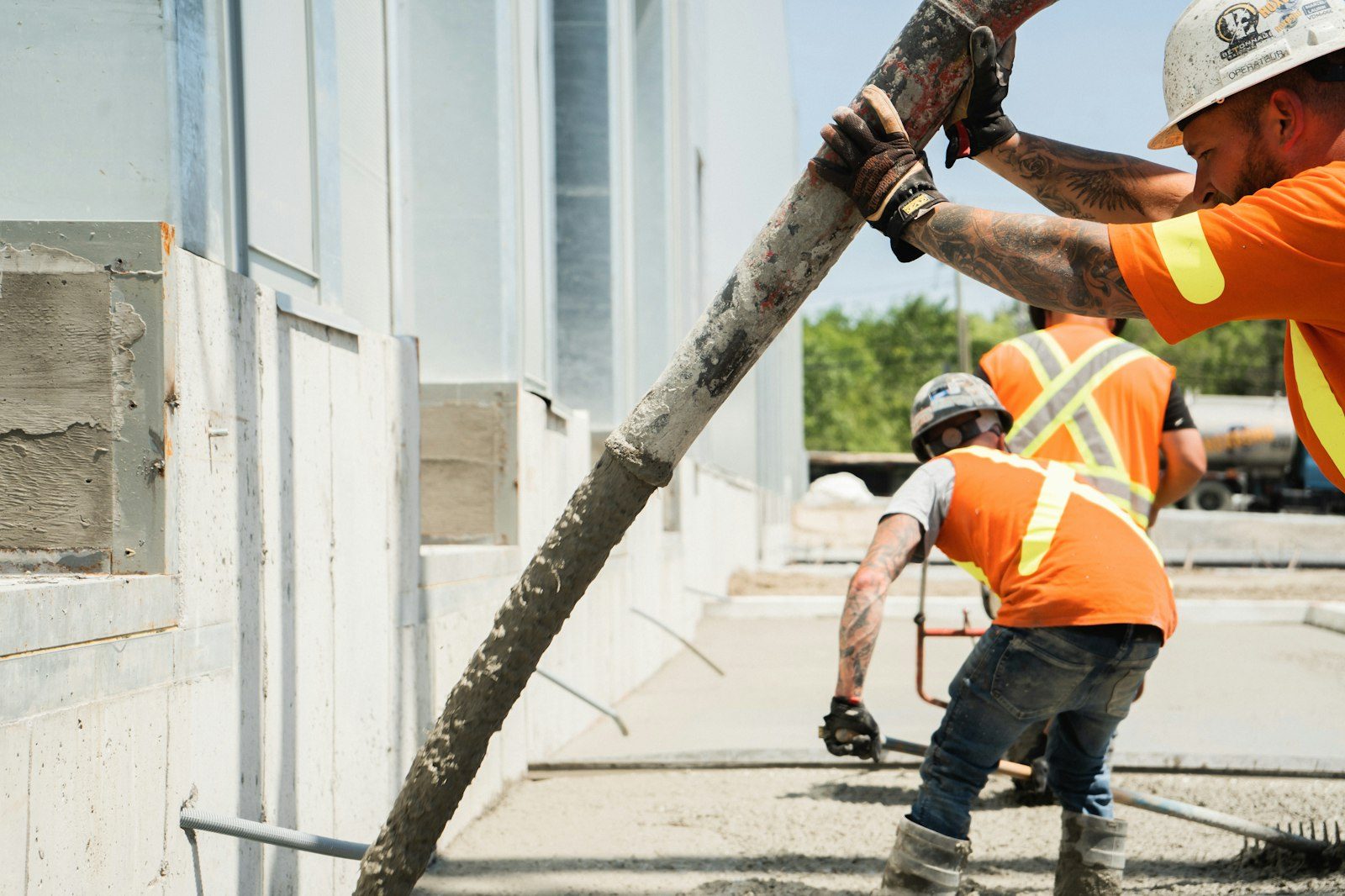
Over forty years, nearly every trade that visits your house borrows a piece of the stem wall.
Think about what happens to that band of concrete between your framing and the dirt. The furnace installer punches a vent through it. The plumber brings a hose bib out one side and a sump line out the other. Somebody adds central air and pulls a line set through. Then a radon system, then a deck ledger, then a low voltage guy who found the softest spot he could reach with a drill. Nobody coordinates any of it, and nobody patches it the same way twice.
That's the working life of a stem wall, and it's why we treat penetrations as part of the job instead of somebody else's afterthought. We pour new walls, rebuild failed sections, and repair the damage that decades of drilling leaves behind, on crawl space houses around Eastlake and on the newer builds in North Creek Farms where the trades are still lining up to take their turn.
A stem wall does three jobs at once. It carries the building, it holds back the soil pressed against its outside face, and it separates conditioned space from wet ground. Every hole through it is a small argument with the third job.
None of that means holes are bad. Houses need vents, drains, lines, and hardware, and concrete accepts all of it fine when the work is planned. Trouble starts with location and finish. A hole punched low, right in the zone where soil moisture collects, is a wick. A hole hammered instead of cored leaves a spalled crater that traps water at the edge. A hole slathered in expanding foam looks sealed and reads as a straw the moment the foam skins over and shrinks.
The other quiet cost is steel. Reinforcement in a stem wall sits where an engineer put it, usually near the faces, and a drill that finds a bar and keeps grinding through it has removed capacity from that section. One severed bar in a long wall is rarely a crisis. Six of them clustered under a door opening is a different story.
| What lands on the wall | What shows up years later | How we handle it |
|---|---|---|
| Deck or porch ledger bolted to the face | Rust bleeding from the anchors, and a crack radiating from the lowest bolt | Anchors sized and spaced by the engineer, set in sound concrete, kept out of the top few inches |
| Hose bib and the puddle under it | A saturated strip of wall that spalls a little more every freeze | Move the penetration up, slope the grade away, and give the drip somewhere to go |
| Dryer or combustion vent through the wall | Warm moist air condensing at the sleeve and staining the concrete below | Cored opening, sleeved, sealed, hooded outside, and never buried behind mulch |
| Air conditioner line set | The one hole nobody sealed, feeding humid air and insects into the crawl space | Sleeve with a proper seal, and insulation continued through instead of stopped at the wall |
| Sump or condensate discharge | A wet trench alongside the wall, refilling the drain it was supposed to relieve | Carry the discharge well past the backfill zone, then check that outlet every fall |
| Downspout strap and the splash zone below it | Roof water landing in the loosest soil on the property, right against the concrete | Extend every downspout past the trench line. It's the cheapest repair in this trade |
We'll look at the wall, the grade, and every hole somebody's put through it, then tell you which one is actually causing your problem. (303) 569-4046.
Every penetration is a temperature difference and a place for water to pause, which is why the flaking usually starts around them. Moisture collects at the edge of a rough opening, freezes overnight, thaws by noon, and works the gap a hair wider each cycle. Repeat that from November to April, year after year, and a hammer-drilled hole becomes a crater with rusty steel in the bottom of it. Ice at a condensate line does the same thing faster, and so does a hose bib that never fully drains.
New walls pour nearly year round with warm mix water, non-chloride accelerator, and blankets over the forms, and we won't place on frozen bearing. Backfill is the half we schedule carefully, since frozen clods stack rather than compact. Face repairs are different again: patch material wants moderate temperatures to bond, so surface work waits for the shoulder seasons whenever the failure isn't urgent.
We opened up a spalled section under a deck last spring and found five holes within a hand's width of each other. Cable, gas, a dead phone line, and two nobody could identify. Everybody drilled the same easy spot. The concrete there had nothing left to give.What our crew lead tells homeowners
Still unsure about something?
Call the crew at (303) 569-4046 and we will talk it through.

Get a free, no-obligation estimate from a crew that knows Colorado soil, Colorado weather, and how to finish concrete that lasts.
Accessibility
Adjust the site to fit how you read and browse. Your choices are saved on this device.