
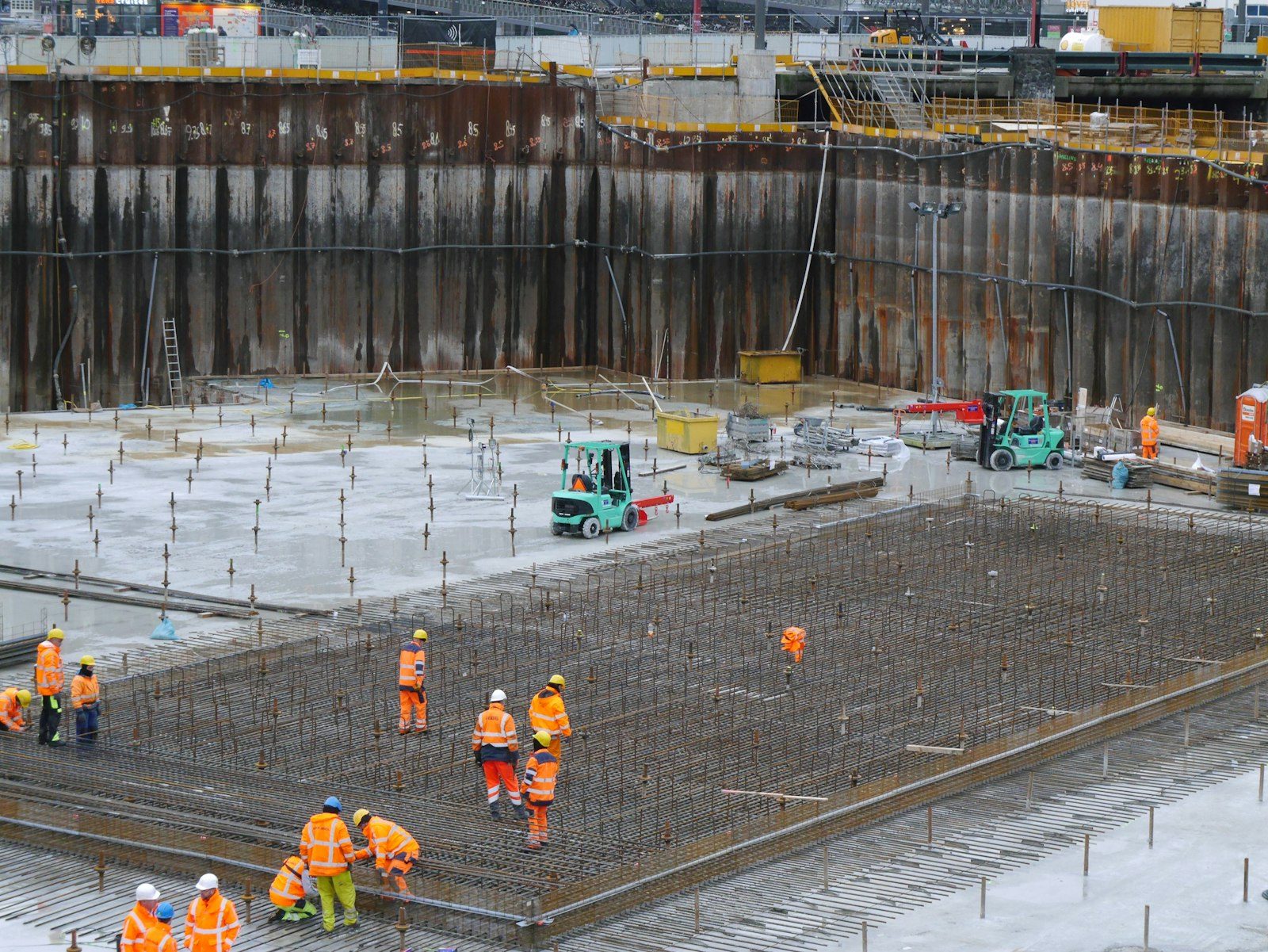
The unit that gets billed on this work isn't the hole. It's the morning.
People ask what a footing costs the way they'd ask what a tire costs, and the answer never fits the question. A crew, a rig, a truck, and a permit-ready design show up on a given morning. Whether that morning produces four holes or fourteen depends on how far the rig can get, what the auger meets on the way down, and where the dirt goes when it comes out. That's the arithmetic. The concrete itself is close to the smallest line on the sheet.
We set bearing for decks, covered porches, shops, carports, additions, and the outbuildings people keep adding on the roomier properties around Eastlake. Newer yards in North Creek Farms hand us a different set of problems than the established lots in Hunters Glen do, and neither one is harder in general. They're harder in different places, and the estimate should say which.
Depth comes first, because it isn't negotiable. Bearing goes below frost, confirmed with the building department, and then it goes deeper still if the soil at that elevation won't carry the load our engineer calculated. Two holes fifteen feet apart can want different depths. We size for what's there rather than for what would be convenient.
Access is the driver that surprises people most. A rig that can back to the work does in an hour what three people with shovels do in a day. A gate too narrow, a slope too steep, an irrigation system in the way, an established tree we're not willing to damage: every one of those turns a machine job into a hand job, and hand work is bought by the hour.
Then the dirt. Every hole produces spoils, and clay that came out of a five-foot hole does not want to go back in tidily. Spreading it takes time, hauling it takes a truck, and both belong on the estimate rather than in the fine print.
Last is trips. Two mobilizations to the same property cost roughly twice one, no matter how little concrete goes in the second time. If there's more work coming, tell us early. That's the cheapest sentence in this whole trade.
| How the hole gets made | Where it's the right tool | What it costs you somewhere else |
|---|---|---|
| Hand dug with shovel and clamshell | Tight courtyards, work inside a finished patio, anywhere a machine would do more harm than good | Time, and a limit on how deep and how wide anybody can honestly go |
| Two-person handheld auger | A handful of modest holes in soft ground with a gate we can walk through | Stops cold at cobble or hardpan, and diameter is capped by what two people can hold |
| Skid-steer or mini-excavator auger | Most residential work, once there's a route in and room to swing | Tracks on the lawn, a plywood road, and some lawn repair afterward |
| Truck or track-mounted drill rig | Deep piers, larger diameters, and anything the engineer specified as a caisson | Needs real access and staging, so it favors doing all the holes in one visit |
| Coring through existing concrete | Posts landing on a patio or garage floor you intend to keep | Slow per hole, plus a patch, and the slab underneath has to be sound enough to leave in place |
Send the plan or a photo of the yard. We'll tell you what the holes are likely to hit and what that means before anybody quotes it. (303) 569-4046.
Late summer and early fall are the friendliest stretch out here. The ground is dry enough to hold a clean shaft wall, an open hole will stand overnight without sloughing, and equipment can cross a lawn without leaving ruts you'll be looking at all winter. Spring can be excellent or miserable, and it changes week to week. Saturated clay smears instead of cutting, holes cave, and a hole that caves is a hole that has to be drilled again.
Winter doesn't shut this work down. Frost sits in the top layer and gets punched through; the bearing we care about lives well below it. What cold changes is the pour: warm mix water, an accelerator without chloride in it, blankets over exposed tops, and nothing placed on frozen material at the bottom of a shaft. Short days matter too, since a hole opened at three has to be filled before dark or protected overnight.
The wasteful move is waiting. A post that has started lifting keeps lifting, and the repair grows every season. Get looked at in any month. Do the work in whichever one suits your project.
Still unsure about something?
Call the crew at (303) 569-4046 and we will talk it through.
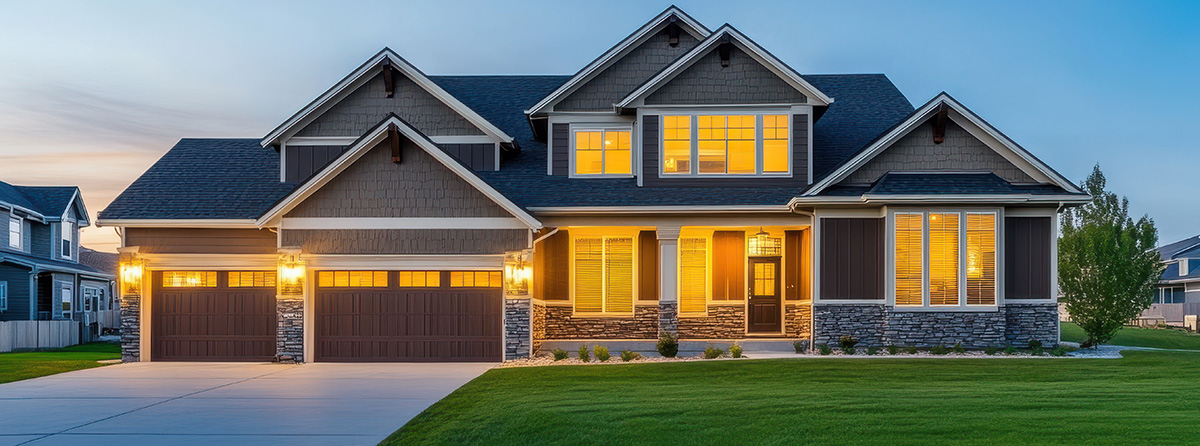
Get a free, no-obligation estimate from a crew that knows Colorado soil, Colorado weather, and how to finish concrete that lasts.
Accessibility
Adjust the site to fit how you read and browse. Your choices are saved on this device.