
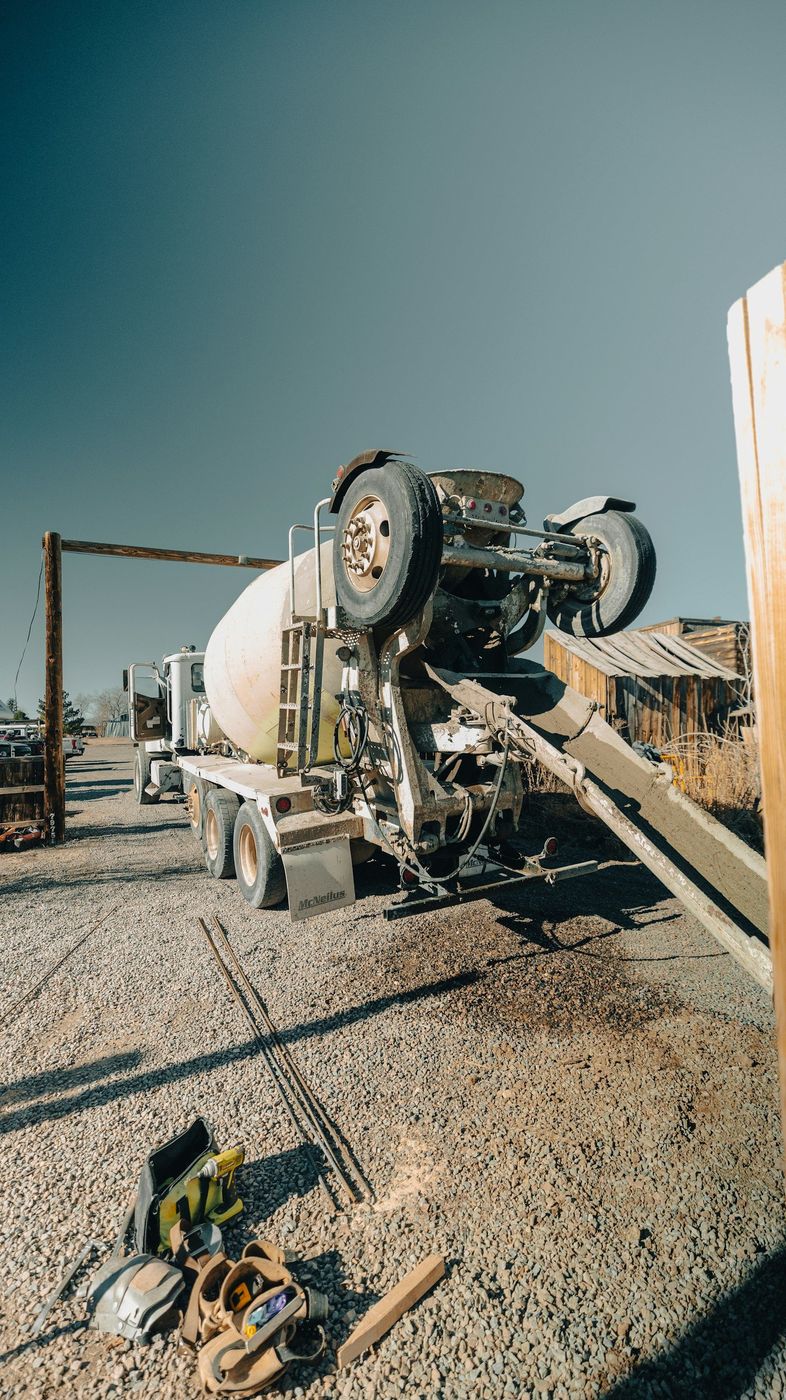
A wide open lot in July has no shade, no wind break, and a subgrade hot enough to pull water out of the mix before we finish it.
Ask a property manager when they'd like the lot rebuilt and almost everyone says summer. Long days, dry weather, tenants used to the noise. It makes sense on a calendar. It's also the hardest condition we place concrete in, and a lot is the least forgiving place to try it.
There's no shade on a parking lot. No building throwing a shadow across the work at two in the afternoon, no trees, nothing to slow the wind coming across an open pad in the north metro. The subgrade has been baking since sunrise. The air is dry enough that water leaves the surface faster than the slab can push more up. We still build lots all summer. We just build them on a plan that assumes the weather is working against us, because it is.
Three things gang up on a summer lot pour: surface temperature, wind, and humidity sitting near nothing. Together they set an evaporation rate, and when that rate passes what the slab can replace with bleed water, the top dries while everything below it is still plastic. That's plastic shrinkage cracking. Short, ragged, random cracks that show up an hour after finishing and have nothing to do with your soil or your steel.
Heat also steals the finishing window. A mix that gives a crew a comfortable stretch in May sets up in a fraction of that time in August, which is why a good crew shrinks each placement instead of pushing a bigger one and hoping. And a hot subgrade drinks, so we soak the base ahead of the trucks. None of that changes what the finished lot owes you: carry a loaded trash truck at the enclosure, move water to the inlets, crack only where we told it to. Heat just narrows the margin for getting all of it right in one morning.
If your reserve schedule is flexible, put the lot in the ground between mid-August and mid-October. Heat backs off, the monsoon pattern fades, nights cool enough that curing behaves, and there's still time to gain strength before anything freezes. Spring works once overnight lows quit dipping. Deep winter is a different job, priced with heated water, non-chloride accelerator, and blankets, and scheduled between fronts rather than on a date picked in a board meeting.
Thornton gives us a wide mix of lots. Retail corridor properties where one trash enclosure takes abuse from everybody. Newer commercial pads paved for the leasing brochure rather than the tenant who moved in. Light industrial yards running trucks heavier than the pavement was designed around. And shared association parking near Hunters Glen and Quail Valley, where the board hears about every pothole within a day.
One rule we don't bend: nothing gets placed on frozen subgrade. Ice in the base means voids by spring, and voids under a lot mean panels that rock the first time a semi crosses them.
We'll walk it with you, mark what's failing and what's fine, and give you a written scope you can take to ownership.
| How we hold water in | Where it belongs on a lot | The limit |
|---|---|---|
| Curing compound sprayed behind the finish | Most of the lot, most days. Covers big square footage fast. | Must be compatible with whatever goes on top later. Tell us about sealing or striping first. |
| Wet burlap kept saturated | Entry aprons, the dumpster approach, anywhere the surface takes the worst abuse | Somebody has to keep it wet. Dry burlap quits curing and starts pulling moisture back out. |
| Plastic sheeting weighted at the edges | Overnight coverage and quick storm protection on panels placed that day | Uneven contact leaves a mottled surface. Nobody notices in a drive aisle. |
| Evaporation retardant during finishing | Hot, windy afternoons when the top crusts ahead of the crew | Buys finishing time and nothing else. Anybody treating it as a cure is cutting a corner. |
| Fogging the air upwind of the placement | Wide open pads with no wind break anywhere | Fog the air, not the concrete. Water landing on a surface being finished weakens the top. |
| Insulated blankets | Late fall and winter placements | Useless in July. In November it decides whether the slab gains strength or just sits there. |
Still unsure about something?
Call the crew at (303) 569-4046 and we will talk it through.
Get a free, no-obligation estimate from a crew that knows Colorado soil, Colorado weather, and how to finish concrete that lasts.
Accessibility
Adjust the site to fit how you read and browse. Your choices are saved on this device.