
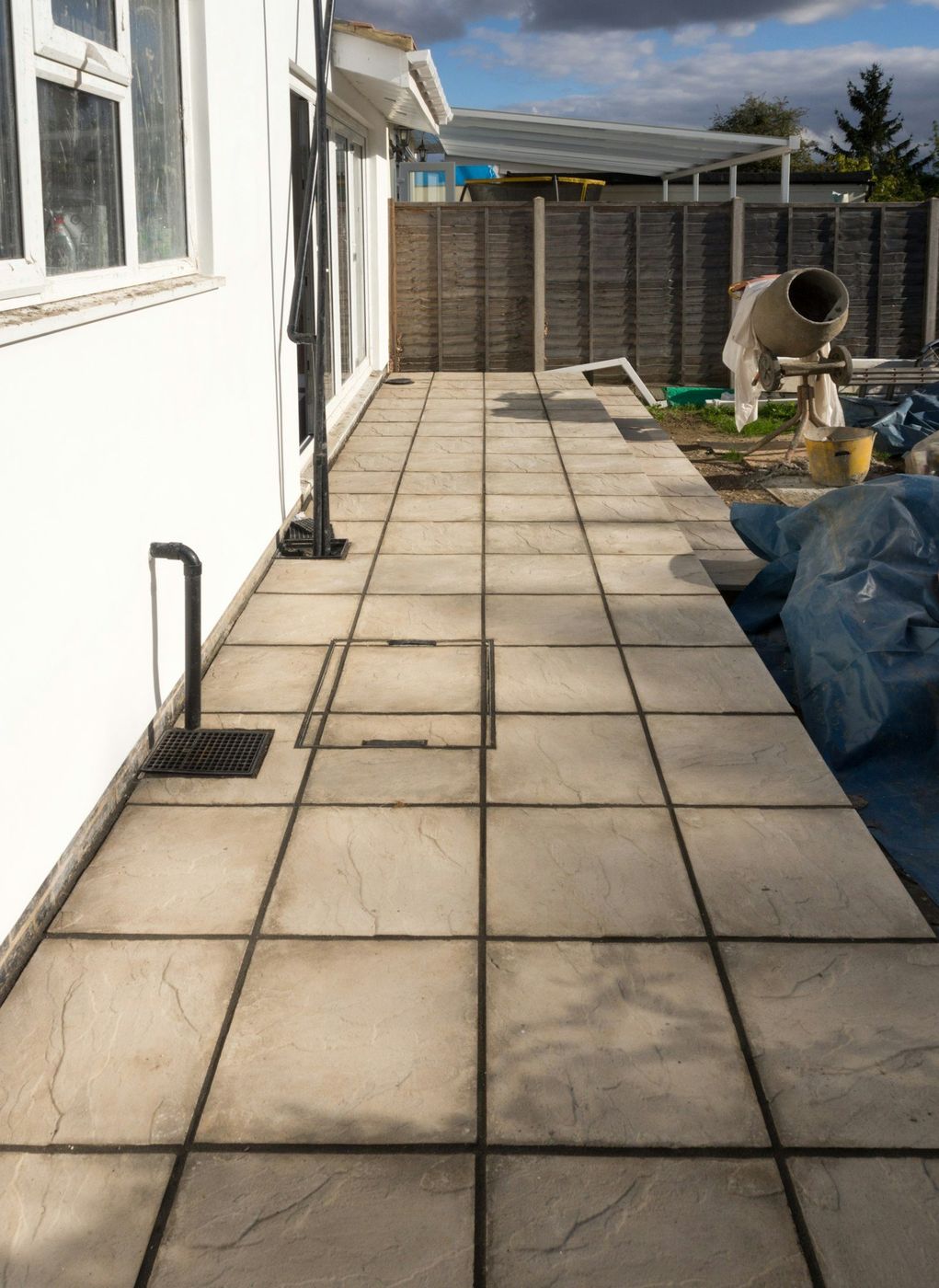
Color that reacts into the slab, then puts up with dogs, planters, and a grill that drips.
A stained slab earns its keep on ordinary days. Bikes rolled across a lower level, a wet dog shaking off inside the door, a planter that sits in one spot all summer and leaves a pale ring when you finally move it in September. That's the real test. Color that only looks right the week it goes down isn't worth paying anybody for.
So we build these jobs around use, not around a swatch. We match the color system to the slab and the room, we pick a sealer sized to the traffic that surface will actually see, and we tell you flat out what the finish shrugs off and what will mark it. Parker gives us both kinds of floors: finished lower levels in Stonegate and Clarke Farms, and shaded back patios out in The Pinery where needles, snowmelt, and afternoon runoff all get a vote.
The sealer is the part you touch. Color sits down in the concrete where nothing can scuff it, but the clear coat above it takes every chair leg, boot heel, and dragged storage tote. Which is why we ask how the room gets used before picking a sheen. High gloss photographs beautifully and shows every scratch by March. Satin hides daily wear, cleans just as easily, and still deepens the color.
Outside, the sealer does double duty. It keeps water out of the top of the slab, which is what saves you from surface flaking after a hard winter, and it takes the UV hit so the color underneath doesn't. At 5,869 feet that matters more than people guess. Sun does more damage to a patio finish here than snow ever will.
Traffic patterns show first. Slider to grill. Stairs to couch. Wherever the office chair rolls. None of that is a defect; it's a wear layer doing its job, and a recoat brings it back.
| What lands on it | What happens | What we tell you to do |
|---|---|---|
| Red wine, coffee, soda | Nothing, if the sealer is intact. It beads and sits there. | Wipe it whenever you get to it. No panic. |
| Dog accidents | Acidic urine can etch a topical coat if it keeps drying in one spot. | Rinse it. Recoat that area ahead of the rest. |
| A planter parked all summer | Trapped moisture leaves a lighter ghost ring. | Use pot feet or a saucer, and shift them occasionally. |
| Road salt off boots and tires | Chloride residue dulls the coat and leaves white crusting. | Mop it off in winter. No deicer at all the first year. |
| Grill grease | Hot oil is the one thing that reliably darkens a stained surface. | Mat under the grill. Blot fresh spills before they cool. |
| Sun through a south window | Water-based dye softens faster than reactive acid color. | Pick acid stain for the bright rooms. |
Acid stain is a chemical reaction, not a coating. Metallic salts in the solution grab the free lime in the concrete and leave behind mineral color that's part of the slab. It's permanent, it can't peel, and it comes out mottled and variegated instead of even. Earth tones only: browns, tans, rust, soft greens. Every slab reacts differently depending on how it was finished and what's in the mix, so we test a corner and let you look before we commit the floor.
Dye is a different animal. Fine pigment in solvent or water, it soaks in fast, covers a much wider palette, and gives you real control over evenness. It also has less staying power in direct sun, which is why we lean on dye indoors and acid outdoors. Plenty of our best work uses both, with one sealer over everything.
We'll stain a test patch in an out-of-the-way corner so you're picking from your own concrete, not a sample board.
Interior floors run year-round. Basements and garages stay warm and dry enough that January is a fine month to color a lower level, and our indoor calendar loosens up exactly when the exterior one freezes shut. Been putting off that gray slab under the carpet? Winter is your opening.
Outdoors runs on weather. The concrete has to be dry all the way through, not just dry on top, and we want mild temperatures with no rain while the sealer sets. Late May works. So does September, our favorite stretch for exterior color: warm days, cool nights, dry air, and runway before the first hard freeze.
New concrete waits. A fresh pour needs to reach full strength and let its surface chemistry settle before stain takes evenly, so plan on about a month between the pour and the color.
Still unsure about something?
Call the crew at (303) 569-4046 and we will talk it through.
Get a free, no-obligation estimate from a crew that knows Colorado soil, Colorado weather, and how to finish concrete that lasts.
Accessibility
Adjust the site to fit how you read and browse. Your choices are saved on this device.