
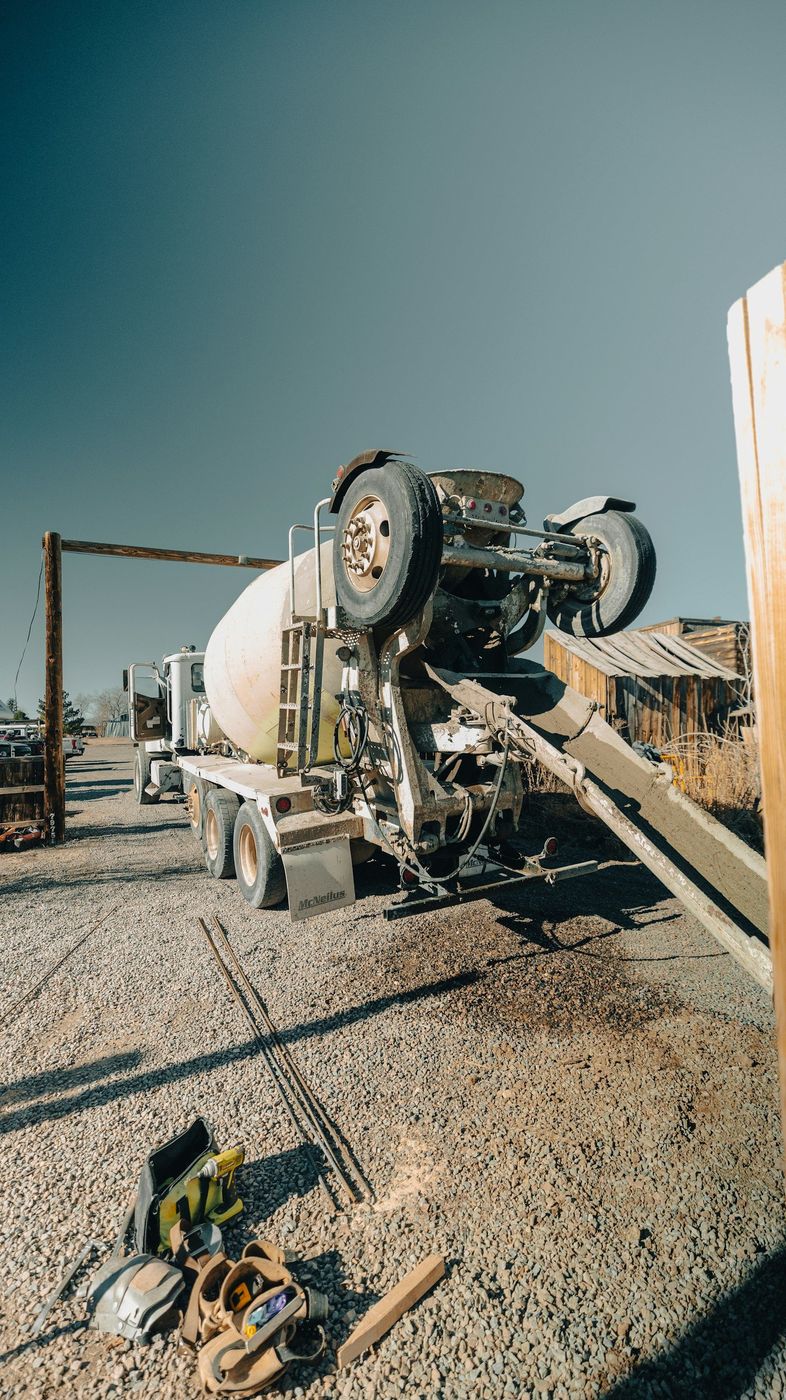
Tandem axles put a lot of weight on a small footprint. The pad has to be built for the rig, not for a sedan.
Storage lots are expensive and they're never where you want them at six in the morning on a Friday. That's the math most people are running when they call us about a pad. Park the rig at home, plug it in, load it over two evenings instead of one frantic morning, and stop writing a check every month for a gravel space across town.
What we won't do is pretend the pad is cheap. It's more concrete than a two car driveway in most cases, thicker, with more steel in it, and out on the wooded acreage around The Pinery the approach from the road matters as much as the pad itself. So let's talk about where the money actually goes and which parts of that are worth paying for.
A car spreads maybe a ton across four tires and then leaves. A fifth wheel sits in one spot for eight months with its full weight concentrated on two axles a few feet apart, plus the tongue or the landing gear jacks punching down through a pad of a few square inches each. That's a different load case entirely, and it's why four inches of concrete over so-so base does fine under the family sedan and cracks under the trailer by the second spring.
So we go six inches, and we go heavier on steel. Number four bar on chairs, tied on a tighter grid where the tires and the jacks will sit, because rebar lying on the dirt is decoration. Send us the rig specs before we set forms. Axle spacing and jack positions change where the reinforcement bunches up.
| What moves the price | The reason behind it | Notes |
|---|---|---|
| Rig weight and axle count | Drives thickness and the reinforcement grid | The single biggest spec decision on the job. Get it right once. |
| Pad length and width | Straight square footage, plus more base under all of it | Add five feet past the bumper. Nobody has ever asked us for a shorter pad. |
| Approach from the drive or the road | A coach needs a drivable path, not just a destination | Acreage lots carry more of this cost than subdivision lots do. |
| Cut and fill on a sloped site | Grading, retention, and hauling dirt off the property | Flat corner of the yard is cheap. Sidehill is not. |
| Base correction under soft ground | Depth of road base and how many lifts it takes to compact | We only know after we dig. We tell you the day we find it. |
| Utilities in the pour | Conduit for shore power, sleeves for water or a dump connection | Cheap now, expensive later. Run the sleeves even if you wait on the hookup. |
Measure your rig, then add five feet at the tail and a few at the nose. Slide-outs need clearance to the side, and if you plan to sit outside under the awning you want twelve to fourteen feet of width instead of ten. Those extra feet are the cheapest concrete in the job, since the crew and the truck are already there.
The apron is what gets forgotten. Where the pad meets the existing driveway there's a transition, and if the two slabs sit at different heights or pitch against each other you'll scrape the hitch every time. We build that joint deliberately: matched elevations, an isolation joint so the pad and the old drive move independently, and enough width in the turn that a long trailer can swing without dropping a wheel off the edge. Out on the bigger lots past Reata, that turn radius is usually what we spend the most time laying out.
Send us the make, the axle count, and a photo of the spot. We'll measure on site and put a written number in your hands for free.
The gravel pad question comes up on every acreage job. Gravel is fine until you jack the rig up on it. Then the jack pad sinks, you shim it, and next spring you're doing it again. Concrete doesn't move under a jack. That's the whole argument.Straight from the crew
Still unsure about something?
Call the crew at (303) 569-4046 and we will talk it through.

Get a free, no-obligation estimate from a crew that knows Colorado soil, Colorado weather, and how to finish concrete that lasts.
Accessibility
Adjust the site to fit how you read and browse. Your choices are saved on this device.