
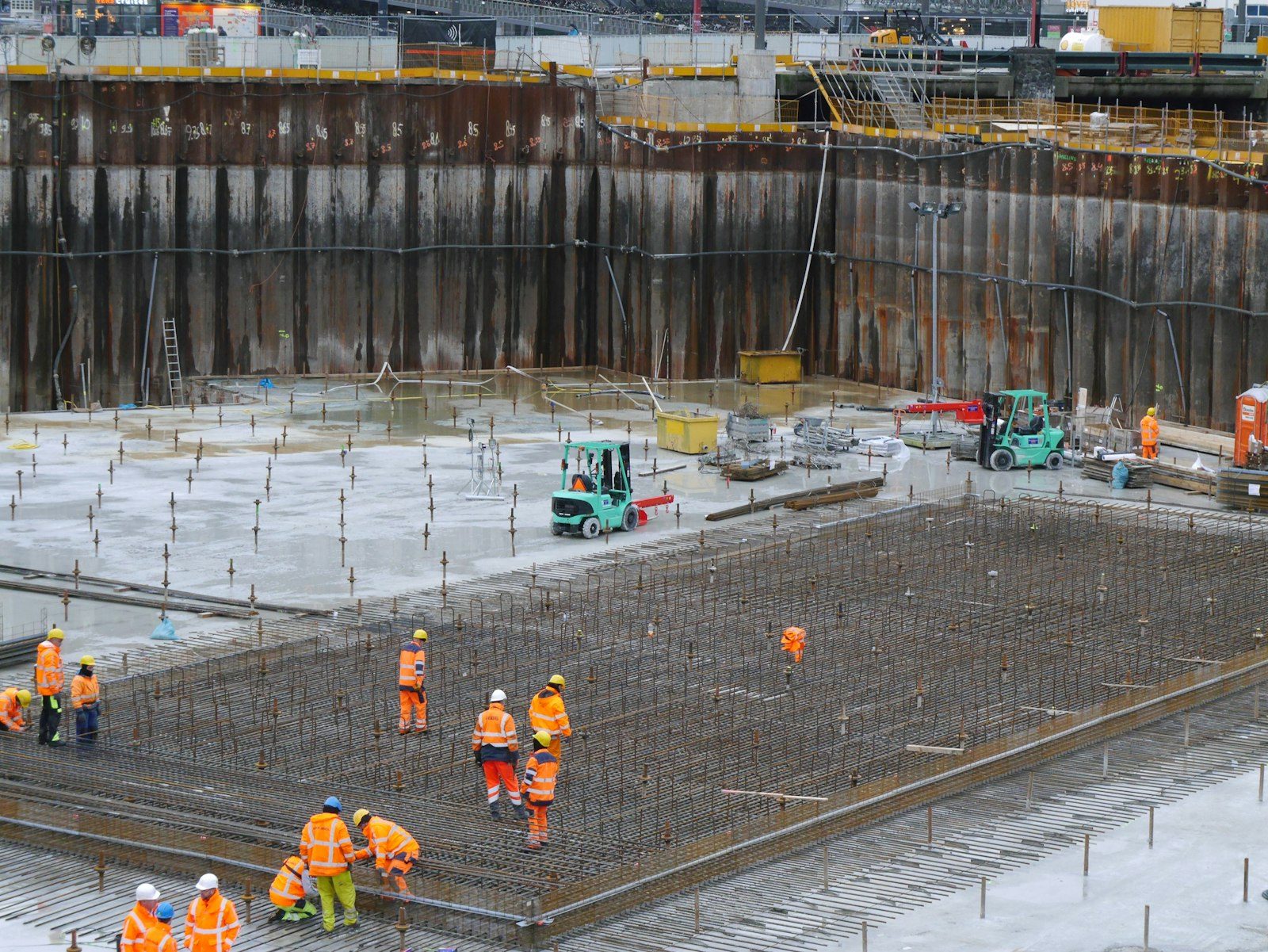
Demo, haul-off, regrade, and a new slab: the whole swap handled by one crew.
Parker got built in waves, and you can read the timeline in the driveways. Stroh Ranch and The Pinery went in first, and plenty of their original slabs are now broken into a dozen pieces, heaved at the joints, or wearing away in patches. Stonegate, Clarke Farms, and Canterberry Crossing came along later and are entering the years where small problems start compounding. Meanwhile Idyllwilde and Reata are still getting first pours from production builders working at production speed.
So we run two kinds of replacement calls in this town. In the older neighborhoods, it's full tear-outs of slabs that gave everything they had. In the newer ones, it's ripping out five-year-old concrete that failed early because somebody rushed the base. Different stories, same fix: get the old slab out, correct what's underneath, and pour it right this time.
| Stage | What's happening | Typical duration |
|---|---|---|
| Demo and haul-off | The breaker cracks the old slab, the loader stacks it, and trucks carry it away, recycled whenever the load qualifies | Usually a single day |
| Regrade and base | We correct the slope, dig out soft spots, and compact fresh road base in lifts until it stops moving | A day, longer if the ground needs real correction |
| Forms and steel | Forms lock in the lines and elevations; #4 rebar goes in on chairs, tied at two-foot centers | Half a day to a day |
| Pour and finish | Trucks roll in early so we can place, screed, and finish before the sun gets pushy | One morning |
| Joints and cure | Control joints get sawed before the crew leaves, then the slab rests under cure protection | Foot traffic in a day or two, parking after a week |
We'll come look before you commit to anything. If the slab has honest years left in it, we'll say so and leave.
Tear-out day is show-and-tell. Under the failed drives in Stroh Ranch and The Pinery we usually find the same shortcuts: concrete thinner than anyone was told, no steel anywhere, and native clay sitting where a gravel base belonged. The slab never had a fighting chance. It just took a couple of decades for the soil to prove it.
The newer failures are more frustrating. A builder-grade drive in a fast-growing subdivision sometimes sits on fill that got spread but never truly compacted. It looks fine at closing, then settles and cracks by year three as the ground consolidates under it. When we replace one of those, the fix isn't fancier concrete. It's compaction, done slowly, checked as we go, before a single form gets set. Boring work. It's also the entire difference between a slab that lasts and one that repeats history.
We swap driveways from spring thaw until the ground freezes, and the fall slots go first because September and early October are close to perfect curing weather. Summer replacements run all season long; we just build the pour around afternoon storm patterns and keep plastic staged for surprise cells coming off the foothills.
Cold months? Doable, with rules. The subgrade can't be frozen, so we work between fronts, warm the mix water, add a non-chloride accelerator, and blanket the slab the moment finishing wraps. And whatever season you pour in, keep deicer off the new surface until it has one winter behind it. Sand gives you traction. Magnesium chloride gives you a ruined finish.
The old slab tells you everything during demo. When it comes up in thin, clean plates with no steel hanging out of it, nobody has to ask why it failed. We just build the new one the way the old one should have been built.The crew lead's read on it
Still unsure about something?
Call the crew at (303) 569-4046 and we will talk it through.

Get a free, no-obligation estimate from a crew that knows Colorado soil, Colorado weather, and how to finish concrete that lasts.
Accessibility
Adjust the site to fit how you read and browse. Your choices are saved on this device.