
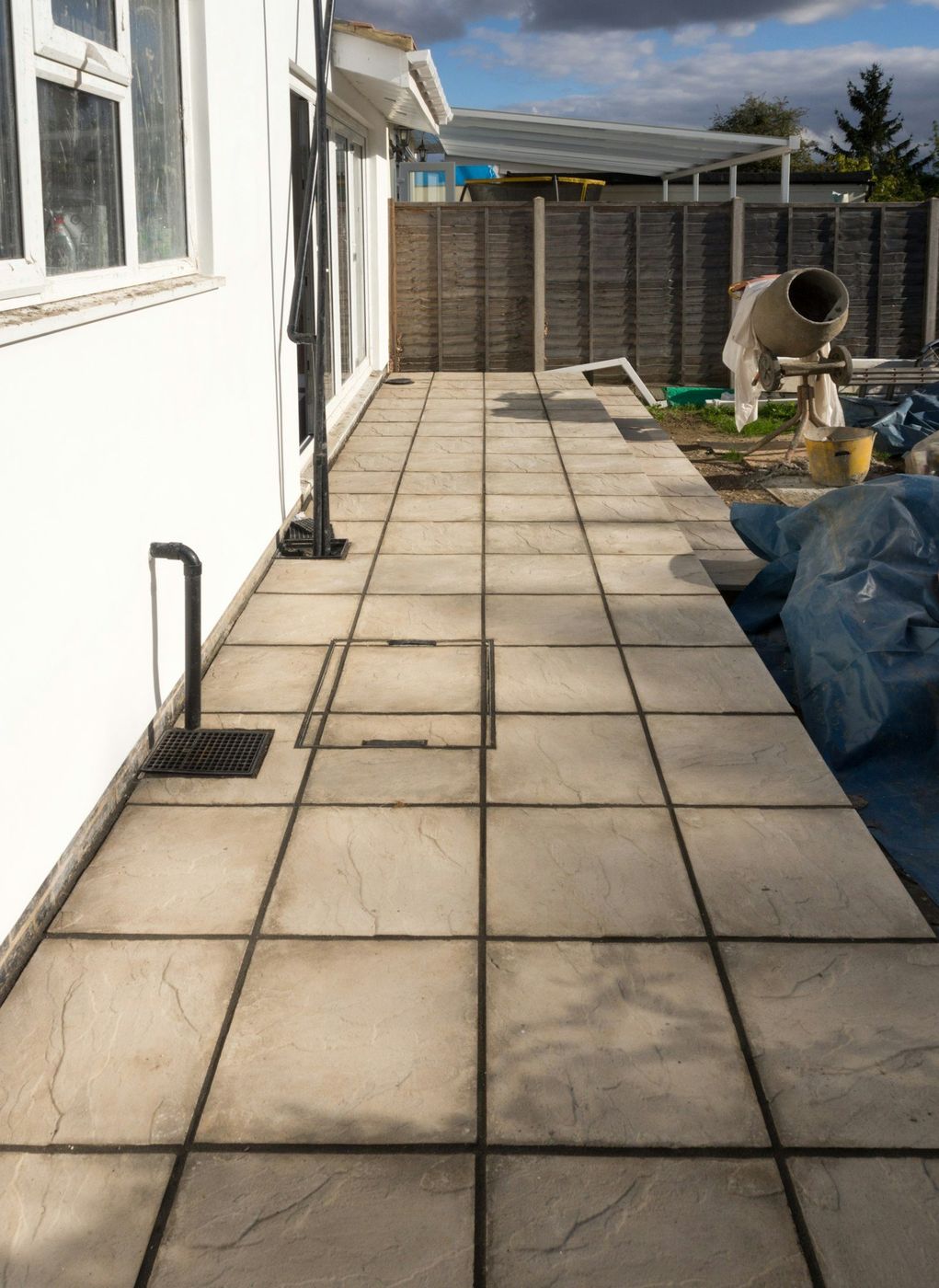
Backyard concrete sized for Colorado sun, sloped away from your foundation, finished by hand.
Pour day starts early on our patio jobs. Forms went in yesterday, the steel is tied and sitting on chairs, and the first truck rumbles up the street a little after seven. From there it's a controlled sprint: concrete rides down the chute, the crew screeds it flat, and the bull float glides across while the mud is still willing. In Parker's dry air at 5,869 feet, a slab starts setting faster than newcomers expect, so the finishing rhythm matters more here than it does at sea level.
By early afternoon the surface is edged, jointed, and finished, and your backyard has a slab where the dirt patch used to be. What it becomes after that, dinner spot, fire pit pad, the spot the dog claims by August, is up to you. Our job is building the concrete part so well you never think about it again.
Tell us the rough size and how you'll use it. We'll bring layout ideas and a written price to the walkthrough.
| Finish | What you get | What it asks for later |
|---|---|---|
| Broom | Clean lines, sure footing, the everyday workhorse look | A rinse now and then; sealing is optional insurance |
| Exposed aggregate | Stone texture that hides dirt and shrugs off wear | Periodic resealing to keep the stones locked tight |
| Stamped with color | Pattern and tone that read as flagstone or wood plank | A fresh sealer coat every two to three years to protect the color |
| Stained | Rich, varied tone over smooth or broomed concrete | The color rides near the surface, so stay current on sealer |
| Steel trowel smooth | A sleek interior-style surface | Skip it outside; it turns into a skating rink the first frosty morning |
Colorado sun at this elevation is no joke, and it changes patio design. A west-facing slab with no cover can be too hot to enjoy at 5 p.m. in July, which is exactly when you want to be out on it. So we talk through sun angles before we stake anything: morning coffee side or evening dinner side, where summer shade actually falls, whether footings for a future pergola should go in now while the crew's already there.
On the wooded acreage around Parker, shade brings its own math. Slabs under heavy tree cover hold moisture and ice longer through winter, so drainage and a touch of extra slope earn their keep. Every patio we pour falls away from the house at about a quarter inch per foot, because water that sheds toward a foundation on this clay is trouble you don't want to fund.
A lot of our patio calls come out of Idyllwilde and Reata, where builders hand over a house with a concrete postage stamp off the back door. A ten-by-ten pad can't hold a grill, a table, and the family at the same time, and homeowners figure that out the first warm weekend. We tear out or extend those little pads and pour something the yard can actually use.
In Stroh Ranch, The Pinery, and Clarke Farms, the work leans toward replacing patios that have done their twenty-plus years, plus fresh pours where an old deck came down and the owners are finished restaining wood every other summer. Stonegate and Canterberry Crossing land somewhere in between. Different yards, same conversation: how do you actually live back here, and what slab makes that easy?
Half the patios we replace failed at the house line because the original slab drained the wrong direction. Water sat against the foundation, the clay swelled, and the slab tipped even harder. Slope is a boring detail right up until it isn't.What the crew sees on site
April through October covers most patio pours, and if you want the slab ready for summer cookouts, get on the spring list early, because those slots vanish. Fall pours are underrated: cooler air slows the set, finishing gets easier, and the patio cures into its strength well before serious cold shows up.
Winter patios happen less often than winter driveways, since nobody's racing to grill in February, but the cold-weather playbook works the same if you want to beat the spring rush: heated water, chloride-free accelerating admixtures, blankets over fresh work, and never, ever a pour over frozen ground. Book a winter slot and you're eating outside on opening weekend while the neighbors are still collecting estimates.
Still unsure about something?
Call the crew at (303) 569-4046 and we will talk it through.

Get a free, no-obligation estimate from a crew that knows Colorado soil, Colorado weather, and how to finish concrete that lasts.
Accessibility
Adjust the site to fit how you read and browse. Your choices are saved on this device.