
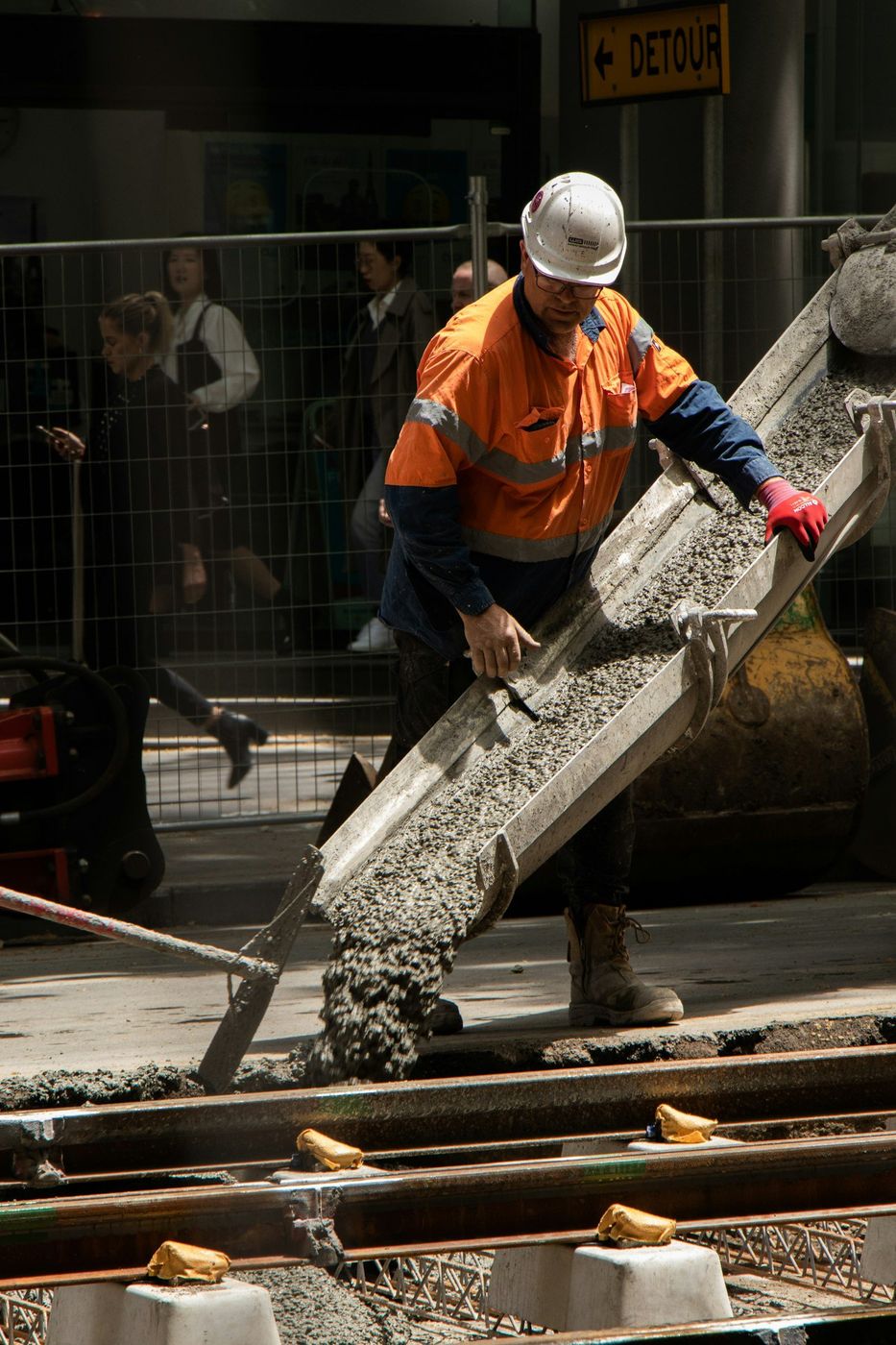
A stem wall's job description changes completely depending on what's sitting on top of it.
Under a heated walkout, a stem wall is a structural element and a water barrier working two shifts at once. Under a vented crawl space on an older ranch, it's a short, hardworking perimeter nobody has looked at since the day the trench got filled. Under a detached garage, it only has to stay exactly where it was put for the next forty winters. Same name, three different problems.
Lone Tree has all three, sometimes on one street. We pour new stem walls and rebuild failing ones across the city, and our first question is never how tall. It's what sits on top, what's packed behind, and where the water ends up.
The older housing stock in Fairways and Montecito brings us crawl space perimeters. Short walls, modest loads, and decades of accumulated moisture history. When those go bad it's rarely dramatic. A damp crawl, a sagging batt of insulation, and a wall face spalling at the base where somebody mulched too high.
Heritage Hills and Carriage Club run to walkout and garden level basements on sloping lots, which produce tall stem walls with real soil pressure behind them and finished rooms in front. Those walls have to be waterproofed, drained, and braced properly at the top before backfill, and they're unforgiving of shortcuts. Then there's newer construction, where the walls are typically fine and the calls come from additions, and finally the detached stuff: shops, garages, and outbuildings whose short unheated walls sit in ground that freezes harder than anything under the house.
You will never see the outside of your stem wall again after backfill day. That's precisely why we treat it as the important side. Damproofing goes on any wall with conditioned space behind it, drainage board over that where soil pressure and water volume justify it, and a footing drain in washed rock wrapped in filter fabric so silt doesn't choke it in year three.
Then the dirt itself. Native clay shoved straight back into the trench holds water like a bathtub liner and delivers it directly to the wall. Free draining material in the zone next to the concrete gives water a path down to the drain instead of a place to press. It costs more on the estimate, and it's the difference between a dry lower level and a spring ritual involving a shop vac.
| What's above | What the wall has to do | Where it usually goes wrong |
|---|---|---|
| Vented crawl space | Carry light load, keep ground moisture out of the framing | Grade and mulch built up above the top of the wall |
| Walkout or garden level basement | Hold back real soil pressure with a finished room behind it | Backfilled before the floor deck braced the top |
| Garage or shop slab | Support the slab edge and handle vehicle loads at the door | Thin section at the overhead door where it takes the most abuse |
| Room addition tying into a house | Match the existing bearing so the two halves move together | New footing shallower than the old one, so the addition drifts |
| Detached unheated outbuilding | Resist frost with no heat in the building helping | Set at the minimum depth and lifted by ice within a few years |
We'll look at the wall, the drainage, and the grade together, and tell you which one is actually causing the problem. No charge for the visit.
Stem walls go up in any month. Cold pours get warm mix water, non-chloride accelerator, and blankets over the forms, and we don't place anything on frozen bearing surfaces. That part is routine. April through October is smoother and cheaper, so if your schedule is flexible, aim there.
Backfill is the step we get particular about regardless of season. The wall needs its strength and, on taller walls, needs the floor above it in place before dirt goes back. Winter adds a second trap: frozen clumps of soil don't compact, they bridge, and then they thaw into voids that show up as a settled sidewalk or a sunken flower bed a few months later. When the ground is frozen we either wait or import material that behaves. We've never regretted the wait.
Still unsure about something?
Call the crew at (303) 569-4046 and we will talk it through.

Get a free, no-obligation estimate from a crew that knows Colorado soil, Colorado weather, and how to finish concrete that lasts.
Accessibility
Adjust the site to fit how you read and browse. Your choices are saved on this device.