
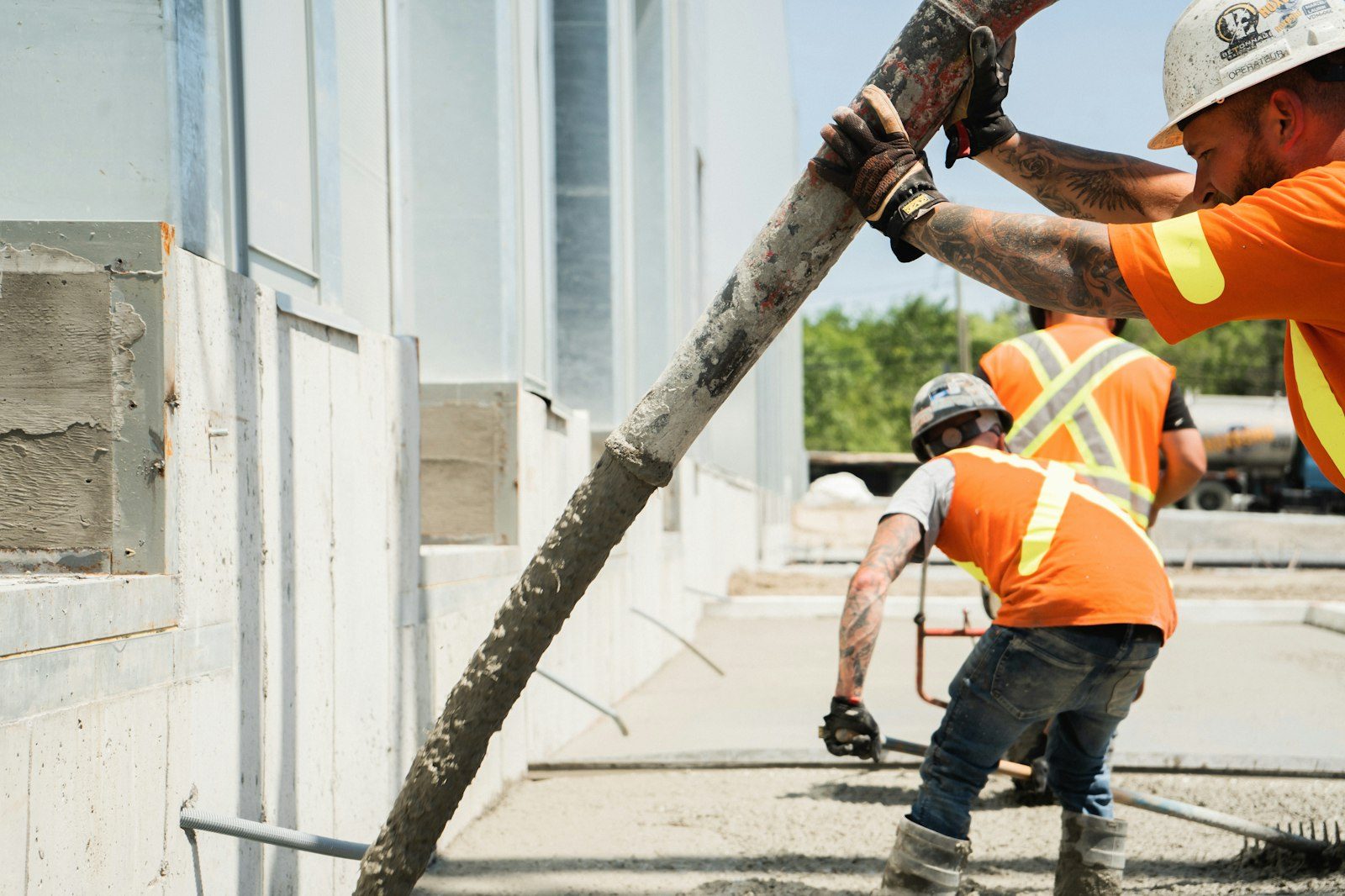
Nine degrees at seven in the morning, steam off the spoils pile, and a hole that still has to be right.
Nine degrees at seven in the morning, and there's steam coming off the spoils pile beside the auger. The top eighteen inches of that lot came out in frozen slabs the size of dinner plates. Everything under it drilled like ordinary dirt. That's frost on the Front Range in one picture: a lid, not a season long shutdown, and once you're through it a hole is a hole.
Supports have to answer to weather twice. Once while we build them, and then permanently, because the ground they live in freezes, thaws, soaks, and dries on a schedule nobody voted on. We size and place footings and piers around Lone Tree with both halves of that in mind, and the engineer who signs the design works here.
People blur these two together and then wonder why a bid seems deep for a small structure. Depth is about frost, and frost around here reaches well past a foot in a cold winter. Bury the bottom of a support below where the ground freezes and seasonal ice can no longer get underneath and lift it. That's the whole reason for the number.
Width and diameter are a different conversation entirely, and they come from load divided by what the soil can carry. A covered porch column collecting roof snow puts down real weight. A shade structure post barely puts down any, but it may need to resist wind trying to pull it out of the ground, which is a footing problem running in reverse. Our engineer runs both directions before we set a hole size, because guessing costs less on paper than it does in year four.
| Season | What the ground is doing | How we adapt |
|---|---|---|
| Early spring | Thawing on top, still frozen deeper, water everywhere | Pump holes dry, check bottoms twice, resist the urge to pour into mud |
| Late spring | Best drilling of the year, moist and stable | Book heavy pier work here whenever the schedule allows |
| Summer | Dry and hard up top, storms in the afternoon | Start early, cover open holes, place before the cell arrives |
| Fall | Dry, workable, no frost yet | Ideal window for deck, porch, and outbuilding supports |
| Deep winter | A frozen crust over drillable ground | Break the lid, thaw bearing surfaces, warm mix and blanket the tops |
Settlement gets all the attention because it's intuitive. Something sank. But the more common complaint we field on Douglas County soil is the opposite: a post, a stoop, a stair landing that keeps rising while the house sits perfectly still. Water gets into clay under a shallow support, freezes or swells, and the smallest, lightest thing on the property is the easiest for it to move.
That's why heave picks on decks, pergolas, gates, and detached structures. The house has weight and depth on its side. A twelve inch deep post hole has neither. We see it in the older backyards of Fairways and Montecito where original decks and arbors have been through decades of freeze cycles, and we see it on newer builds where a subcontractor set posts fast in the fall. Fix is the same either way: get below the frost, get onto soil that will hold, and give water somewhere to go.
We'll dig, look, and tell you whether it's a support problem or something cheaper. The visit and the estimate cost nothing.
The custom homes up in Heritage Hills and Carriage Club bring us the heavier work: piers under an addition, supports for a covered outdoor room, a porte cochere column that needs more under it than what's there. Bigger structures, longer spans, and more roof load funneling into fewer points. Those jobs almost always start with the engineer, not the auger.
Newer construction around the RidgeGate side sends different calls. Usually a deck or a detached structure whose supports were set to the minimum on a tight builder schedule, and which has started telling on itself a few winters in. And across every neighborhood we drill piers for garage additions, sunrooms, retaining structures, and outbuildings that need to be tied into ground that doesn't rearrange itself every March.
Still unsure about something?
Call the crew at (303) 569-4046 and we will talk it through.

Get a free, no-obligation estimate from a crew that knows Colorado soil, Colorado weather, and how to finish concrete that lasts.
Accessibility
Adjust the site to fit how you read and browse. Your choices are saved on this device.