
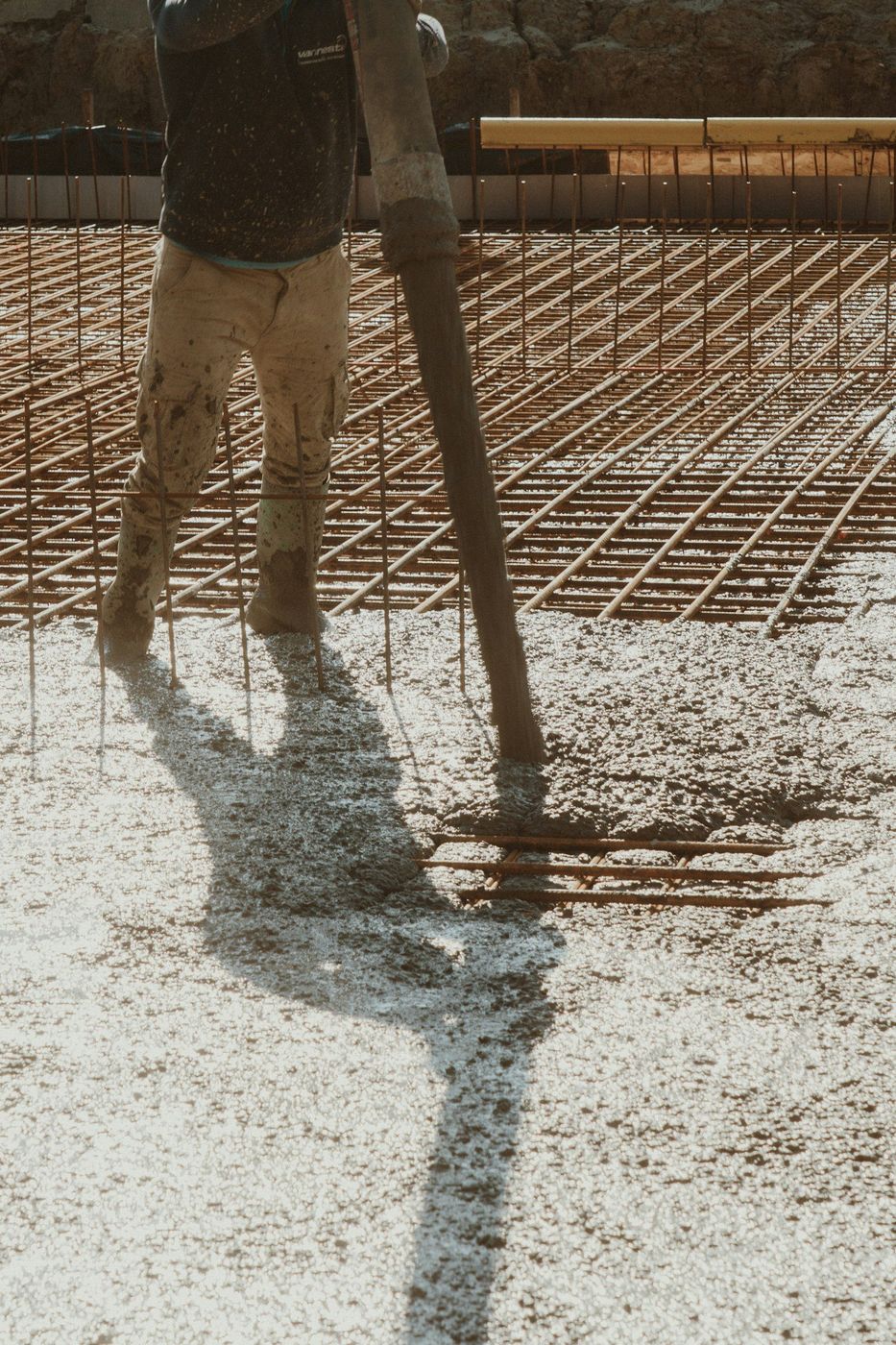
The smallest slab we pour, carrying the most concentrated load in the yard, and the one place skimping shows up fastest.
A spa pad is a small rectangle of concrete, and that's exactly what makes it easy to get wrong. People price it against a patio, see a number that feels heavy for the square footage, and start shopping for a way around it. Then a filled tub with four adults in it sits on that shortcut, in one spot, forever.
So let's talk about where the money goes on a pad and what each dollar is actually buying, without pretending the answer is the same for every backyard in Southbridge and Highland Walk. Some upgrades on a spa pad are genuinely optional. Some of them are the entire reason the slab exists. Knowing which is which is the difference between spending well and spending twice.
Square footage is nearly irrelevant here. Getting a crew, a truck, and the tools to your house costs what it costs whether the pad is eight by eight or ten by twelve, and that fixed part of the job dominates a small pour. Which is why the single best move most homeowners can make is combining the pad with other flatwork. Pouring a spa pad the same morning as a patio extension or a walk costs a fraction of what two separate visits cost.
After that, access does the heavy lifting. A pad the truck can reach with a chute is one thing. A pad behind a gate on a sloped Ken Caryl lot, reached by buggy or pump line, is another, and that's a real difference in labor rather than an upcharge somebody invented. Excavation depth matters too. If the spot has soft fill or an old planting bed in it, we dig it out and rebuild the base, because the concrete is only as good as what it bears on.
| The decision | The cheaper way | What it costs you later |
|---|---|---|
| Slab thickness | Pour four inches like a walkway | Cracking under a concentrated load that never moves off the spot |
| Reinforcement | Wire mesh laid in and hoped for | Mesh ends up on the bottom and the slab has nothing where it counts |
| Base under the slab | Pour on whatever soil is there | Uneven settlement, a tilting cabinet, and shims under one corner |
| Electrical conduit | Run it on the surface after the pour | Exposed conduit, a trip hazard, and a core drill through good concrete |
| Pad footprint | Match the tub exactly, not an inch more | No dry footing to stand on and mud tracked into the water |
| Surface finish | Trowel it smooth because it looks better | Ice underfoot on the one night of the year you want the tub most |
Think about what sits on top. A spa shell is engineered to be supported uniformly across its whole base. Take that support away at one corner, even slightly, and the shell twists. Doors stop latching. The cabinet skirt gaps. Plumbing unions that were snug start to weep, and a jet that leaks inside the cabinet can run for months before anybody notices. Most manufacturers are explicit that support has to be level and continuous, and a warranty conversation about a tub sitting on a tilted pad is not a conversation you want.
Then there's the practical cost of being wrong. Fixing a bad pad means draining several hundred gallons, getting a filled tub's worth of equipment back out of a finished backyard, and doing the concrete over with the landscaping already in. The pad is the cheapest part of that whole system and the only part that's genuinely permanent. Build it once.
On timing, we pour spa pads most of the year. Cold-weather work uses heated mix water, non-chloride accelerator, and blankets, and we won't place on frozen ground. Spring through fall is easier and cheaper, and the sweet spot is pouring in early fall so the concrete has weeks behind it before you actually want to be out there in the steam.
Send us the model and the delivery date. We'll size the slab, sleeve the conduit, and have it cured before the truck shows up.
Still unsure about something?
Call the crew at (303) 569-4046 and we will talk it through.

Get a free, no-obligation estimate from a crew that knows Colorado soil, Colorado weather, and how to finish concrete that lasts.
Accessibility
Adjust the site to fit how you read and browse. Your choices are saved on this device.