
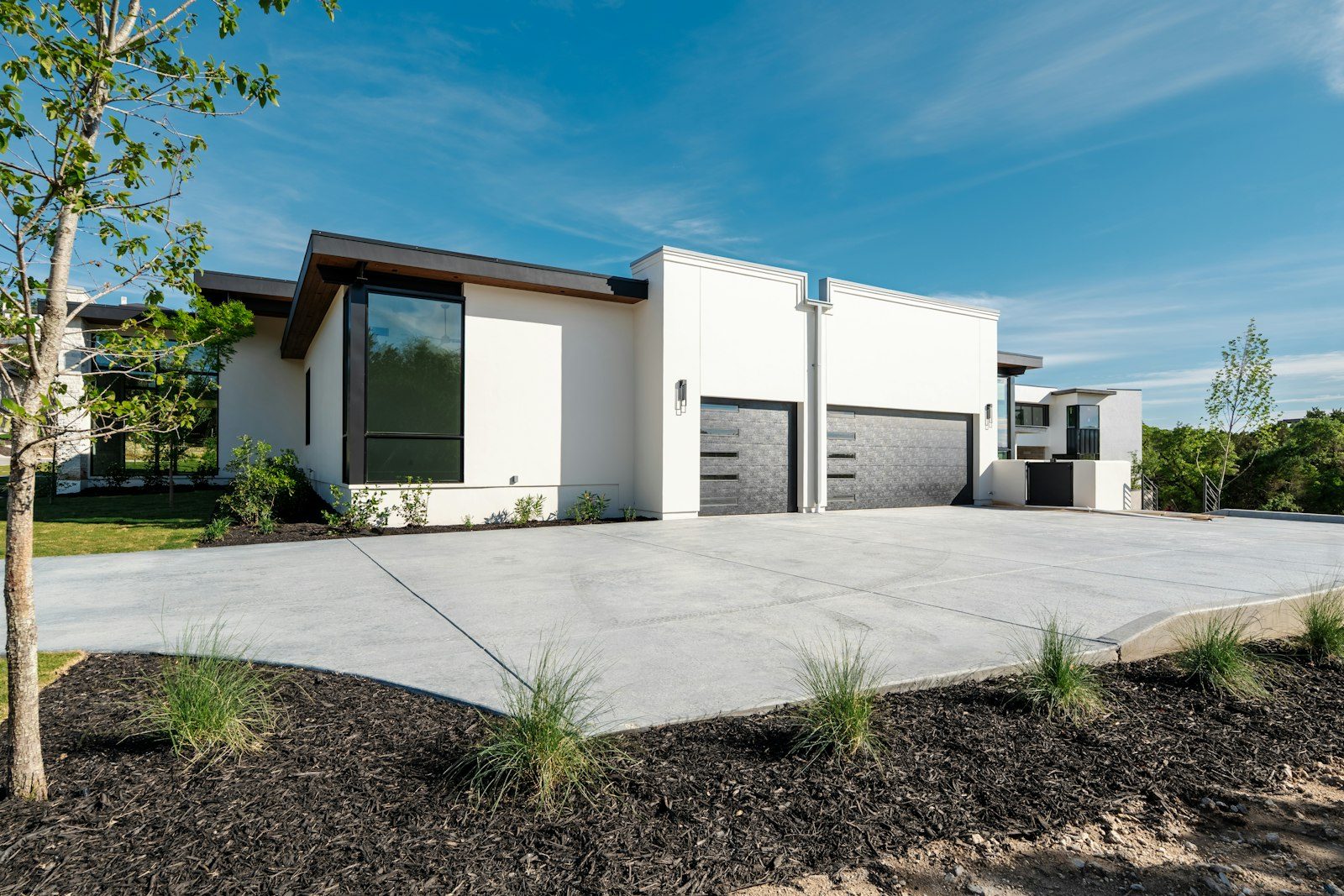
Driveways built for whatever your lot is hiding: clay, rock, slope, or all three at once.
Ask us what a Littleton driveway costs and we'll ask you a question right back: what's under it? Because in this town, that answer changes block by block. Down near the historic core, you're mostly on clay that swells when it's wet and shrinks when it's not. Head west toward Ken Caryl and the ground turns rocky and the lots start to tilt. Plenty of properties in between sit on some mix of the two. The concrete is the easy part. Reading the ground is the job.
We're a licensed, bonded, and insured Denver-area contractor with a structural engineer on staff, and we've poured drives on flat clay lots and on grades that made the mixer driver nervous. Every one of them started the same way: with a shovel in the dirt, figuring out what we were actually building on before anyone talked about finish options.
Here's the thing nobody tells you at the big-box store. Two driveways can get the identical mix, identical steel, identical finish, and one fails in eight years while the other is still flat in thirty. The difference is almost never the concrete. It's the six inches below it.
Clay is the usual suspect around Littleton. It moves with moisture, and a slab poured straight on it rides that movement until something cracks. But the foothill side of town adds two more problems. Rock near the surface makes excavation uneven, so you end up with a slab that's four inches thick in one spot and two in another unless somebody actually checks. And slope sends roof and yard water racing across the drive, or worse, under it, washing out the base one storm at a time. So we grade first, compact road base until it won't take a boot print, and set the drainage before a single form stake goes in.
The older housing stock around Columbine and Southbridge keeps us busy with full driveway rebuilds. A lot of those original drives went in decades ago, thin and unreinforced, and the clay has had plenty of time to work on them. Ken Caryl calls are different. Out there the conversation is usually about grade: a drive that climbs to the garage, water that wants to cross it sideways, rocky cuts that need real base correction. And in Highland Walk and The Hills at Piney Creek, we see newer homes where the builder's driveway was fine but small, so we're widening, adding a pad for the third vehicle, or replacing builder-grade work that skipped the compaction step.
Different neighborhoods, different problems. Same rule everywhere: fix the ground first.
| Ground condition | What it does to a slab | How we build for it |
|---|---|---|
| Expansive clay | Swells and shrinks with moisture, lifting and dropping panels | Thick compacted road base, steel on chairs, joints cut the same day |
| Rock near the surface | Uneven excavation leaves thin spots that crack first | We cut to consistent depth and verify thickness before the pour |
| Slope toward the garage | Runoff crosses or undercuts the drive, then freezes on it | Regrade, crowned or cross-sloped slab, drainage routed off the concrete |
| Old fill or loose soil | Settles under load, so the slab drops with it | Excavate the soft material, rebuild in compacted lifts |
| Flat lot with poor runoff | Water ponds at the slab edge and soaks the base | Pitch the finished surface and give the water somewhere to go |
We'll come look, check the grade, and put a number in writing. The estimate is free and nobody follows up with a hard sell.
May through October is the comfortable window. September pours might be our favorite: warm afternoons, cool nights, no monsoon buildup over the foothills at 2 p.m. Spring is fine once nights stay above freezing, and summer works as long as somebody is watching the radar, because rain on a slab that's still being finished will scale the surface. We cover fresh work with plastic when a storm builds.
Winter isn't off the table. Heated mix water, non-chloride accelerators, and insulated blankets let us pour into the cold months, though we won't touch frozen ground. Frost under a pour is a guaranteed callback, so if the base is frozen we wait for a thaw window. One more thing: skip the deicers on new concrete through its first winter. Magnesium chloride in particular is rough on a young surface. Sand and a shovel, that's it.
We opened up a drive on the west side of town last season and hit rock eighteen inches down on one end and soft clay on the other. Same driveway, two different planets. That's Littleton. You don't guess at the base out here, you dig and find out.From the crew lead on these jobs
Still unsure about something?
Call the crew at (303) 569-4046 and we will talk it through.
Get a free, no-obligation estimate from a crew that knows Colorado soil, Colorado weather, and how to finish concrete that lasts.
Accessibility
Adjust the site to fit how you read and browse. Your choices are saved on this device.