
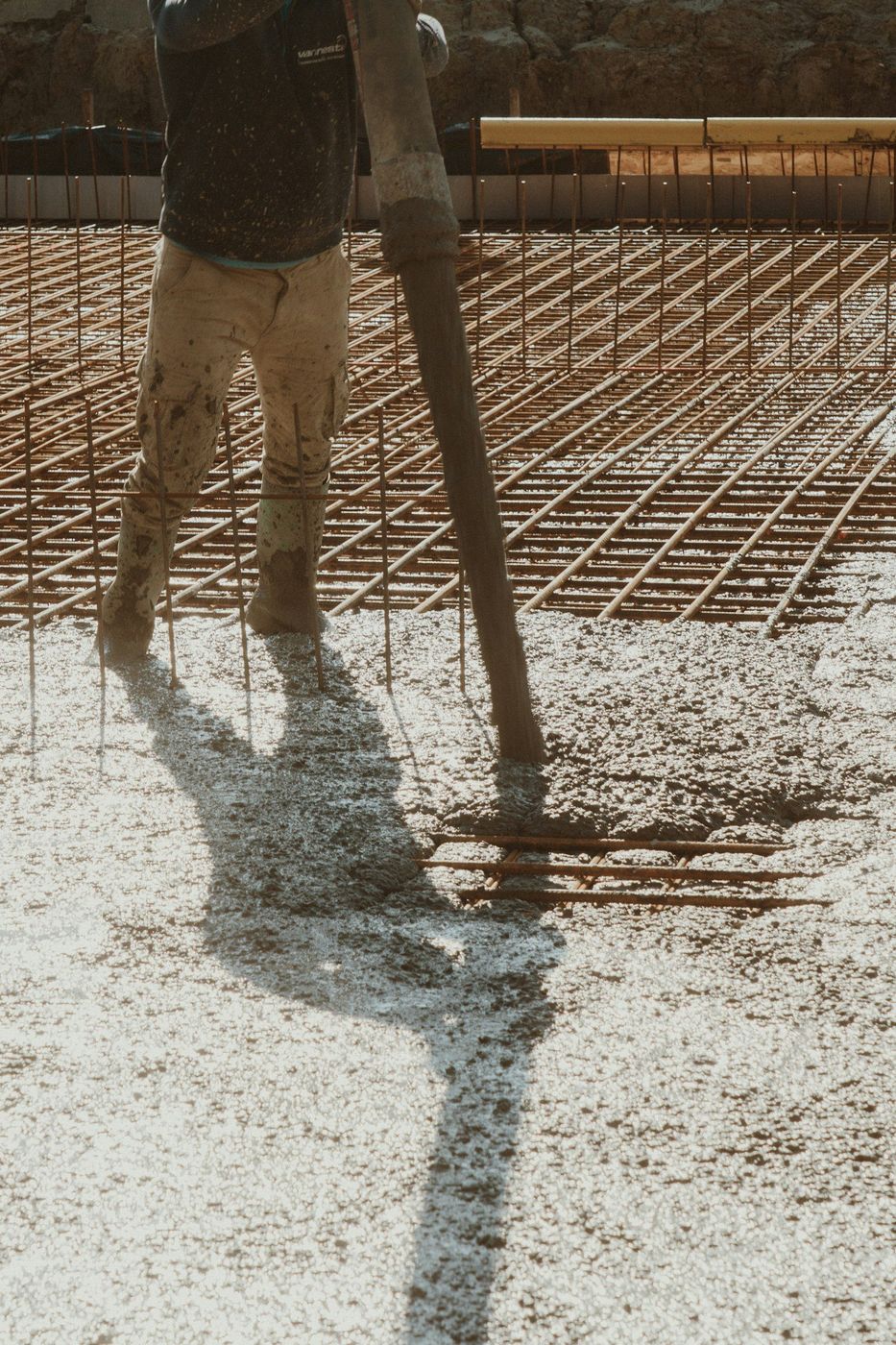
Public walk work, from the saw cut on Monday to the broom pass that finishes it.
A sidewalk pour is a run of small yes-or-no calls, and by the time the truck pulls away our foreman has made a few dozen. Is the base tight. Is the cross slope holding panel to panel. Is the surface ready for a broom or still an hour off. Is that gray cloud stacking over the foothills going to matter. From the porch it looks like one smooth operation. Inside the forms it's decisions with a clock attached.
This page is the walkthrough, so you know what's happening out front and why in that order. Our license, bond, and insurance are current, and we've got a structural engineer in house for the jobs that need one. Public walk gets treated like what it is: concrete that strangers, strollers, and wheelchairs use every day.
We start with paint on the ground and a saw. Bad panels get cut full depth at the joints so the neighbors' good concrete doesn't chip out with ours. Then the broken pieces come up and go straight into the truck for recycling. What's left is a rectangle of dirt, and that dirt is the part of the job you'll never see again.
Out come the roots, the old bedding sand, any pocket of soft clay. Base goes in and gets compacted. Forms get set to string and shot with a laser, not eyeballed off the panel next door, since that panel may be why we're here. On older blocks near downtown the run has usually drifted out of slope over the decades. Newer sections through Highland Walk sit flatter but often came in thin, and trenching a run up around Ken Caryl means rock. Either way, grade gets rebuilt to numbers.
Concrete goes in, gets pulled to grade, and then the crew waits. People misread that part. Bleed water has to come up and go before anybody touches the surface, and working a slab too soon locks that water into the top skin, which is what makes concrete dust and flake two winters on. So we bull float, step back, and watch.
When it's ready, edges get run, joints get cut, and the broom goes on perpendicular to the direction people walk. Cross slope gets checked again with a level before the surface sets, because two percent is the ceiling and a walk that drifts past it is a walk somebody has to redo. Running slope, panel width, and the transition where your driveway crosses all get the same attention. Then the plastic comes out if there's any chance of weather, and we're done touching it.
| What we're looking at | The call | Reasoning |
|---|---|---|
| Frost still in the subgrade at eight | Postpone | Concrete on frozen ground is concrete you buy twice |
| Storm cell building over the foothills by one | Pour anyway, plastic staged at the forms | Rain on a finished, set surface is harmless; rain during finishing is not |
| Ninety degrees, dry, and windy | Evaporation retarder, extra hands, cover it fast | A slab skinning over faster than we can finish will craze |
| Truck arrives soupy | Hold the load for adjustment, or send it back | Extra water at the chute buys workability and costs strength |
| Subgrade soft after an overnight storm | Dig out and rebuild base before any concrete lands | Nothing we do on top fixes ground that won't hold weight |
| Overnight low dropping into the twenties | Blankets on before the crew leaves | Fresh concrete that freezes in its first day never recovers |
Send a photo and the length of the run. We'll tell you what's worth replacing and what can wait, at no charge.
Mature trees do most of the lifting we get called about. A root under a panel isn't a maintenance problem, it's a growing structural member, and grinding the lip only resets the clock. We cut roots back where the tree can spare them, add a barrier in the trench, and sometimes rework the panel layout so the concrete bridges rather than fights. Big established trees in Columbine and Southbridge are worth planning around.
Right-of-way work is often permitted and inspected, so check with the city before anything gets broken out. We file where a permit applies and meet the inspector on site. Our walk crews run hardest from April into late October. Winter panels are doable with hot water in the mix, chloride-free accelerators, and blankets, though the schedule bends around weather instead of the calendar.
Still unsure about something?
Call the crew at (303) 569-4046 and we will talk it through.
Get a free, no-obligation estimate from a crew that knows Colorado soil, Colorado weather, and how to finish concrete that lasts.
Accessibility
Adjust the site to fit how you read and browse. Your choices are saved on this device.