
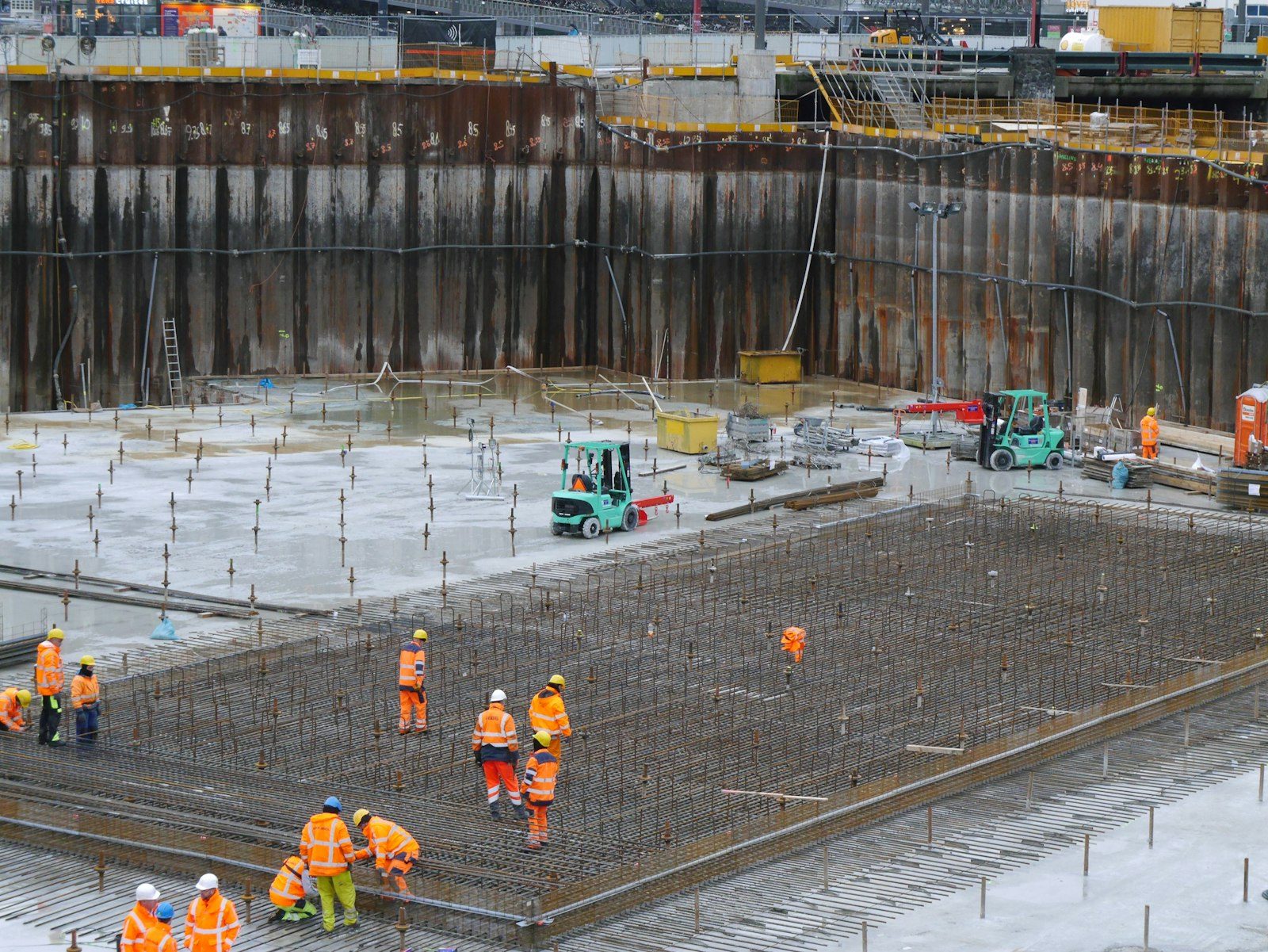
Cracks diagnosed by an engineer on our payroll, fixed by a crew that pours concrete for a living.
Here's what a repair day looks like at a Littleton house with a settling foundation. The crew is there early, plywood down to protect the lawn, and by mid-morning there are neat excavations at the marked footing points. No guesswork about where those marks go; our structural engineer set them after the evaluation, along with the load numbers behind each one. Piers go in, the structure gets lifted or stabilized to the plan, and the holes close up. Most homeowners tell us afterward the scariest part was the weeks of wondering beforehand.
That wondering is usually where we come in. A crack shows up over a doorframe, or the basement floor develops a slope you'd swear wasn't there last year, and every search result screams catastrophe. Take a breath. Most cracks we look at are cosmetic. The point of having an engineer in-house is telling you which kind you have before anyone talks money.
Two forces, mostly. The first is the clay that underlies much of town: it swells with spring moisture, shrinks through dry stretches, and cycles a foundation up and down by fractions of an inch until something shows. The second is Littleton's geography. As you move from the historic downtown blocks toward the foothills, slope and rocky ground enter the picture, and with them come drainage patterns that concentrate water against one side of a house. A foundation can be fine for forty years and start moving after one landscaping project changes where the runoff goes.
Age plays its part too. The older stock around downtown and through Columbine and Southbridge was built before modern drainage detailing was standard, while newer homes in Highland Walk or The Hills at Piney Creek more often show early settlement from fill that wasn't compacted well when the subdivision went in. Different causes. Same physics.
Half the foundations I look at aren't foundation problems. They're water problems that found a foundation. The downspout dumps at the corner, the clay swells, the corner lifts. Fix the water first and half the drama goes away.The crew lead's read on it
| What you're seeing | Worry level | Typical path |
|---|---|---|
| Thin vertical crack in poured concrete | Low | Usually shrinkage; seal it against water and keep an eye on it |
| Stair-step cracking through block or brick | Moderate | Often differential settlement; evaluation warranted, urgency depends on movement |
| Horizontal crack in a basement wall | High | Lateral soil pressure; get it looked at promptly |
| Diagonal cracks off door and window corners | Moderate | Classic settlement signature; we measure before we prescribe |
| Any crack that widens season over season | Worth watching | Active movement; monitoring data tells us how fast and which fix |
Send photos or book an evaluation. You'll get an engineer-backed answer, not a scare quote.
When a foundation is actively settling, the fix is underpinning: steel piers driven or screwed down past the unstable clay to ground that doesn't move, then the structure lifted or locked where it stands. That's the heavy artillery, and it's the right call when the data says the movement is real and ongoing. But it's not the default. Plenty of jobs end with drainage corrections, crack injection to keep water out, and a monitoring plan, because the movement was seasonal and the structure had already found its equilibrium.
What we won't do is sell piers to a house that needs a downspout extension. The engineer's numbers make that discipline easy. If a contractor quotes you underpinning without measuring anything, get a second opinion. Ours is free to start.
Foundation repair runs closer to year-round than our flatwork does. Pier installation happens in winter as long as the ground allows the excavation, and the clay is often at its most honest in late summer, when dry soil shows settlement at its full extent. Spring brings its own signal: if cracks open after the first wet month, that's swelling clay talking, and it's exactly the kind of seasonal pattern the engineer wants documented.
So the practical advice is this. Don't wait for a season; start the evaluation when you notice the symptom, and let the monitoring data run across a wet-dry cycle if the situation allows. And if concrete work is part of the repair, any pour follows our cold-weather rules: no placing on frozen ground, heated water and blankets when temperatures drop.
Most foundation companies rent their engineering: an outside stamp on a plan drawn by the sales department. Ours works down the hall. That changes the incentives. The person deciding whether your house needs piers doesn't earn more when it does, and the crew installing the fix can walk the plan with its author before the first shovel. On the foothill-side lots where slope, rock, and clay all show up in one excavation, that back-and-forth between engineer and crew isn't a luxury. It's how the job gets done right the first time.
Still unsure about something?
Call the crew at (303) 569-4046 and we will talk it through.

Get a free, no-obligation estimate from a crew that knows Colorado soil, Colorado weather, and how to finish concrete that lasts.
Accessibility
Adjust the site to fit how you read and browse. Your choices are saved on this device.