
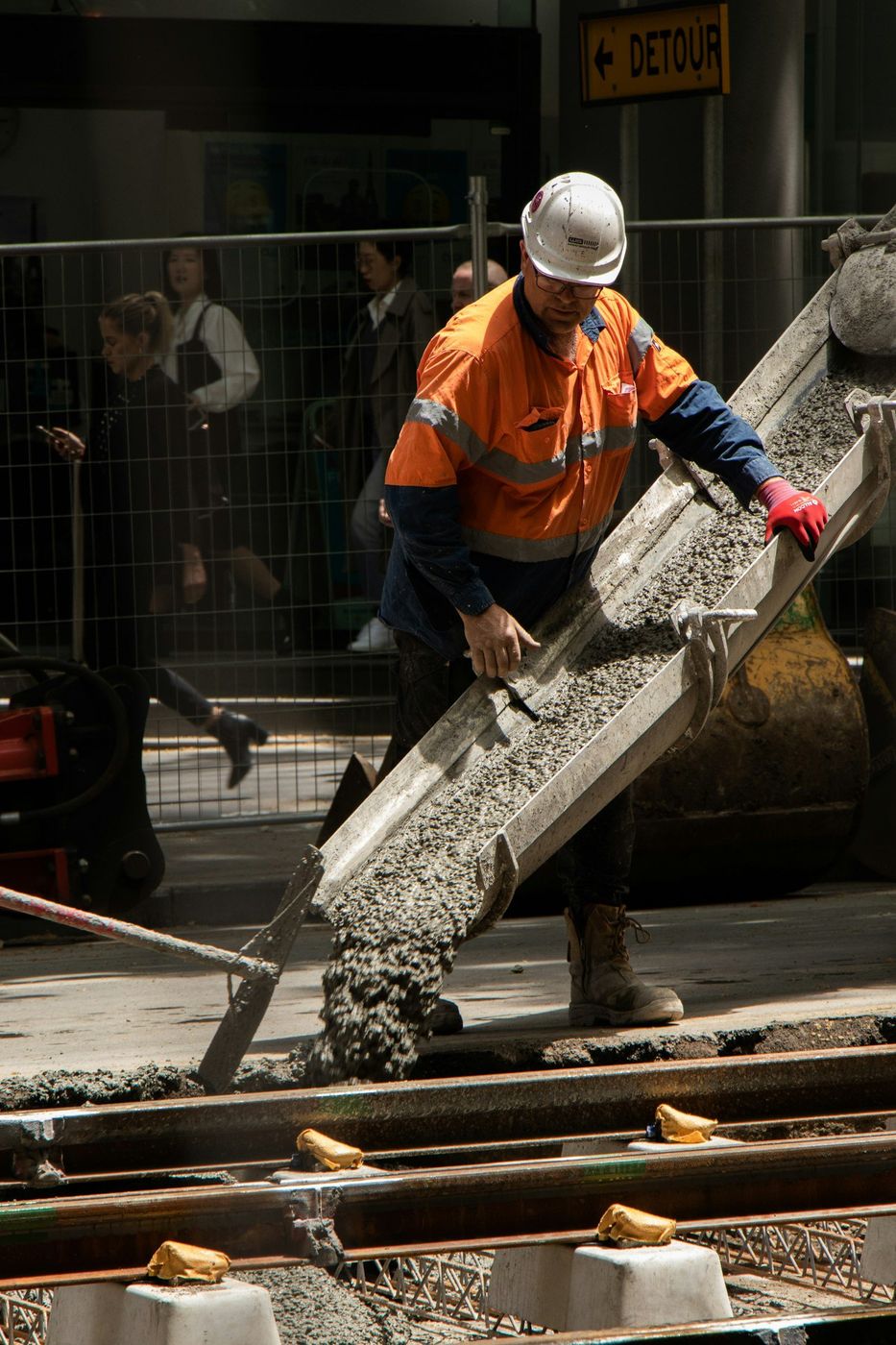
The pile of dirt next to the hole is the most useful document on the job.
Watch an auger come up out of a fresh hole sometime. The material changes as it climbs, and it changes in order: dark yard soil first, then whatever the builder pushed around forty years ago, then something stiffer and paler, and eventually the stuff we actually came for. Every layer lands on the pile in order, so the pile is a cross section of your property laid out sideways on a tarp.
We read it before deciding anything. A deck, a shop, a covered patio, an addition: all of them ride on whatever sits at the bottom of a hole, and the only honest way to know is to open one. Littleton makes that interesting, because the ground under Columbine and the ground out toward Ken Caryl are not the same material at all.
The top foot or two is almost never structural. Yard soil, old landscape fill, sometimes buried construction debris nobody mentioned at closing. Fine for growing grass, useless for holding weight. We drill through it.
Below that, most of the flat ground in town hands us clay. Stiff, pale, sticky when wet, and perfectly able to carry a load right up until its moisture changes. Head toward the foothill edge and the profile shifts fast. Around Ken Caryl we find decomposed granite, cobble, sometimes solid rock a few feet down. Excellent bearing, slow drilling. The newer streets near Highland Walk add their own wrinkle: engineered fill from development days, which can be very good or very indifferent.
| What comes up | What it means down there | What changes in the design |
|---|---|---|
| Loose dark soil and old fill | Nothing structural, whatever the depth | We drill through it and don't count an inch of it as bearing |
| Stiff tan clay, dry and crumbly | Decent capacity now, active moisture behavior later | Deeper piers, skin friction reaching past the seasonal zone |
| Damp gray clay or a wet seam | Water is traveling through that layer, probably from uphill | Deeper still, and drainage handled above ground before we finish |
| Clean sand and gravel lens | Good drainage, moderate capacity, and a hole that wants to cave | Casing or a tube so the shaft stays open until concrete arrives |
| Decomposed granite and rock chunks | Real bearing close to the surface | Shallower supports, wider footings, a longer day on the drill |
| Standing water in the shaft | The hole intercepted a perched water table | Pump it, case it, or move the support and tell the engineer first |
Decks, shops, additions, covered patios, hot tubs. Free estimate and an engineer's read on the ground. (303) 569-4046.
People ask how deep as if depth were one number. It isn't. Depth and spacing trade against each other: fewer supports means each carries more, so each goes deeper or wider. More supports spread the load and can be shallower, but you're buying more holes.
Two floors set the minimum. Frost is one, and on the Front Range that means planning for something in the range of two and a half to three feet before load even enters the conversation. Bearing is the other, and on clay bearing wins. We keep going until the shaft has the side friction and end capacity to hold without riding the layer that moves every season. Our engineer sets the numbers. We don't eyeball it.
Here's advice you'll read online that we'd like to bury: throw a few inches of gravel in the bottom of the hole for drainage. On sandy ground, harmless. On the clay under most of this town, you just built a bathtub. Water finds the gravel, the clay holds it there, and the bottom of your pier spends every winter in a wet pocket that freezes and pushes.
What works is keeping water away up top. Grade falling away, downspouts carried past the posts, sprinkler heads aimed elsewhere. Down in the hole we want concrete against undisturbed soil. No cushion, no soft spot, no drilling crumbs left in the bottom. We clean shafts before we fill them, every time.
Late summer through fall is the sweet spot. Dry ground, shafts that stand open, no mud. Spring works but runs slower, since saturated clay sloughs about as fast as the auger clears it. Summer is fine when we place early instead of chasing an afternoon storm.
Winter changes less than people expect. Frozen ground is a lid, not a wall. The top foot comes out in chunks and everything under it drills like ordinary dirt. What we won't do is pour against frozen material or leave fresh piers bare on a night headed for single digits. Heated water, blankets over the tops, and every hole drilled and filled the same day.
Still unsure about something?
Call the crew at (303) 569-4046 and we will talk it through.
Get a free, no-obligation estimate from a crew that knows Colorado soil, Colorado weather, and how to finish concrete that lasts.
Accessibility
Adjust the site to fit how you read and browse. Your choices are saved on this device.