
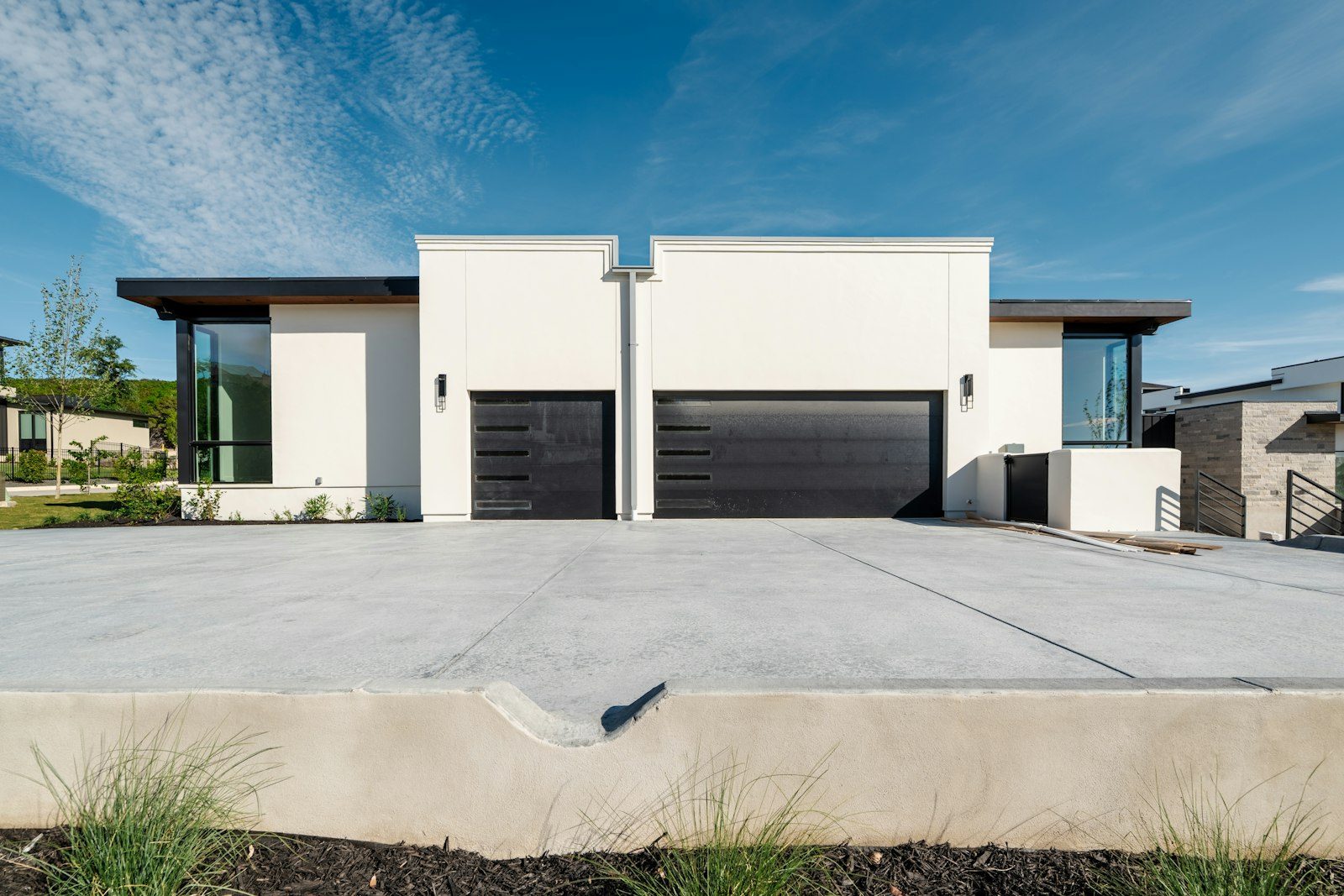
Walk one block of older houses and you can sort the driveways into two piles without leaving the sidewalk.
Walk a street of similar-aged houses in Littleton and you can sort the driveways into two piles from the sidewalk. One pile is even in color and tight at the surface, with a crisp edge where the concrete meets dirt. The other is pale and mottled, sandy underfoot, aggregate showing through the tire paths, apron crumbling toward the gutter.
Same builder, same decade, same weather. The difference is that somebody in the first pile sealed their concrete at some point and nobody in the second pile ever did. That's not a pitch, it's what thirty Colorado winters do to bare concrete versus protected concrete. And it's why the age and history of a slab, more than its size or finish, decides what we put on it.
Bare concrete is porous. It takes on water like a hard sponge, and up here that water crosses the freezing point again and again from November into March, prying a little off the top each time. Add road treatment carried home on tires, oil drips, fertilizer overspray, and tannin from leaves that sat in a corner all fall.
Sealer interrupts all of it. Think of it as a sacrificial skin: it gets used up instead of the concrete. It's also the item that quietly slides off the list every year, because a sealed drive and an unsealed drive look identical for the first five. The difference arrives around year fifteen, and by then it's a resurfacing conversation.
One family soaks into the pores and reacts inside the concrete. Nothing sits on top, so a treated slab looks exactly like an untreated one, and there's no film to peel, cloud, or turn slick underfoot. That goes on nearly every driveway, walk, and washed surface we treat, and on anything that stays shaded and damp.
The other family builds a film. That film is what gives stamped and colored work depth and the just-rained look, and it's a maintenance commitment, because film fails visibly when it goes on too thick, over a damp slab, or past its service life. We use it where the look is the point. Not on a north-facing walk, and not on a drive that never fully dries.
The costliest mistake has nothing to do with which family you pick. It's moisture. Put a coat over concrete that hasn't dried out and the water underneath has nowhere left to go, so it reappears as white haze inside a few weeks. Dry slab, right product, right spread rate.
| The concrete we find | What we usually see | What goes on it |
|---|---|---|
| Original flatwork, never sealed | Open, thirsty surface with sand starting to show | Penetrating sealer, two passes, since the first disappears into it |
| Sealed once with the wrong product | Cloudy patches and flaking film in the traffic lanes | Strip it all. Nothing goes over a failing film |
| Builder concrete, newer subdivision | Sound and tight, often still carrying curing compound | Remove the compound after a full cure, then a penetrating coat |
| Stamped or colored work | Color fading first where afternoon sun lands | Film sealer with grit, on a two to three year clock |
| A pour from this season | Nothing wrong yet, everything to protect | About a month out, then no deicer the whole first winter |
| Shaded north-side walk | Damp, glazed at night, moss in the low corner | Clean it hard, then penetrating sealer only |
If the water goes dark and disappears instead of sitting up in beads, your concrete is drinking whatever winter hands it. Free look at the property.
Exterior sealing runs late spring through early October, and if we got one stretch it would be September. Mild days, cool nights, dry air, and time to cure well ahead of the first hard freeze. Spring works too, but only after the ground drains off its snowmelt and the slab strings together several dry days. Concrete that looks dry on the surface in late April is usually still wet inside, which is the most common reason a spring job clouds up.
Winter shuts exterior work down. These products need temperatures parked above freezing through the cure, and a shaded January slab is never dry. Garage floors and lower levels run year round with ventilation. How often: a driveway on penetrating sealer goes four or five years, sooner if a plow works it. Colored and stamped surfaces want it every two to three, since the sealer protects the part you paid extra for.
Older properties around Columbine and Southbridge take the deepest first coat, since concrete that has never been sealed drinks it. Highland Walk is mostly first-time seals on sound builder concrete. Ken Caryl adds slope, so we look at where runoff crosses the drive first.
Still unsure about something?
Call the crew at (303) 569-4046 and we will talk it through.

Get a free, no-obligation estimate from a crew that knows Colorado soil, Colorado weather, and how to finish concrete that lasts.
Accessibility
Adjust the site to fit how you read and browse. Your choices are saved on this device.