
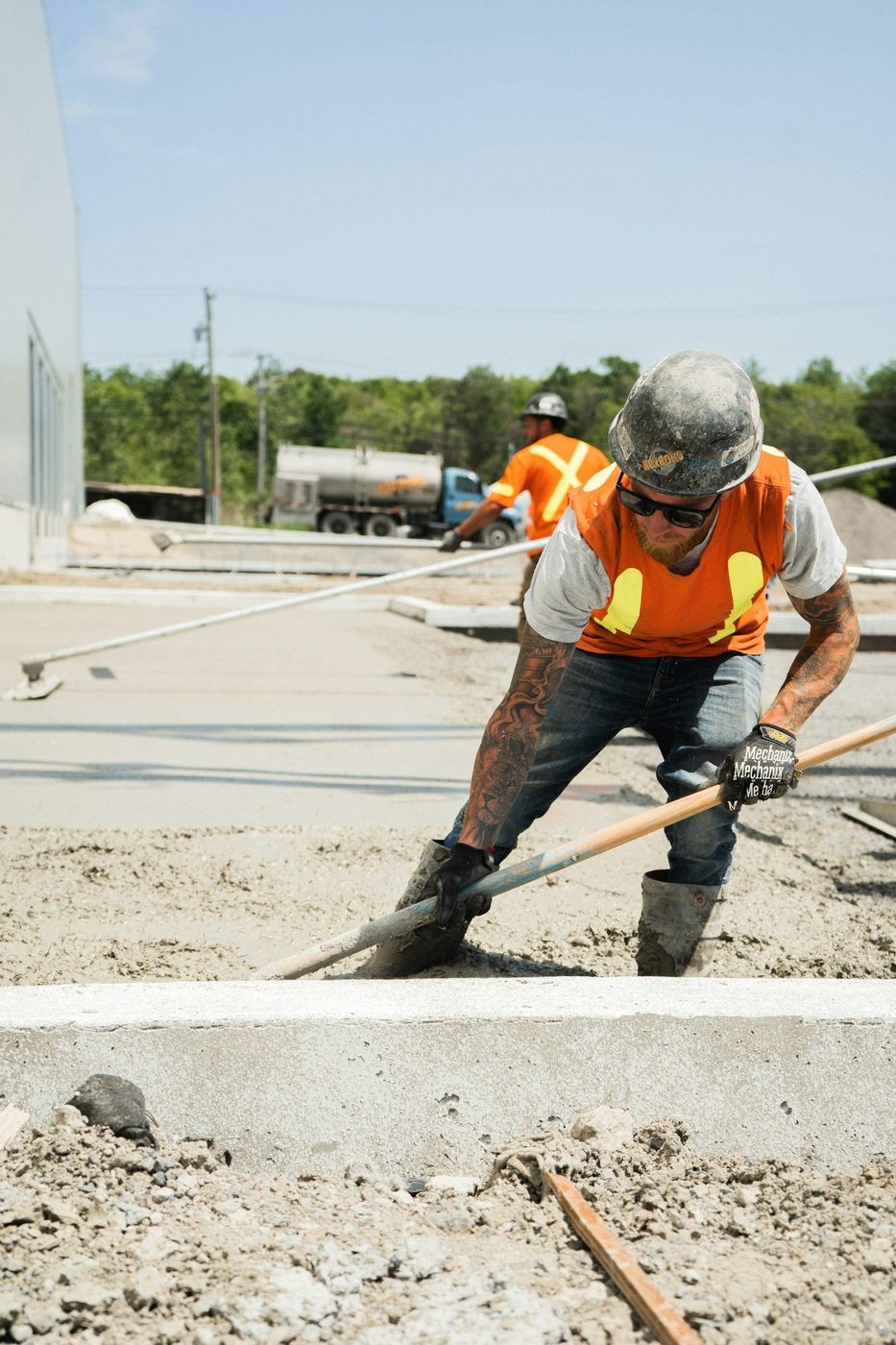
Nobody walks on curbing. Everything else in the yard runs into it every week.
Think about a normal week in your yard from the curbing's point of view. A hose gets dragged around the corner of the bed twice. A trimmer line whips the face of it. The mower deck rolls past on Saturday, close enough to matter. A blower pushes leaves across it in October, a shovel scrapes along it in January, and the dog uses it as a launch pad year round. It never gets admired and it never gets a day off.
That's the standard we build to, because a bed edge that only looks good on install day isn't worth pouring. We work across the south metro out of a licensed, bonded, and insured shop, we run our own crews, and a residential run usually starts and finishes inside a single day.
Two things do most of the damage to landscape edging here, and neither is weather. The mower and the trimmer. Plastic and steel strip gets clipped, bent, and eventually popped out of the ground, where it waves along the bed like a ribbon. Poured concrete doesn't care. It takes a mower wheel and a summer of trimmer line, and it stays put because it's one continuous piece with a keyed foot below grade.
Profile matters for that reason. We push a low rounded or slant face where lawn meets bed, since that shape lets you ride a wheel along the top and cut the grass line clean in one pass. Taller squared profiles look sharp and belong where the bed holds material back, not where you mow every weekend. Pick the shape around how you maintain the yard. Both look good anyway.
Spring is mulch season, and curbing earns its keep by holding that fresh layer in the bed instead of sending it down the driveway with the first hard rain. Summer brings sprinklers on the face daily. Fall is leaves and a blower running the line. Then winter, when the edge becomes a target: snow shoveled off the drive lands on it, and whatever deicer was on that concrete rides along.
That last one is the real threat. Skip ice melt on any surface draining onto fresh curbing through the first winter, and go easy after. Sand works. A curb sits high and narrow, so it freezes and thaws faster than the slabs around it. That's why we run control joints at regular spacing. The concrete will move. The joints decide where.
Tell us roughly how many feet and what's in the beds. We'll measure on site and quote it free.
| Bed material | What it does to the edge | How we detail it |
|---|---|---|
| Shredded mulch | Floats and travels the moment water moves through the bed | Enough height above grade to hold it, with the bed graded back away from the lawn |
| Rock or cobble | Heavy, stays put, but gets raked and washed against the face | Wider footprint and a profile that doesn't chip when a rake rides up it |
| Turf on both sides | Grass creeps over anything low and the mower needs a clean line | Low rounded profile a wheel can ride, set to cut clean |
| Xeric gravel with drip lines | Water leaves under the surface, not over it | Weep gaps or a deliberate low point so the bed never holds water |
| A planting bed on a slope | Everything migrates downhill in a storm | Stepped runs, deeper foot on the low side, drainage planned first |
Straight and sweeping work is extruded. A machine walks the line and lays continuous shaped curb over a trenched, compacted path, which is fast and gives you the smooth radius that makes a bed line look intentional. Tight circles around a tree, short returns, and odd transitions get formed by hand, and a good crew blends the two so you can't tell where the machine stopped. Terraced yards toward Ken Caryl take more hand work than flat lots in Highland Walk, since grade changes get stepped, not curved.
Season runs April into November, tracking the ground. We won't trench frozen soil, and spring work waits until the yard dries enough to hold a clean trench edge. Late summer and early fall are ideal, especially if you're redoing beds anyway. Keep the mower and foot traffic off a new run for a few days, and hold off on heavy watering right against it.
Every spring we get the same call. Plastic edging heaved over the winter, somebody stepped on it, and now there's a black lip standing three inches out of the bed. You can stake it back a dozen times. It's held by the same soil that pushed it out.The crew lead's read on it
Still unsure about something?
Call the crew at (303) 569-4046 and we will talk it through.

Get a free, no-obligation estimate from a crew that knows Colorado soil, Colorado weather, and how to finish concrete that lasts.
Accessibility
Adjust the site to fit how you read and browse. Your choices are saved on this device.