
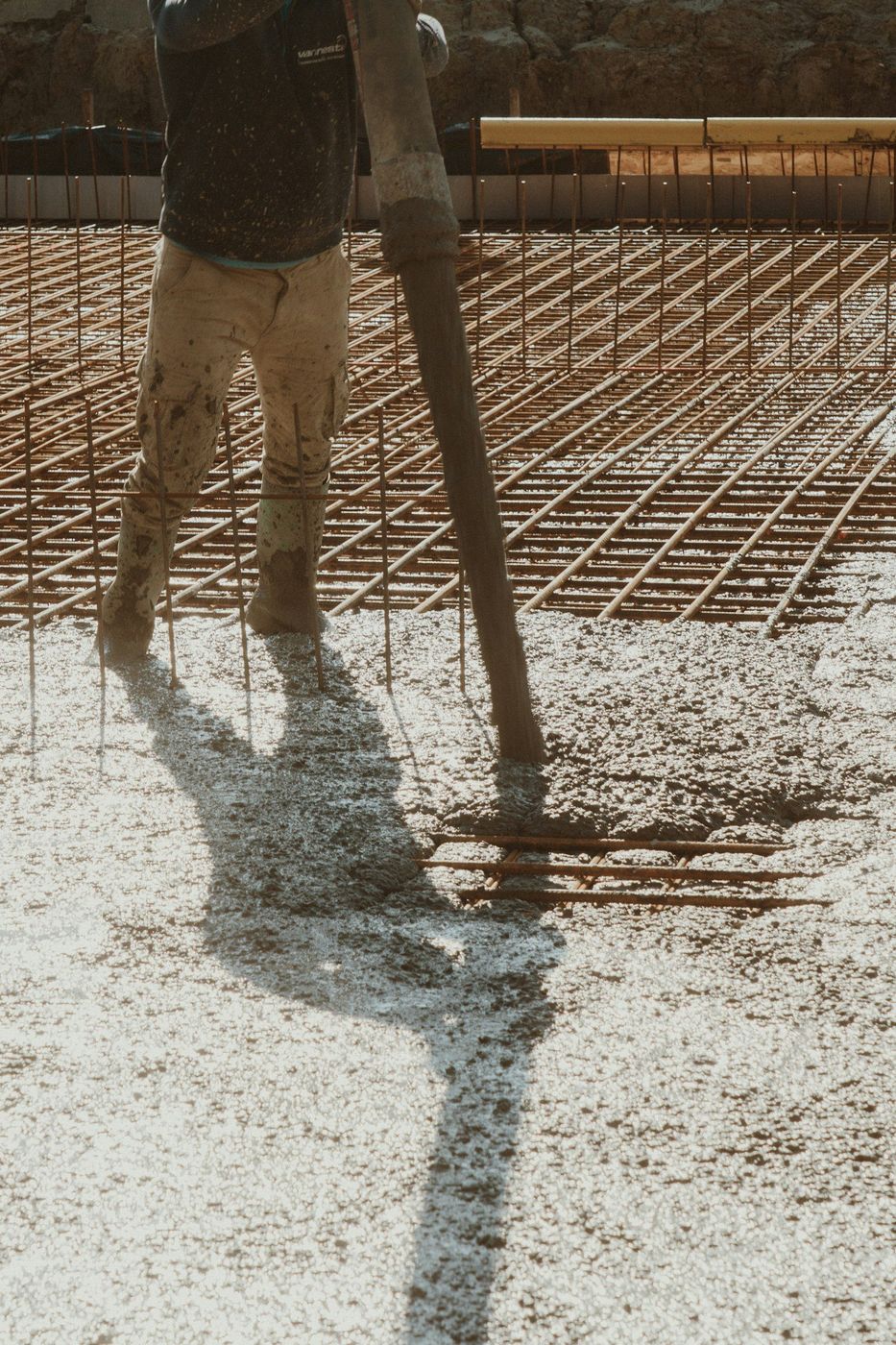
Shop floors, garage slabs, and outbuilding pads, specified around what actually happens on them.
Most slab conversations start with thickness and end with price. Ours start with a question: what happens on this floor on a normal Tuesday? A pad that parks a tractor, a garage holding a workbench and a spare fridge, and a heated shop with a floor drain are three different pieces of concrete under one name.
Larkspur adds its own list. Snow tracked in on tires all winter. A propane truck swinging across a Sage Port outbuilding apron. Ground under the Perry Park pines that stays damp weeks after the meadow dried out. We build the slab around the use first, deal with moisture second, and get to the number after both.
Point loads decide more than square footage does. A jack stand under a truck axle loads a small circle of concrete harder than the whole vehicle does across four tires, and loaded shelving concentrates weight right where a slab is thinnest. So we ask where the heavy things land, then build for that, instead of pouring one uniform thickness and hoping the furniture cooperates.
Wheel paths matter too. Park in the same spot daily and that spot takes thousands of load cycles a year while the rest of the floor takes almost none. It isn't a wear problem the way people picture it; the surface handles it fine. It's fatigue in the slab and the base beneath. Extra depth and steel where the vehicle sits, normal section everywhere else. Same logic in a new Bear Dance garage or an old shop getting re-poured.
Under everything we pour: compacted subgrade, clean aggregate base, and a vapor retarder anywhere the space is enclosed or might get coated someday. That sheet isn't optional in a shop. Moisture rising through concrete is what peels epoxy, softens whatever cardboard you stacked on the floor, and keeps a heated outbuilding smelling like a basement no matter how hard the fan runs.
Then the edges. A slab carrying a wall gets thickened under that line, deep and wide enough to spread the load into the base without punching through it. Where the slab meets a foundation or a stem wall we isolate instead of bonding, because those two pieces of concrete move on different schedules and one of them has to give. Better a joint you planned than a crack across your floor.
Tell us what's going to live on it. We'll spec the slab around that and put the reasoning in writing.
| What you do on it | What it does to the slab | How we answer it |
|---|---|---|
| Park in the same spot every day | Fatigue concentrates in one wheel path and the base under it | Thicken and reinforce that zone during the pour, not after |
| Hose the floor out | Standing water finds joints and any crack that isn't filled | Slope to a drain or a door, fill joints in the wet areas |
| Track road deicer in on tires | Chlorides pool and attack the surface, worst in the first winter | Rinse during a thaw, and keep salts off new concrete through winter one |
| Load shelving along the walls | Line loads land exactly where the slab is thinnest | Thickened edge under any wall carrying racking or a bench |
| Heat the building all winter | Warm slab over cold ground drives moisture upward | Vapor retarder below, perimeter insulation if you're heating it |
| Coat or epoxy the floor later | Moisture from below lifts coatings off perfectly good concrete | Tell us before the pour so assembly and finish match |
Indoor slabs give us the widest calendar. Once a building is roofed and closed we can temper the space, pour in December, and never look at the radar. Open pads are a different animal. Mid-May into October is the comfortable stretch up here, and even then we'd rather start at daylight than fight a July afternoon on a big placement.
First winter rules are short. No deicing chemicals on new concrete, magnesium chloride least of all. Shovel it, sand it, done. Snow landing on a slab that's a few days old is harmless; what hurts young concrete is chemistry, not cold. Walk it after a day or two, drive it around the one week mark, and keep the genuinely heavy loads off until day twenty-eight.
Still unsure about something?
Call the crew at (303) 569-4046 and we will talk it through.

Get a free, no-obligation estimate from a crew that knows Colorado soil, Colorado weather, and how to finish concrete that lasts.
Accessibility
Adjust the site to fit how you read and browse. Your choices are saved on this device.