
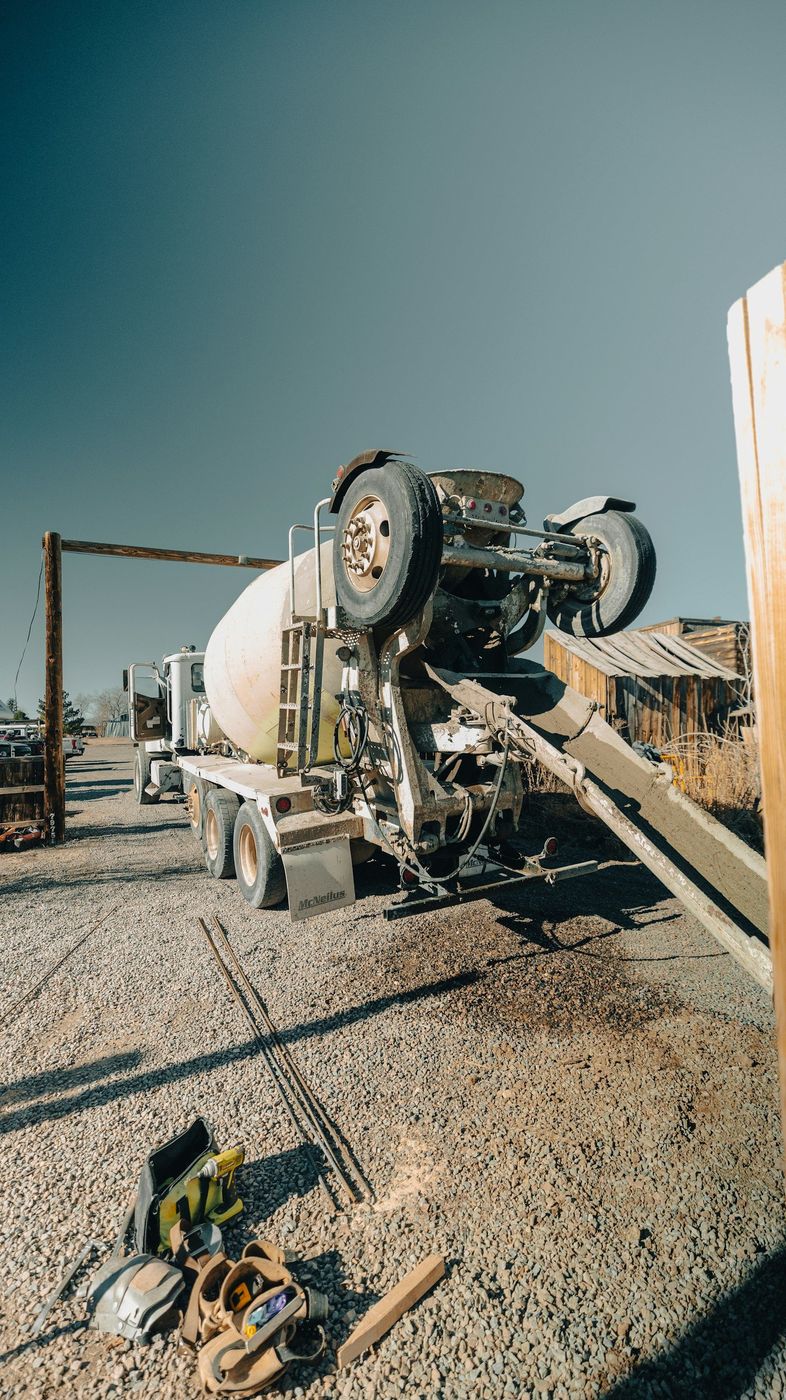
Wider or deeper? The answer is in the hole, and it can change across one property.
Two crews can quote the same deck, the same detached garage, the same barn addition, and price supports that cost wildly different money. Neither one is padding. They just answered a different question about the dirt. That's the whole game with footings and piers up here, and it's worth understanding before you pick a bid.
Larkspur ground doesn't offer one answer per property. A Perry Park lot can hand you dense material three feet down at the uphill corner and soft, wet fill at the downhill one. Which support system belongs under your structure depends on where trustworthy bearing sits, what the soil does when wet, how heavy the thing on top is, and whether a rig can reach the spot. Our engineer settles those four before anybody quotes a number.
Spread footings are simple, cheap, and completely correct when the soil cooperates. Dig below frost, widen the pad until the pressure under it drops inside what the geotech allows, tie steel, pour. Done. We use them constantly, and anyone telling you every Front Range structure needs deep piers is selling deep piers.
But the soil doesn't always cooperate. When the layer near the surface swells hard as it takes on water, a spread footing sits inside the zone that moves, and it moves with it. When competent material is genuinely deep, widening the pad just spreads a bad idea over more area. Both push us to piers, where the load skips the active layer and gets carried by friction and end bearing well below it. Grade beams span between the piers, and void form beneath those beams gives swelling soil somewhere to go besides up into your building.
| What we're checking | What we find | What that points to |
|---|---|---|
| Depth to trustworthy bearing | Shallow and dense, inside a bucket's reach | Spread footings below frost, widened to suit the load |
| Depth to trustworthy bearing | Competent material well under the active layer | Drilled piers with grade beams and void form beneath |
| Swell potential in the geotech | Flagged moderate or high | Piers with enough embedment to resist uplift, plus a void space |
| Room for a drill rig | Slope, mature trees, or a building in the way | Helical piers, installed with smaller equipment in tight clearance |
| What the structure weighs | Light and tall: deck, carport, shade frame | Supports designed for uplift and overturning, not just downward load |
| Water in the excavation | Seepage arriving before the hole is finished | Casing, dewatering, or a shifted footing line. Never a wet pour |
Send us both and the soils report. Our engineer will tell you which one matched the dirt, even if it isn't ours.
People assume more piers is safer. Sometimes it's just more holes. Spacing comes out of the load path: how much weight each bay of the structure delivers, how far a grade beam can span before it needs more depth or more steel, and how much a single pier can carry given its diameter and the friction it develops in your soil. Tighten the spacing and the beams get lighter. Widen it and they get heavier. The cheapest package is where those two curves cross.
Uplift changes the math again. On expansive ground the soil pushes up against the beam and tries to drag the piers with it, so embedment gets designed to hold the structure down, not only up. That's a different calculation than the one used at sea level, and it's what most out-of-area plans get wrong on a Larkspur lot.
Pier work runs closer to year round than most concrete does, because the hole goes past the frozen crust in the first minute. Cold slows surface work and equipment, not the design. Summer is the easy season and also the wet one, so we cover open holes and pour the day we drill when we can. Spring melt is trickiest on a Sage Port or Bear Dance wooded lot, since a north-facing hole can stay frozen at the bottom while the yard around it turns to soup.
Building next summer? Get the supports designed over the winter. Engineering takes time, geotech takes time, and the crews who can drill a steep lot fill up fast once the ground opens. A footing package figured out in February isn't holding up your framer in June.
Still unsure about something?
Call the crew at (303) 569-4046 and we will talk it through.
Get a free, no-obligation estimate from a crew that knows Colorado soil, Colorado weather, and how to finish concrete that lasts.
Accessibility
Adjust the site to fit how you read and browse. Your choices are saved on this device.