
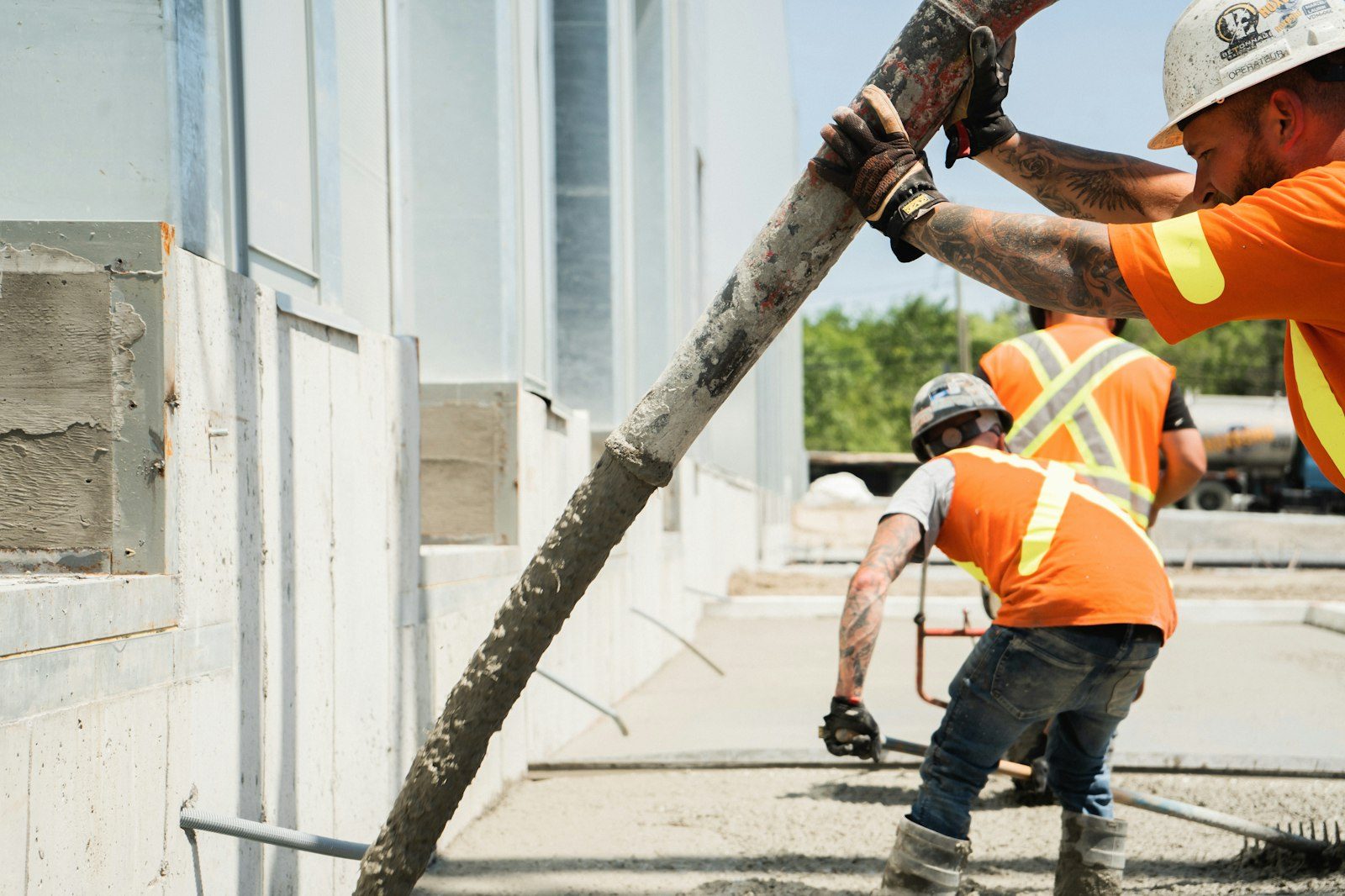
Straight answers on settlement, from an engineer who works for us, not for the fix.
Larkspur properties don't come in one age or one shape. Perry Park holds homes that have watched a few decades of winters, Sage Port mixes eras across its wooded hills, and scattered through all of it are the buildings people forget to mention on the phone: barns, shops, well houses, detached garages, each on its own slab or stem wall. Foundation trouble out here rarely announces itself the same way twice. The house shows a stair-step crack over the garage. The shop door starts dragging a corner. The barn floor tips just enough that water finds the hay.
What every building shares is the ground. Clay that moves with moisture, hillsides that deliver water to whatever sits below them, and frost that works deep through a long winter. We diagnose before we prescribe, and the diagnosis comes from our in-house structural engineer, not from a salesman with a pier quota.
Water is the ringleader. On sloped, wooded ground, snowmelt and storm runoff travel downhill until something interrupts them, and too often that something is a foundation. Clay takes the water, swells against the wall or under the footing, then shrinks away in the dry months, and the structure above gets rocked gently back and forth, season after season. Add a deep frost line and a downspout dumping at the corner, and you've got lift in February stacked on settlement in August.
That's why so many of our Larkspur repairs start outside the foundation, not under it. Regrade the uphill side, carry roof water well away, cut off the supply, and half the movement calms down. Piers fix structure. Drainage fixes causes. Good repairs usually take some of each.
Send photos. Our engineer looks at every inquiry, and if it's cosmetic we'll say so and it costs you nothing.
| Approach | The problem it solves | What it can't do |
|---|---|---|
| Steel push or helical piers | A settling footing; the load transfers to stable soil below the movement zone | Won't stop water. A piered wall with bad drainage keeps getting wet. |
| Crack injection, epoxy or urethane | Sealing a crack that has stopped moving against water and air | Injection into live movement fails. It's a patch, not a cure. |
| Drainage and regrade correction | The moisture swings that make clay push and pull in the first place | Can't lift a structure that already dropped. It stops the bleeding, not the scar. |
| Slab stabilization for outbuildings | Barn, shop, and garage floors that settled or tipped out of level | A slab on collapsing fill needs the fill addressed, not just the concrete lifted. |
Hairline shrinkage cracks live in nearly every foundation ever poured, and they're not a structural story. The cracks worth a phone call look different: stair-stepping through block or brick, horizontal runs along a basement wall, anything wider than a coin that keeps growing, doors and windows racking out of square in one corner of the house. And on rural properties, watch the outbuildings. A shop slab often telegraphs soil trouble before the house does, because nobody built it with the same care.
Here's our structural advantage, plainly: the engineer is on our payroll and stamps the plan before anyone quotes steel. You get a diagnosis first, a scope second, and a price last. Plenty of our inspections end with us telling the owner to fix a downspout and call back if anything changes. That answer is free, and it's more common than this industry wants you to believe.
Repair season is generous, because most of this work lives below the surface weather. Piers go in year-round; frozen topsoil slows the excavation but rarely stops it. Drainage and regrade work wants workable ground, so spring through fall owns that window. The smart calendar move is diagnostic: have the assessment done in spring, when the clay is wet and the movement is at its loudest, then book the fix for the drier months when access is easy. But if a wall is actively moving, forget the calendar. Call, and we'll triage it now.
Still unsure about something?
Call the crew at (303) 569-4046 and we will talk it through.
Get a free, no-obligation estimate from a crew that knows Colorado soil, Colorado weather, and how to finish concrete that lasts.
Accessibility
Adjust the site to fit how you read and browse. Your choices are saved on this device.