
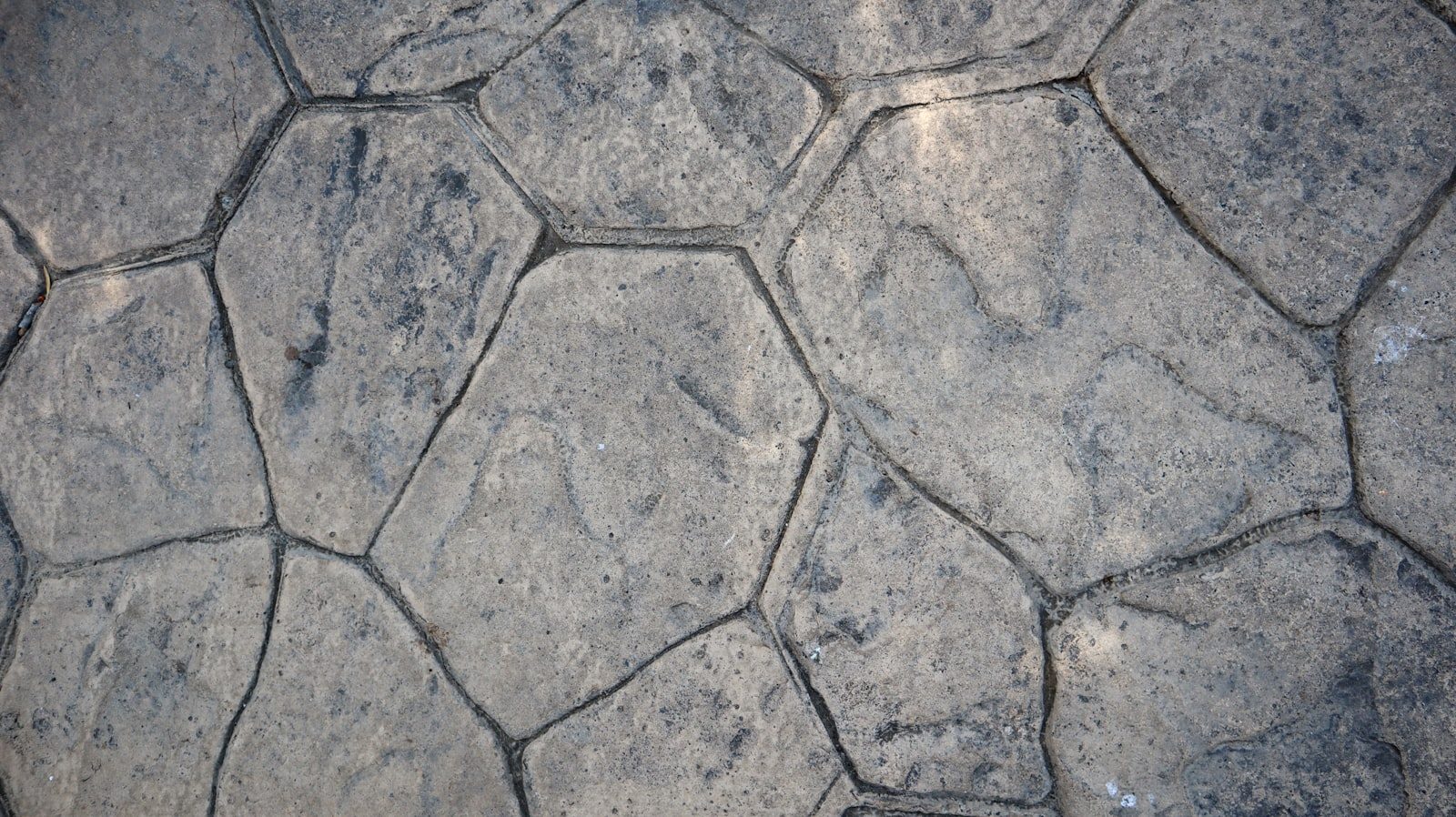
Pattern and color that still look poured-yesterday after a decade of Colorado sun.
Walk any established street in Lakewood and you can grade the stamped concrete from the sidewalk. Some of it still reads as slate or flagstone from thirty feet away, color deep, joints crisp. And some of it has gone chalky gray, the pattern flattened out, the sealer long since burned off. Same product, wildly different outcomes. The difference is rarely the stamp. It's the mix under the pattern, the sealer on top of it, and whether anyone ever came back to maintain it.
Decorative concrete has to survive everything plain gray does, then look good doing it. That's a taller order at a mile of elevation than the brochures admit. We build stamped work for this climate specifically, and we say out loud what it needs from you afterward, because a stamped patio without a resealing habit is a countdown.
Three forces gang up on stamped work here. UV comes first; high-altitude sun breaks down sealers faster than sea-level guidance suggests, and once the sealer goes, the color layer underneath starts dulling. Freeze-thaw comes second, and it's why the mix matters more than the pattern: stamped or not, exterior concrete in this town gets 4,000 PSI air-entrained mix or it scales. Deicers are the third, and the sneakiest, because nobody pours salt on their showpiece patio on purpose. It walks in on boots and drips off the car onto a stamped driveway, and magnesium chloride does not care how pretty the surface is.
None of this argues against stamped concrete. It argues for building it like it lives here. Right mix, joints cut on schedule, a quality sealer applied at the right film thickness, and a recoat every two to three years. Do that and the tenth summer looks like the first.
| Question | Stamped concrete | Pavers |
|---|---|---|
| Surface over time | One monolithic slab; joints are decorative, weeds have nowhere to start | Individual units can shift and open joints, especially over active clay |
| Winter behavior | Shovels clean like any slab; sealer needs deicer kept off it | Edges catch shovel blades; sand in joints migrates with meltwater |
| Repairs | Harder to patch invisibly if damage ever happens | Single units swap out easily; matching faded neighbors is the catch |
| Maintenance rhythm | Reseal every 2 to 3 years | Re-sand joints, occasional re-leveling where soil moves |
| Design range | Slate, ashlar, flagstone, wood plank, custom color blends | Set shapes and colors from the manufacturer's catalog |
Style follows the architecture more than trends do. Around Belmar and Applewood, where the housing stock leans mid-century, buyers usually want restraint: an ashlar slate in a gray-on-gray blend, or a plain texture-skin finish with a single accent border. Solterra goes more contemporary, big-format patterns and lighter integral color that plays well against stucco. Bear Creek and Green Mountain calls are frequently front-entry work, a stamped walk and porch cap that upgrade the approach without repainting a thing.
Color is where we slow clients down. Two-tone jobs with an antiquing release read as stone. Six-color extravaganzas read as regret by year three. Pick from physical samples in your own yard light, not a phone screen, and remember the sun up here lightens everything a shade over time. We plan for the faded version, not just the day-one version.
Recoloring and resealing costs a fraction of replacement. Call (303) 569-4046 and we'll tell you which one your slab needs.
Stamping is racing the set. The crew has a window, shorter on a hot dry afternoon, to texture the whole surface before the concrete stops taking an impression, so we schedule decorative pours for mild mornings and stack extra hands on big slabs. Late spring and early fall are ideal; the concrete sets on a relaxed clock and colors cure evenly. High summer works with an early start. True winter stamping is the one thing we talk most clients out of, because cold stretches the set time and blanket-curing under wild temperature swings can mottle color. If the calendar says December, we'd rather pour your project first thing in spring than hand you a patio with a birthmark.
Still unsure about something?
Call the crew at (303) 569-4046 and we will talk it through.

Get a free, no-obligation estimate from a crew that knows Colorado soil, Colorado weather, and how to finish concrete that lasts.
Accessibility
Adjust the site to fit how you read and browse. Your choices are saved on this device.