
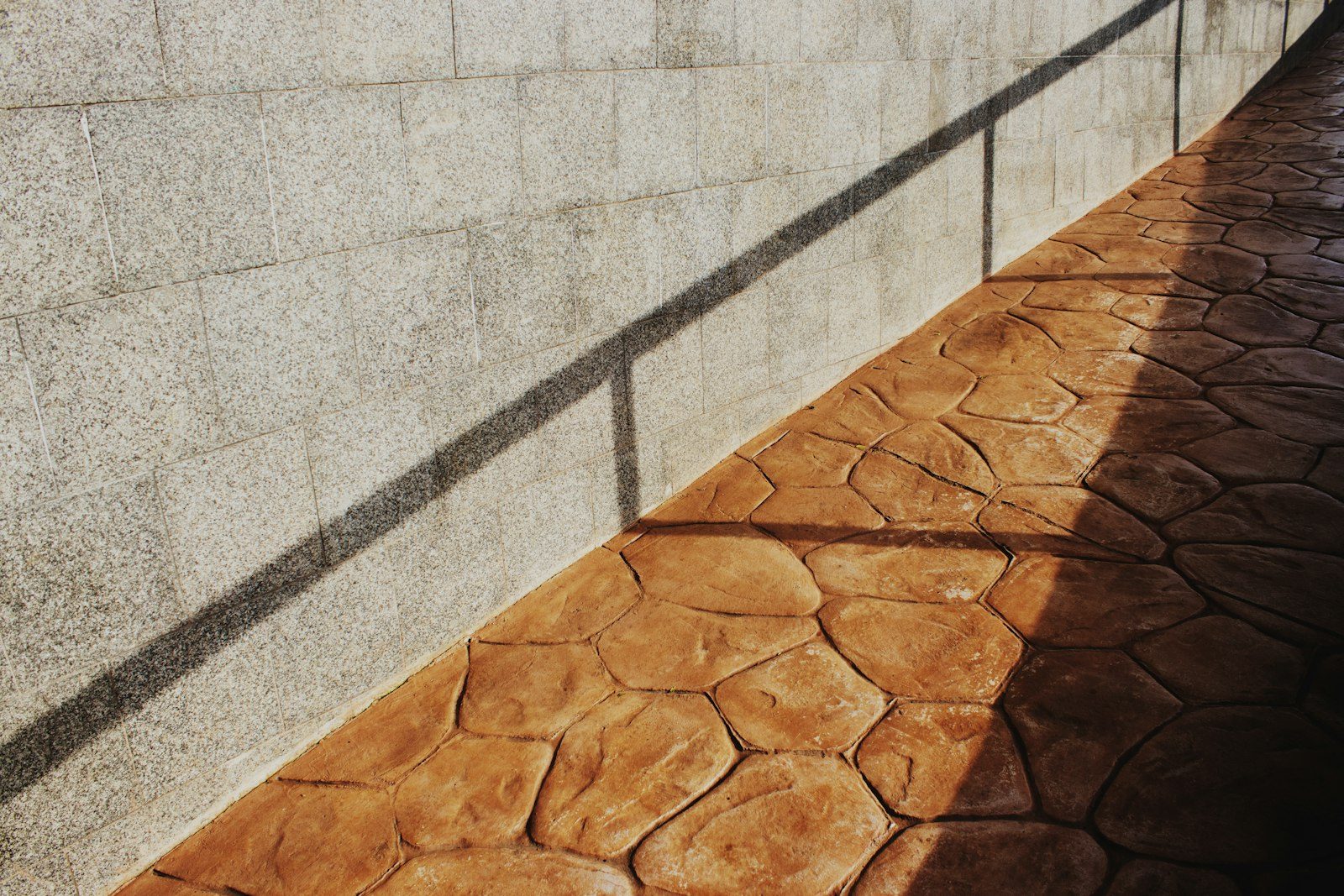
Acid color is a marriage to the slab you already own, so we tell you first whether that slab is worth marrying.
Color is permanent. Start there, because it changes how you should think about the whole decision. Acid stain isn't paint you can strip off in five years when you get tired of it; the color becomes part of the concrete, and the only real exit is grinding or covering. So the first thing we do on a staining call in Lakewood isn't talk about color at all. We look at whether the slab has enough life left to be worth committing to.
Plenty of the time it does. A sound gray slab is a good candidate and a cheap one, since you skip demolition and a ready-mix truck entirely. But a surface that's already dusting will drink color unevenly and then shed it, and no chemistry fixes that. We'd rather say so than take the job.
Reactive stain is a weak acid carrying metallic salts. Pour it on cured concrete and it opens the surface just enough to reach the free lime left over from hydration, and the salts and the lime trade places and form something that won't wash off. That's why the color reads like weathered stone instead of paint. It grows inside the top sliver of the slab, following the density of the paste and the way somebody troweled it twenty years ago. Nobody controls that fully. The mottling is the point.
Then comes the step people skip. The reaction leaves spent acid and residue behind, and sealing over that gets you a milky film and color that keeps shifting for months. We flush, scrub, and rinse until the runoff is clear and the surface tests neutral, then vacuum it dry. Dye is a different animal: no reaction, just pigment carried into open pores, more even and far wider in color range, leaning on the sealer for UV protection instead of the concrete.
| Option | What it does to the concrete | When we would talk you out of it |
|---|---|---|
| Reactive acid stain | Becomes part of the top layer, mottled, permanent, no film to peel | When the surface is dusting, since color cannot hold onto failing paste |
| Water-based dye | Carries pigment into the pores, more even, more colors | On a west-facing slab where nobody plans to keep up with resealing |
| Porch and floor paint | Lays an opaque film over everything, hides stains and patches | Outdoors, almost always. Film plus meltwater plus a shovel equals peeling |
| Solid epoxy or urethane | Builds a thick uniform layer that reads as a floor, not as concrete | When moisture is moving up through the slab, or when you wanted it to look like concrete |
| Tear out and repour | Fresh base, steel, drainage, and integral color through the whole slab | When the concrete is flat, sound, and your only complaint is color |
Send a photo taken in daylight and we will give you a straight read. Free estimates, licensed, bonded, insured. Call (303) 569-4046.
Belmar and Applewood send us basement floors. Older construction, often poured before under-slab vapor barriers were standard, so we tape a square of plastic down for a day and see what collects underneath before promising anything. If moisture is coming up, reactive color still works, but a film-forming sealer over it will cloud, and we steer you to something breathable. Green Mountain brings walkout patios cut into slope, where half the slab bakes and half sits in shade. Color reads differently across that line no matter what anybody does, so we plan around it.
Bear Creek properties sit under mature trees, which means tannin from leaf litter and concrete that stays damp. Solterra is the easy end of the phone: newer, denser, hard-troweled slabs that take acid slower and lighter, so we adjust strength and dwell time rather than promising a catalog color.
Outdoor color needs a dry runway on both ends: a dry slab going in, a clean working window, and enough dry time afterward for the rinse water to leave before sealer goes down. That points at late spring through early fall. In July and August we watch the afternoon storm pattern and often start at seven.
Interiors run all year, and winter is our best basement season. The house is closed up, the slab is stable, and nobody is using the patio anyway. Call in November about an outdoor project and we'll put you on the spring calendar rather than force a job into a week where the slab won't dry.
Still unsure about something?
Call the crew at (303) 569-4046 and we will talk it through.
Get a free, no-obligation estimate from a crew that knows Colorado soil, Colorado weather, and how to finish concrete that lasts.
Accessibility
Adjust the site to fit how you read and browse. Your choices are saved on this device.