
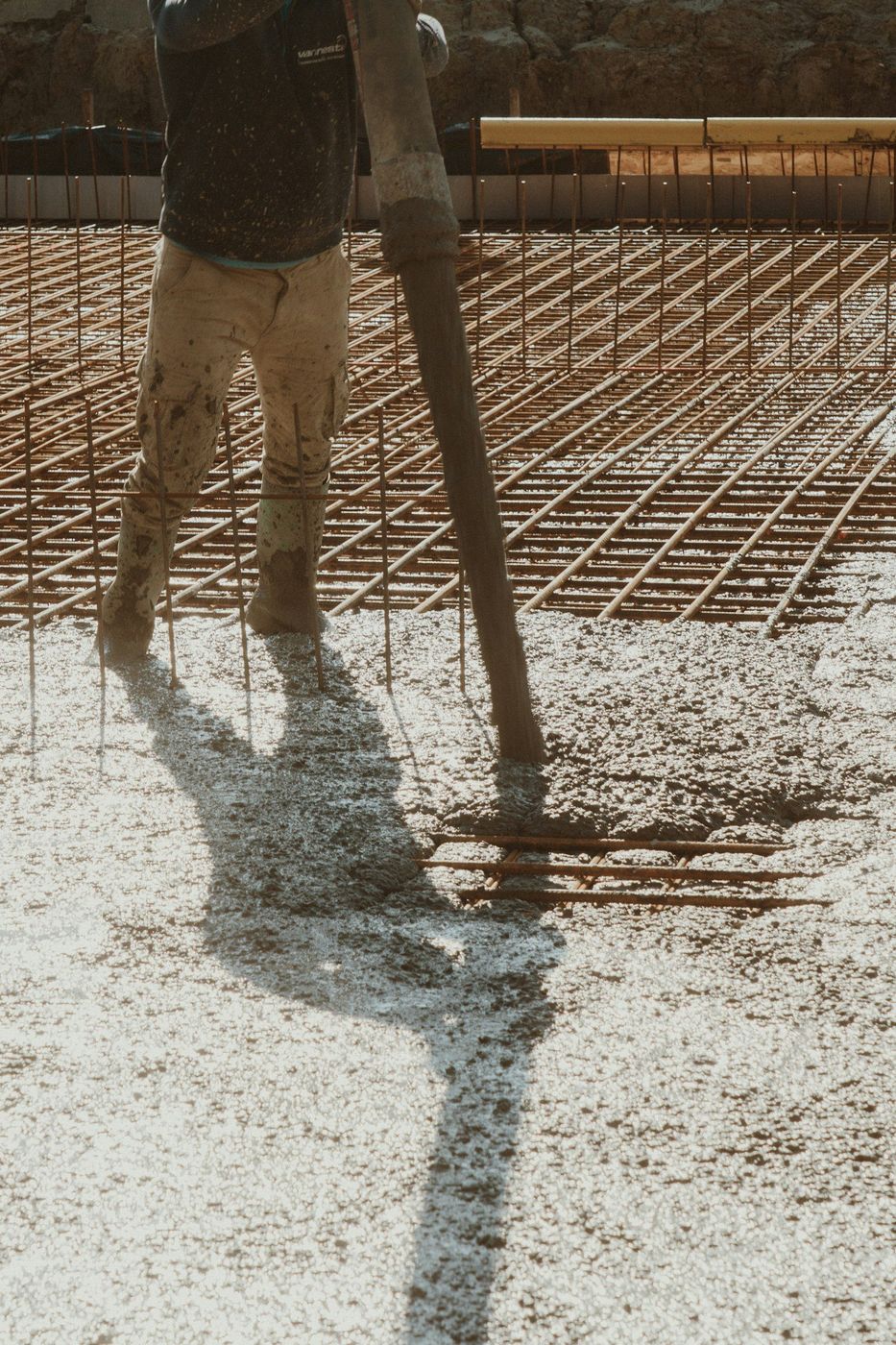
Half the floors we replace in this town are behind mid-century houses, in garages nobody expected to hold a modern truck.
The most common floor we replace in Lakewood sits in a detached garage behind an older house. Four inches of concrete, no plastic, no rock, poured onto whatever ground was there the day the garage went up. And honestly? It lasted decades. Then a heavier vehicle started parking on it, and now it's in five pieces with one corner riding low.
This town gives us a wide spread of floors. Older stock around Applewood and Belmar brings detached garages, basement slabs, and addition floors built to the habits of their era. Solterra and the newer streets bring big attached garages asked to carry far more. What separates a floor that lasts from one that doesn't is the base, the moisture layer, and how the slab meets what's around it.
Detached garages lead the list. Built as cheap shelter, sitting on ground that has soaked up roof water for decades, with nothing engineered underneath. Basement floors come second, in houses where somebody wants finished space downstairs and just learned there's no vapor retarder under the existing slab. Then addition and sunroom floors, which fail one specific way: the middle holds, the edge under the wall settles, because nobody thickened it.
Newer construction sends different work. Three-car garages holding a full-size truck and a trailer, shops behind houses out toward Green Mountain where the pad had to be cut into a grade, hobby space with a floor rated for what actually happens on it. In the low ground near Bear Creek the question is always water: where it comes from and how we keep it out from under the slab.
A slab is a plate. It spreads load across whatever it's lying on and it cannot bridge a hole. So when a floor cracks in a jagged line and one side drops, the concrete didn't fail, the support did. That's why the front half of a floor job is dirt work: strip the soft material, place base rock in lifts, compact each one, screed it so slab thickness stays honest.
Above the rock goes the sheet nobody sees. Ground moisture rises through concrete as vapor whether the slab feels dry or not, and it ruins coatings and glued flooring. Lap it, tape it, seal it at every pipe. Then steel: bar on chairs for anything carrying weight, mesh only on light work where it's genuinely held off the base, fiber as a supplement rather than a substitute.
| Where the slab meets something | What that connection has to do | What poured tight gets you |
|---|---|---|
| The foundation or stem wall around it | Let the floor shrink and move without dragging on the wall | A crack tracing the perimeter about a foot in from the wall |
| The apron outside the overhead door | Take vehicle loads across the transition without stepping | A lip at the door that grows until the weather seal quits |
| A bearing wall or post landing on it | Get deeper and pick up steel so the load doesn't punch through | The wall settles into the floor and the framing above follows |
| Pipes, posts, and drains coming through it | Isolate the penetration so the slab can shrink around it | A crack running from that spot to the nearest edge |
| Control joints in the open field | Give shrinkage a straight line to follow, cut the same day | Random cracking wherever the slab decides it wants to |
Photos from a couple of angles usually tell us whether it's a surface problem or the ground underneath. (303) 569-4046.
A basement slab or a floor inside a closed building is nearly a year-round job, because the building is the weather protection. Garages sit in between: with the door open in January you're pouring outdoors, so we plan on heat, blankets, warm mix water, and an accelerator, and never place on frozen base. Aprons wait for the warm half of the year.
The first winter on a new floor matters more than the pour. Keep deicers off it, magnesium chloride especially, and that includes the brine your tires carry in off the street. Park over a mat if you can, or rinse it on a warm day. Salt during that first season is what turns a good garage floor into a flaking one for the rest of its life.
Still unsure about something?
Call the crew at (303) 569-4046 and we will talk it through.
Get a free, no-obligation estimate from a crew that knows Colorado soil, Colorado weather, and how to finish concrete that lasts.
Accessibility
Adjust the site to fit how you read and browse. Your choices are saved on this device.